
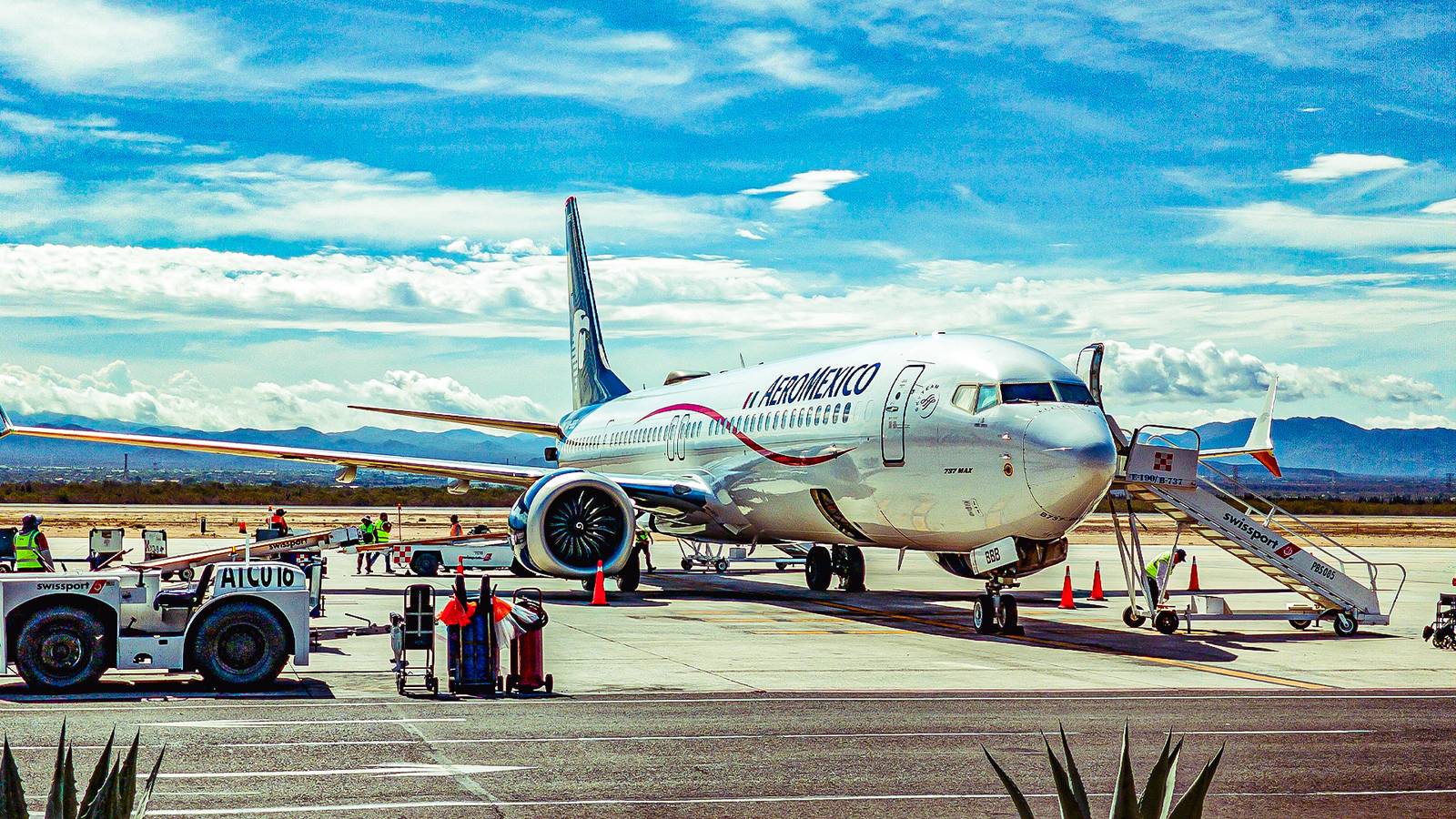


On Thursday, the US Court of Appeals ruled to overturn the Trump administration’s order from September 2025 to block a joint venture between Delta Air Lines and Aeromexico . The two carriers immediately sued following the decision from the US Department of Transportation to issue a block against the decade-old pre-existing partnership, Reuters reported.
Delta argued that the Trump administration held the airline alliance to much stricter standards than other ventures such as United Airlines and All Nippon Airways (ANA) of Japan. The appeals court decided the DOT’s decision was “arbitrary and capricious” when it ruled to reinstate the cooperative travel program.
Why The DOT Tried To Close The Inter-Border Air Bridge
The US DOT not only approved of the alliance in 2016, but granted antitrust immunity to Delta and Aeromexico, which allowed them to functionally operate as a single business. This legal protection allowed the two carriers to share flight schedules, ticket pricing tiers, and revenue on cross-border routes between America and Mexico.
When the DOT blocked the partnership, it cited the Mexican government’s violation of the bilateral Open Skies agreement. This followed a 2023 decision when the government imposed a moratorium on cargo flights into Benito Juárez International Airport (MEX). Mexican authorities diverted freighter flights to Angeles International Airport (NLU), which the DOT considered an anti-competitive move against US operators.
The 11th Circuit Court of Appeals previously found that the DOT broke from its historic trade balance analysis to conclude that Mexico was unfairly blocking American air carriers, according to a statement obtained by Reuters.
“[The USDOT] did not reasonably explain why it conducted a far more limited market analysis in this case than it has always done in the past or why it imposed a requirement for approval of the joint venture that it did not require of similar joint ventures it approved in Japan.”
The Government’s Cherry-Picked Statistics Fall Through
Historically, when evaluating whether an airline alliance is a monopoly, the USDOT has analyzed the entire country-to-country market. The government used emotionally charged terms like “legalized collusion” to justify shutting down the partnership, but the court ultimately found that the statistics used to back up that claim were heavily cherry-picked and distorted. In this case, the DOT hyper-focused only on the operations to and from MEX.
When the DOT blocked the alliance, they claimed it was justified since the two carriers controlled 60% of the market share at the fourth-largest international gateway to the US. However, flights flowing through MEX account for only 21% of total air traffic across the border. Thus, the agency had omitted 79% of the market data to reach this conclusion.
Delta’s legal team successfully proved that the government willfully ignored its own data and precedents from other countries. Further evidence that the decision was politically motivated was the manner in which Secretary of Transportation Sean Duffy announced it. As seen on the DOT web portal, the agency directs a simultaneous attack against former President Joe Biden and former Secretary Pete Buttigieg for allowing Mexico to play ‘games’ instead of honoring the terms of the Open Skies deal.
Delta has sought a five-month extension for its JV antitrust immunity.
The Japan Comparison: Bottlenecks In Tokyo Too
The court used the comparison between Delta’s besieged alliance with Aeromexico and United’s untouched partnership with ANA to spotlight the hypocrisy and double standards. When evaluating the legitimacy of the DOT’s claims, the court found that Tokyo’s Haneda Airport (HND) also has extremely tight operational restrictions and slot limitations, like MEX instituted in 2025.
This severely undermined any argument that Duffy’s agency’s findings and conclusions were valid. The 11th Circuit ruled that the USDOT failed to provide any rational explanation for why tight airport slots in Mexico City equaled collusion, while the same tight airport slots in Tokyo did not. Now that the court has reversed this halt order, air travel over the border should stabilize once again.
The partnership impacts over 50 million passengers who have flown under the joint alliance since its launch. The joint venture between Delta and Aeromexico produces roughly $3.5 billion in annual revenue. The alliance operates 30,000 cross-border flights each year on more than 20 routes between the two nations, all of which depend on the integrity of this cooperative arrangement. Thanks to the courts, business can get back to normal, and flyers can count on uninterrupted travel plans.
Orijinal Haberi Görüntüle