
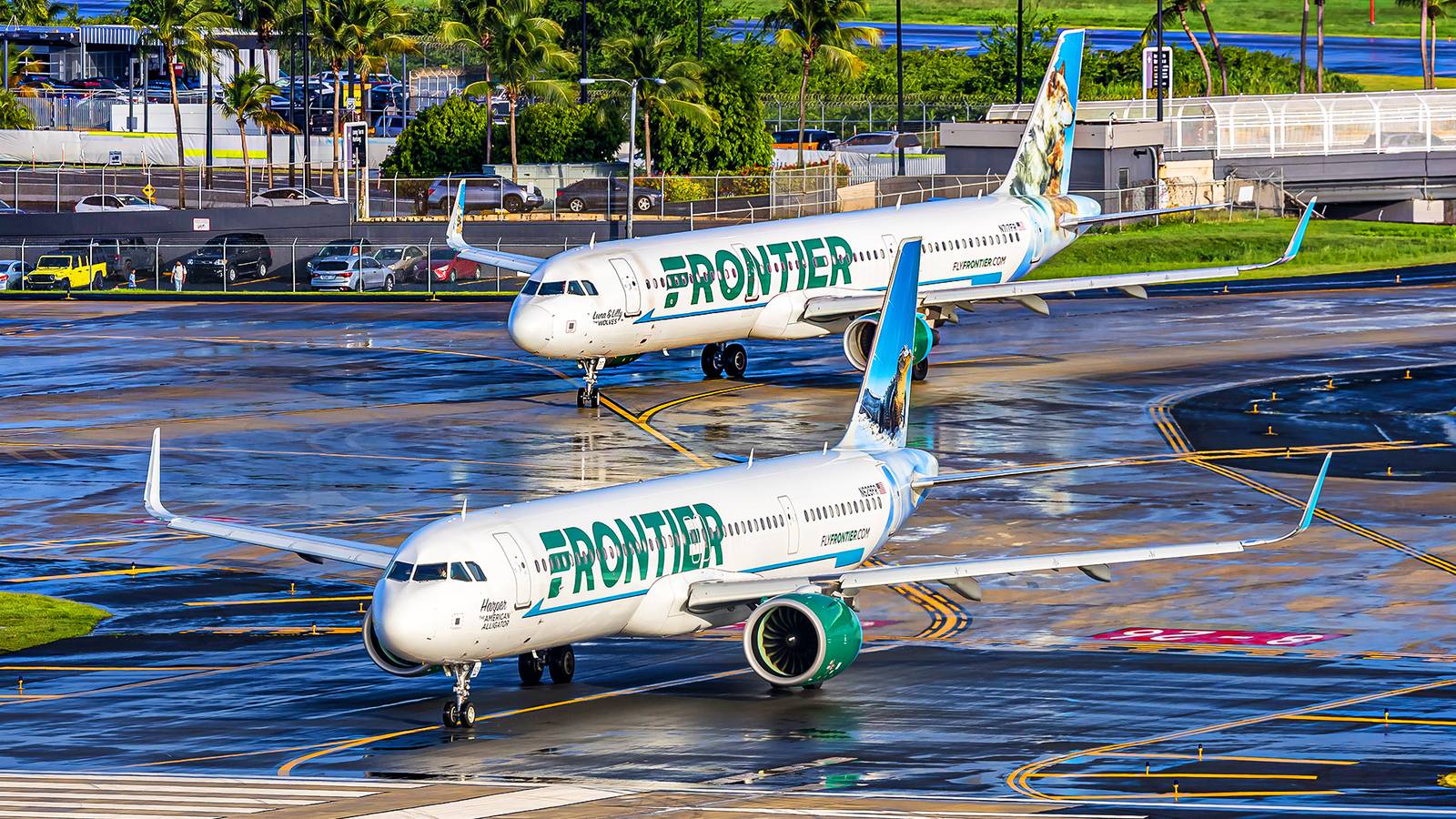


A Frontier Airlines passenger was denied boarding at Harry Reid International Airport (LAS) on Friday after the carrier switched the aircraft operating his flight to Denver International Airport (DEN), according to a report by 9NEWS. The passenger had a confirmed reservation but found himself unable to board after the aircraft change left fewer seats available than passengers booked on the service. The incident raises questions about what protections travelers have when an airline’s operational decision effectively creates an overbooked flight. More importantly, it highlights a little-known exception in US passenger-protection rules.
Being denied boarding normally brings to mind airline overbooking, where a carrier sells more tickets than an aircraft has seats and must ask passengers to volunteer before involuntarily bumping travelers. However, federal regulations distinguish conventional oversales from situations in which an airline replaces a larger aircraft with a smaller one, which was the case in this particular incident. That distinction can make a major difference to passengers because the latter situation is specifically excluded from mandatory denied-boarding compensation under certain circumstances, as stated by the Department of Transportation (DOT).
Frontier’s Aircraft Swap Changed The Situation
Aircraft substitutions are a normal part of airline operations, particularly when carriers have to respond to maintenance requirements, scheduling problems, or other operational issues. In this case, however, the change had a direct consequence for passengers because the replacement aircraft did not provide enough seats for everyone holding reservations.
For the affected traveler, the result was effectively the same as being bumped: he had bought a ticket, expected to travel, and was subsequently unable to board the flight he had booked. Yet US regulations do not necessarily treat an aircraft substitution in the same way as a traditional oversale. The DOT specifically lists the substitution of a smaller aircraft for operational or safety reasons among situations in which passengers are not eligible for involuntary denied-boarding compensation.
Why The Rules Can Leave Passengers Without Compensation
The distinction is important because conventional involuntary bumping comes with significant federal protections. When an airline oversells a flight and cannot accommodate all passengers, it must first seek volunteers willing to give up their seats. If there are not enough volunteers, the carrier can involuntarily deny boarding according to its established boarding priorities, with eligible passengers potentially entitled to compensation or being accommodated on the next flight.
According to Air Advisor, for domestic flights, qualifying “bumped” passengers who experience a sufficiently long delay upon arrival at their destination can receive compensation worth 200% or 400% of their one-way fare, subject to federal limits. The current maximums are $1,075 for a qualifying shorter delay and $2,150 for a longer delay. Those rules, however, do not automatically apply when the loss of capacity results from replacing the originally scheduled aircraft with a smaller one.
That creates an unusual situation for passengers. From their perspective, the practical outcome is identical: there is no seat available even though they hold a confirmed reservation. From a regulatory perspective, however, the reason behind the missing seat determines whether compensation is required. Thus, the Frontier incident demonstrates why passengers should ask precisely why they were denied boarding and whether the airline is classifying the incident as an oversale or an aircraft substitution.
Jim Breuer blasts American Airlines after losing his first class seat to a pilot, igniting debate over crew priority and passenger rights.
Aircraft Swaps Can Create A Difficult Passenger-Rights Gray Area
Airlines rely heavily on aircraft flexibility to keep schedules operating when something goes wrong. Substituting another aircraft can prevent an outright cancellation and allow most passengers to reach their destinations, making it an important operational tool. But when the replacement aircraft has fewer seats, the passengers left behind can find themselves bearing the consequences of a decision they had no control over. The DOT itself recognizes passengers denied boarding because of smaller-aircraft substitutions as involuntary denied boardings for reporting purposes, even though they may not qualify for compensation.
Luckily for the affected Frontier passenger, he ultimately received some compensation from Frontier after 9NEWS brought his case to light. Although the aircraft-swap rules meant he was not automatically entitled to the standard involuntary denied-boarding payment, the airline provided him with a $250 travel voucher following the dispute. That outcome is significant because it shows the difference between what an airline is legally required to provide and what it may offer a customer as a goodwill gesture.
For other travelers, the Frontier case should be a reminder that a confirmed ticket does not always guarantee compensation automatically if something changes operationally before departure. Passengers who encounter a similar situation should document the aircraft change, keep their booking and boarding information, and ask the airline to explain the reason for the denied boarding. The episode also shows why the circumstances behind an airline disruption can be just as important as the disruption itself when determining what rights a passenger has.
Orijinal Haberi Görüntüle