
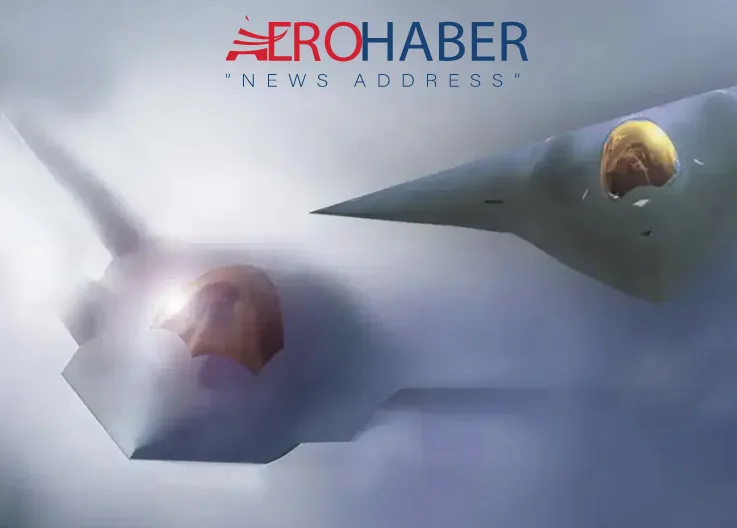


The United States’ next-generation air-superiority programme, the F-47 NGAD, is facing both technological and budgetary obstacles only a few months after its official launch. Delays in variable-cycle jet engines—set to be the first of their kind—are threatening the project’s progress toward its 2030 target.
The US Air Force’s Next-Generation Air Dominance (NGAD) programme, led by Boeing, had gained momentum in 2025 with the goal of producing the world’s first sixth-generation fighter aircraft. However, the programme has entered a critical phase, particularly due to delays in the variable-cycle engines developed under the Next Generation Adaptive Propulsion (NGAP) initiative.
Although Boeing formally signed the contract in March 2025 and the first prototype has begun production, the most optimistic estimate for the F-47’s maiden flight points to the end of 2028.
Variable-Cycle Engine Programme Falls Behind
Development of the next-generation engines at the heart of NGAD is directly influencing the programme’s timeline. GE Aerospace’s XA102 model and Pratt & Whitney’s XA103 engine are not progressing at the planned pace due to supply chain issues.
These engines utilise a third cooled airflow channel capable of dynamically adjusting the airflow according to the mission profile.
Thanks to this technology, the following is targeted:
- up to double the range in low-consumption mode,
- supersonic cruise above Mach 2 in high-flow mode,
- a combination of low fuel consumption and high thrust.
However, the US Air Force reports that the engine programme may officially be delayed by two years.
Similar to developments in NASA’s Commercial Crew Program, the American aerospace industry has still not returned to full production capacity in the post-pandemic era.
China’s Rapid Development Pressure: J-36, J-50 and H-20 Prototypes
Analyses from sources such as the National Security Journal indicate that the F-47 programme could fall four years behind China’s pace.
In recent years, the People’s Liberation Army Air Force has achieved an impressive prototyping speed:
- J-36 and J-50/XD sixth-generation prototypes,
- H-20 stealth bomber,
platforms resembling the US CCA unmanned systems.
While the US 5th-generation F-22 programme entered production after 15 years, China’s J-20 reached service in only six years—forming the basis of such comparisons.
Conflict Between NGAD and the Navy’s F/A-XX Programme
The Department of Defense believes that the Air Force’s F-47 programme and the Navy’s separate F/A-XX sixth-generation fighter initiative are straining the same industrial base.
The Pentagon temporarily paused the NGAD contract in mid-2024 and initiated a review due to cost pressures. The unit cost is projected to be around 300 million dollars.
GE Aerospace CEO Lawrence Culp made the following call to the Pentagon regarding the F/A-XX:
“We’re ready to encourage the Pentagon to take action to ensure progress in this critical programme funded by Congress.”
Due to the overlapping technology requirements of both programmes, delays in one could hinder the other.
US Defence Industry Struggling with Constraints
The US aerospace sector has not regained full capacity since the pandemic. Added to this are large-scale quality control problems affecting Boeing’s commercial and defence programmes:
- the 737 MAX crashes and global grounding,
- the years-long delay of the Boeing 777X,
- billions of dollars lost in the new Air Force One programme,
- the strike at the St. Louis facilities.
These factors are exerting indirect pressure on F-47 NGAD production planning.
Information Security Crisis in the US–China Rivalry
A series of espionage cases indicate that China’s advancements may involve the illicit acquisition of sensitive information.
Notable examples include:
- a Northrop Grumman engineer receiving a 32-year prison sentence for leaking B-2 data to China,
- a former US Navy pilot prosecuted for providing training to Chinese pilots.
Despite all challenges, the United States remains the world’s leading innovation hub in defence aviation. However, NGAD must progress cautiously, reviewing each step to avoid the mistakes made in the F-35, F-22 and B-2 programmes.
Critical Thresholds for the F-47 Programme
Despite all obstacles, the US sixth-generation fighter jet project continues. It is still too early for definitive results; however, the biggest determining factor for both the Pentagon and Boeing will be the success of the NGAP engine programme.
As the air-power competition between the US and China rapidly intensifies, the fate of the F-47 will become clearer in the coming months.