


The idea of reducing commercial aircraft flight decks from two pilots to one has been discussed for decades, but it has always existed in a narrow space between technological ambition and regulatory caution. For Airbus, major airlines, and European research partners, the early 2020s appeared to mark a turning point. Projects exploring extended minimum crew operations and single-pilot cruise concepts were gaining visibility, supported by advances in automation, cockpit systems, and remote monitoring technologies. What once sounded experimental was gradually being framed as a plausible efficiency upgrade for future aircraft generations.
That trajectory has now been sharply interrupted in the United States. A federal aviation law signed in February 2026 requires that every commercial flight operate with a minimum of two qualified, fully rested pilots on the flight deck. In doing so, it transforms what had been regulatory practice into a binding statute and removes any legal pathway toward single-pilot certification in US commercial aviation. The effect is immediate and broad, closing the door not only on full single-pilot operations but also on intermediate concepts such as one-pilot cruise phases supported by automation.
The implications extend well beyond US borders. Airbus initiatives such as Project Connect with Cathay Pacific, Lufthansa-led feasibility trials, and the European ACROSS research program were all premised on incremental movement toward reduced-crew operations. At the same time, the European Union Aviation Safety Agency (EASA) concluded in 2025 that current technology cannot guarantee safety equivalent to a two-pilot cockpit and paused related research efforts. The law now aligns the world’s two largest aviation safety regimes on a conservative baseline, effectively resetting expectations for cockpit design for the foreseeable future.
How The Single-Pilot Concept Moved From Theory To Near-Certification
The push toward reduced-crew and single-pilot operations did not emerge as a radical redesign of commercial aviation, but as a cost and efficiency response to structural pressures facing airlines. Rising pilot demand, increasing training bottlenecks, and long-term labor shortages created incentives for manufacturers and operators to explore ways to reduce cockpit staffing without compromising safety. Within this context, the concept of extended minimum crew operations (eMCO) gained traction as a transitional step, where one pilot would rest during cruise phases while automation and ground support systems maintained flight stability.
More ambitious proposals followed. Single-pilot operations (SiPO), in which one pilot would manage all phases of flight with varying degrees of automated or remote assistance, became the long-term theoretical endpoint of this design path. Airbus, alongside airline partners such as Cathay Pacific, explored these concepts through research programs that examined cockpit workload distribution, automation reliability, and human-machine-interface design. In parallel, European initiatives and airline feasibility studies at Lufthansa examined whether future airliners could safely reduce cockpit crew requirements under controlled conditions.
However, even as technical studies advanced, the operational reality remained more complex. Safety analysis consistently highlighted the difficulty of replicating the redundancy of a two-pilot cockpit. Aviation data from European authorities recorded hundreds of pilot incapacitation events between 2019 and 2024, underscoring that medical emergencies in the cockpit are not theoretical scenarios but recurring operational risks. In a dual-pilot system, such events are managed through immediate role substitution, workload redistribution, and coordinated decision-making. In a single-pilot model, even with automation support, the loss of a pilot introduces a level of risk that regulators have struggled to fully mitigate.
As a result, what began as an efficiency-driven concept increasingly became a regulatory debate centered on acceptable risk thresholds rather than technological feasibility alone. While manufacturers focused on improving automation reliability, pilot associations emphasized real-world scenarios where human redundancy proved decisive in preventing accidents. Public opinion data further reinforced this conservative stance, with 81% of people surveyed indicating strong support for maintaining two-pilot crews across commercial aviation operations.
February 2026 Law And What It Actually Mandates
The turning point in the single-pilot debate came with a federal aviation law signed in February 2026 that removes ambiguity from cockpit crew requirements in the United States. Instead of leaving crew composition primarily to Federal Aviation Administration (FAA) regulatory interpretation, the statute establishes a clear legal baseline that every commercial passenger flight must operate with a minimum of two qualified and fully-rested pilots on the flight deck at all times. In practice, this elevates what had long been standard operational policy into binding federal law, eliminating flexibility for future certification pathways that might have allowed reduced-crew configurations.
Under previous frameworks, concepts such as extended minimum crew operations (eMCO), where one pilot would rest during cruise while automation and monitoring systems assumed part of the workload, remained theoretically certifiable if safety cases could be demonstrated. The new legal language effectively removes that possibility in the US market by requiring continuous dual-pilot presence across all phases of flight, including cruise segments that were previously considered candidates for automation-supported reduction.
Equally important is what the law blocks indirectly. Single-pilot operations (SiPO), which represent the most advanced theoretical endpoint of cockpit automation research, are no longer a certifiable category for US commercial airlines under any foreseeable regulatory interpretation. This closes off a development pathway that manufacturers had been exploring in parallel with incremental automation upgrades. Programs designed around reduced human workload in cruise phases, ground-based monitoring, and advanced flight envelope protection systems now lack a viable certification destination in the American market, regardless of technological maturity.
Industry reactions to the legislation have largely focused on its scope rather than its intent. By codifying a minimum two-pilot requirement, the United States has effectively removed reduced-crew configurations from commercial consideration, even as experimental and research programs continue in other jurisdictions. The decision also places the US in alignment with the most conservative interpretation of cockpit safety standards rather than a transitional one, signaling that future innovation will need to occur within a dual-crew framework rather than through its reduction.
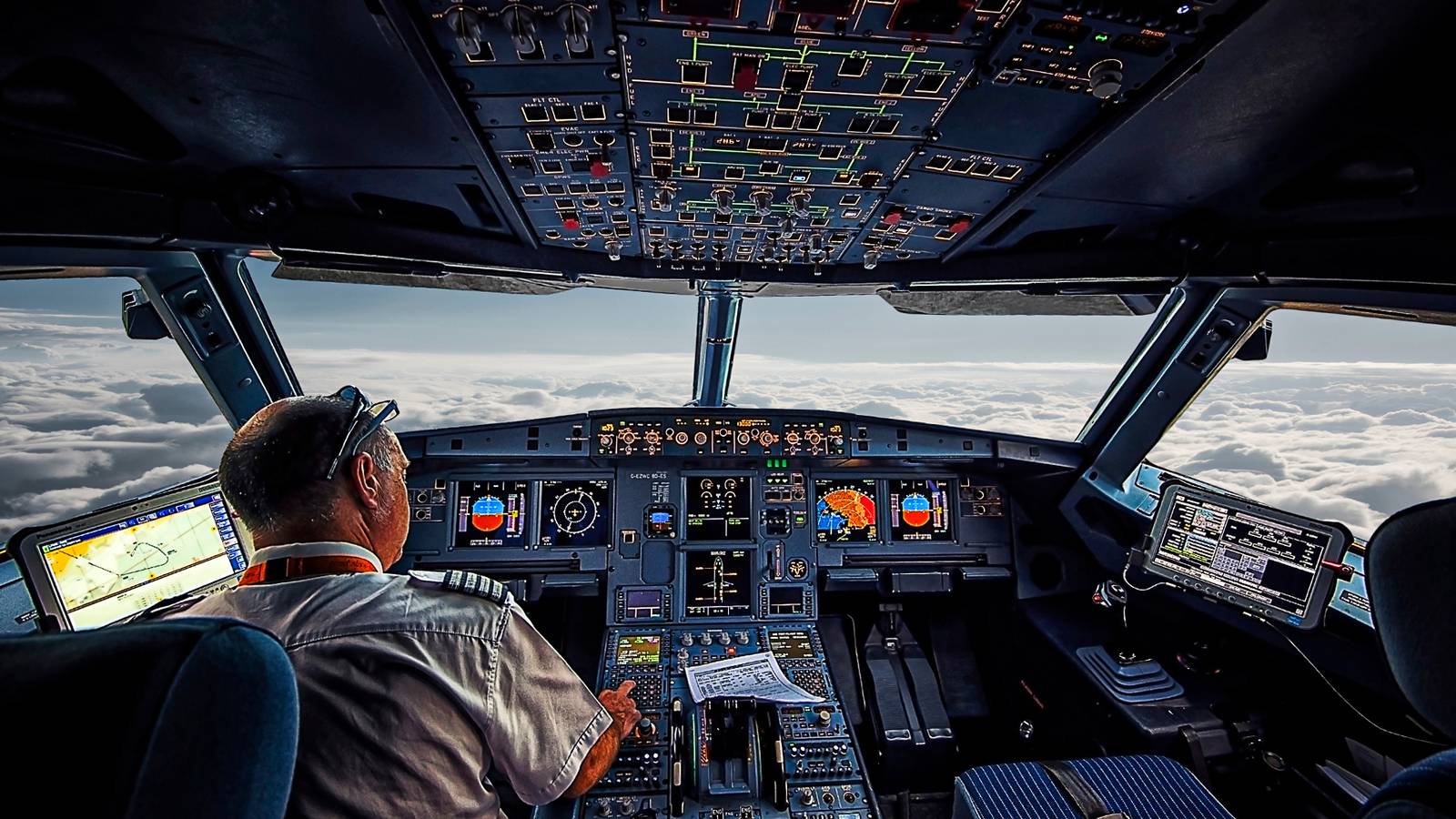
Modern airliners are incredibly automated, but pilots remain fully responsible for every decision during a flight. What do they actually do?
Why Regulators Rejected Safety Equivalence For Single-Pilot Operations
The legislative outcome in the United States did not occur in isolation. It reflects a broader regulatory convergence driven by safety assessments conducted over several years in both North America and Europe. At the core of the issue is the fundamental question of whether automation and remote assistance systems can reliably replicate the redundancy provided by a second human pilot in all operational scenarios, including rare but high-consequence events. European regulators had already moved toward a cautious position prior to the decision. In 2025, EASA concluded that current technology could not guarantee an equivalent level of safety to a two-pilot cockpit and subsequently paused research into single-pilot operations. This conclusion followed extensive evaluation of system reliability, human factors, and failure mode scenarios, particularly those involving pilot incapacitation during flight.
A key concern in these assessments has been the frequency and unpredictability of pilot incapacitation events. Data from European aviation safety monitoring recorded 287 such incidents between 2019 and 2024, averaging roughly one event every six to seven days. While most incidents do not result in catastrophic outcomes under a two-pilot system, they highlight the operational reality that cockpit redundancy is not theoretical but regularly relied upon. In a single-pilot environment, even with automated flight management systems and ground-based oversight, such events would present a fundamentally different risk profile.
Human factors analysis has reinforced these concerns. Aviation remains a domain where workload is uneven and situational awareness can shift rapidly, particularly during abnormal operations such as weather deviations, system failures, or air traffic conflicts. The presence of a second pilot provides not only redundancy in task execution but also continuous cross-checking of decisions under stress. The US law, therefore, reflects not a rejection of automation, but a determination that automation must remain an assistive layer rather than a structural replacement for human crew pairing.
The most immediate impact of the February 2026 US law is not theoretical but programmatic, as it effectively removes regulatory viability from several high-profile industry initiatives that were built around reduced-crew or single-pilot concepts. While none of these programs had reached full commercial certification, they represented structured pathways toward incremental automation in the cockpit, each assuming that regulatory frameworks would eventually accommodate a shift away from mandatory two-pilot operations.
Among the most affected efforts is Airbus’ work with Cathay Pacific under its Project Connect initiative. The program explored how advanced automation, ground support integration, and cockpit workload redistribution could enable extended minimum crew operations during cruise phases. The intent was not to eliminate the second pilot entirely, but to reduce active cockpit presence during portions of flight where automation reliability was considered highest. With US law now mandating continuous dual-pilot presence, any certification pathway that depends on reduced in-flight staffing becomes incompatible with the largest commercial aviation market.
Similarly, Lufthansa-linked trials examining cockpit workload reduction face a structural barrier. These studies were designed to evaluate how far automation and ground-based monitoring could safely extend pilot rest periods without compromising situational awareness or response time during abnormal operations. The US decision effectively removes the incentive for global standardization around such models, since aircraft certified or operated under reduced-crew assumptions would still need to meet stricter dual-crew requirements to access US routes.
The European ACROSS research project is also indirectly constrained. Its long-term relevance depended on establishing a pathway toward harmonized international certification standards for reduced-crew operations. Aviation certification is globally interconnected, and divergence between major regulatory regions often determines whether a concept scales commercially. With the United States now codifying a strict two-pilot requirement, the likelihood of global alignment around single-pilot certification diminishes significantly, reducing the commercial rationale for continued investment in that direction. What makes this shift particularly consequential is that these programs were not fringe experiments. They represented coordinated efforts between manufacturers, airlines, and regulators to explore a staged transition toward higher automation in the cockpit.
Autopilot systems are a 100-year-old technology, but they are still making significant advances in modern commercial aircraft.
The trajectory of cockpit innovation is shifting away from crew reduction and toward workload optimization. Instead of designing systems to remove one pilot from the cockpit, manufacturers are increasingly focused on enhancing decision support, reducing fatigue, and improving coordination efficiency between pilots. This includes advances in predictive monitoring, automation-assisted checklist management, and improved human-machine-interface design that supports shared situational awareness rather than replacing human redundancy.
From an aircraft design perspective, this alignment reinforces the idea that future flight decks will evolve around collaboration between humans and automation rather than substitution. Even as artificial intelligence and autonomous systems become more capable, their role is increasingly defined as augmenting pilot performance rather than assuming control of critical flight phases independently. The broader implication is that commercial aviation has likely reached a long-term plateau in crew reduction ambitions. While efficiency gains will continue through automation, avionics integration, and operational optimization, the foundational requirement for two pilots appears set to remain a defining characteristic of airline operations.
The most lasting effect of the 2026 US law is not simply the preservation of two-pilot crews, but the creation of a structural ceiling on cockpit automation ambitions. By removing any certifiable pathway toward single-pilot operations, regulators have redirected innovation away from crew elimination and toward enhancing human performance within a fixed two-person framework. In practical terms, this means future breakthroughs in avionics and automation will be judged not by how many pilots they can replace, but by how effectively they can strengthen decision-making, coordination, and resilience inside an unchanged cockpit structure.
Found an error? Send it info@simpleflying.com so it can be corrected.
Orijinal Haberi Görüntüle