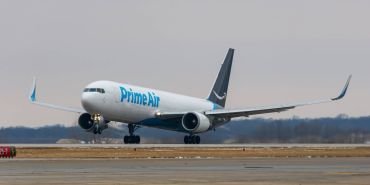

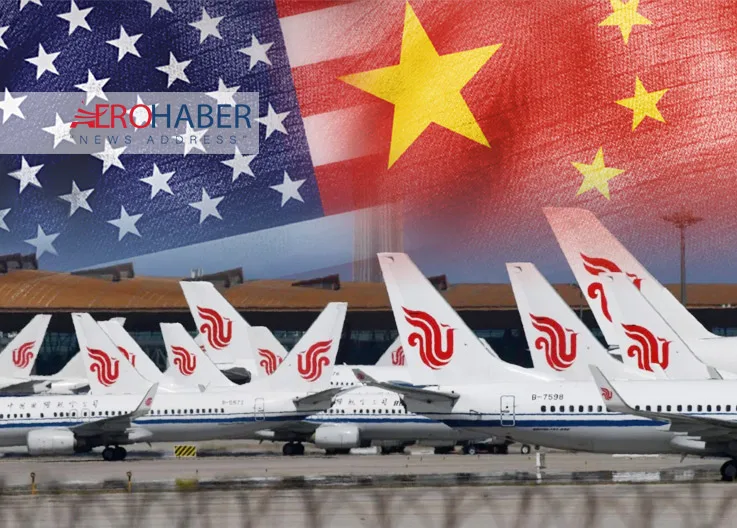


The U.S. administration has proposed banning Chinese airlines from operating flights to and from the United States via Russian airspace. Washington stated that this practice places American airlines at a competitive disadvantage.
This move came shortly after Beijing tightened export controls on rare earth elements critical to U.S. industries. According to experts, the decision could further escalate the trade war between the world’s two largest economies.
Focus on “Unfair Competition”
The U.S. Department of Transportation said on Thursday that Chinese airlines’ continued use of Russian airspace creates “unfair competitive conditions.”
“The current situation is having significant adverse competitive effects on U.S. air carriers,” the statement read.
The Department added that the proposed restrictions would apply only to passenger flights, excluding cargo operations.
Airspace Crisis Following the Russia-Ukraine War
In retaliation for the U.S. ban on Russian aircraft entering its airspace after Russia’s invasion of Ukraine in March 2022, Moscow prohibited American and other Western carriers from flying through Russian airspace.
However, Chinese airlines were exempted from this restriction. As a result, they have enjoyed shorter flight times, lower fuel consumption, and reduced costs—advantages that have helped them increase their market share on international routes.
Affected Airlines and China’s First Reaction
The decision is expected to affect carriers such as Air China (601111.SS), China Eastern (600115.SS), China Southern (600029.SS), and Xiamen Airlines.
Hong Kong-based Cathay Pacific (0293.HK), however, has been excluded from the measure.
A spokesperson for China’s Ministry of Foreign Affairs criticised Washington’s move, saying that the restrictions “negatively impact people-to-people exchanges and the development of civil aviation.”
According to Flightradar24 data, Cathay Pacific flights from New York to Hong Kong are still using Russian airspace.
Stock Declines and Aviation Turmoil
Shares of China’s three major mainland airlines fell on Friday following the announcement.
China Southern recorded the sharpest drop at 1.3%, while Air China fell 1.26% and China Eastern 0.95%.
All three state-backed airlines have reported losses for five consecutive years since the COVID-19 pandemic.
Boeing and Trade Tensions
The tensions are not limited to airspace. U.S. aircraft manufacturer Boeing (BA.N) is reportedly in talks to sell up to 500 jets to China as it seeks to revive sales stalled by U.S.-China trade friction.
However, the current political climate is hindering progress on these deals.
U.S. President Donald Trump and Chinese President Xi Jinping are expected to meet face-to-face in South Korea at the end of October. It remains to be seen whether the meeting will mark a turning point for aviation and trade relations.
Flight Quotas and the Post-Pandemic Landscape
The U.S. Department of Transportation has given Chinese carriers two days to respond to the proposal. The final decision is expected to take effect in November.
Last year, the Department allowed Chinese passenger airlines to increase their weekly U.S. flights to 50 but refused further expansion after pressure from U.S. labour unions.
Before COVID-19, there were more than 150 round-trip flights per week between the two countries.
Some U.S. airlines say the ban on using Russian airspace has made direct flights from the East Coast to China economically unsustainable.
Due to longer flight times, some companies have been forced to reduce seat capacity and limit cargo loads.