

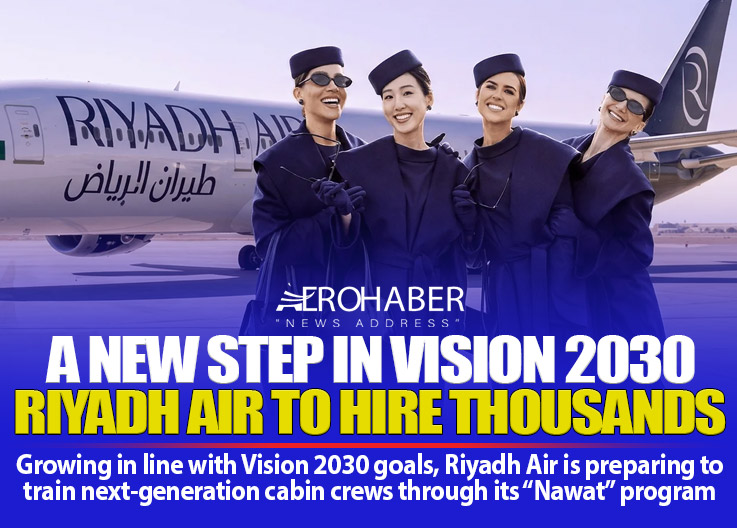


As part of the Vision 2030 goals, Riyadh Air aims to bring thousands of Saudi citizens into the aviation industry through the “Nawat Cabin Crew Program” it has launched. The program offers a wide range of career opportunities, from cabin crew positions to pilot training.
Saudi Arabia’s next-generation airline Riyadh Air has launched a remarkable human resources initiative as part of its rapid growth plans. Through the new training initiative called the “Nawat Cabin Crew Program,” the company aims to introduce thousands of Saudi citizens to the aviation industry in the coming years.
The Public Investment Fund (PIF)-backed airline announced that the program aims not only to train cabin crew members but also to establish a long-term talent ecosystem that will support Saudi Arabia’s global aviation vision.
Riyadh Air invests in human resources for global growth
Aiming to connect Saudi Arabia to more than 100 destinations worldwide by 2030, Riyadh Air is expanding its workforce structure in parallel with the growth of its operations.
According to the company, the Nawat program will become one of the key components of the Vision 2030 target to create more than 200,000 direct and indirect jobs.
Nahar Al-Jahani, Senior Vice President of People and Culture at Riyadh Air, emphasized that the program is not merely a training project but also an extension of the national transformation vision.
Al-Jahani stated that the program will provide young Saudis with world-class experience and play a critical role in building the Saudi airline brand of the future.
A new-generation hospitality model with the “Lavender Thread” philosophy
One of Riyadh Air’s most striking approaches is placing cultural identity at the center of its cabin services.
The company announced that cabin crews will be trained in line with a special service philosophy called the “Lavender Thread.” This approach aims to combine traditional Saudi hospitality with global aviation standards.
Riyadh Air management states that the new cabin crews will be positioned not only as flight attendants but also as global representatives of Saudi Arabia.
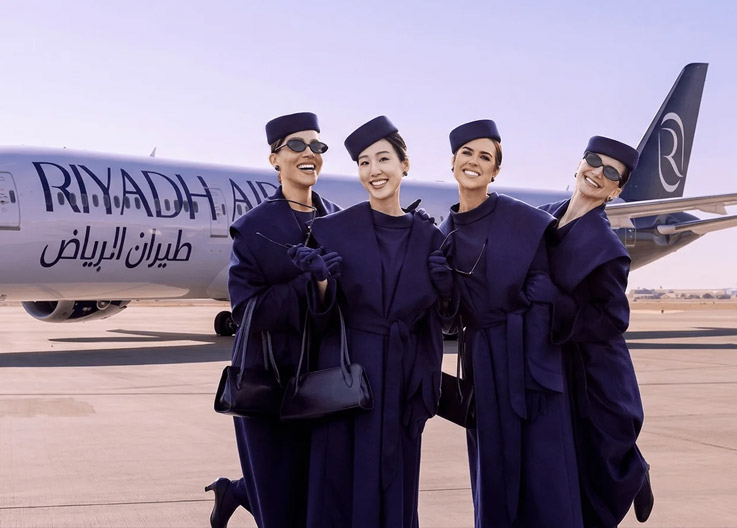
The program is not limited to cabin crew positions
According to information provided by the company, the Nawat program will eventually evolve into a broader aviation talent platform in the long term.
Within this scope:
- bringing Saudi women engineers into the aircraft maintenance sector,
- mechanical and avionics engineering scholarship programs,
- cadet pilot training projects,
- corporate rotation programs for university graduates, and many other initiatives will also become part of Riyadh Air’s human resources strategy.
The emphasis on the first maintenance program aimed at employing female engineers particularly demonstrates Saudi Arabia’s efforts to accelerate the social transformation of its aviation sector as well.
An intensive eight-month training program will be provided
Developed in cooperation with Bunyan for Training Co., the program was announced to include an intensive eight-month training process.
The curriculum will include areas such as:
- flight safety,
- technical operations knowledge,
- language proficiency,
- professional service standards,
- international aviation requirements.
Applications are open to Saudi citizens over the age of 21, and the first group is planned to begin training in August.
Why is Riyadh Air so important?
In recent years, Saudi Arabia has positioned aviation not merely as a transportation sector but as one of the strategic drivers of economic transformation.
For this reason, Riyadh Air is seen not only as a new airline but also as a carrier of the country’s tourism, logistics, technology, and global connectivity ambitions.
Massive aircraft orders, aggressive growth plans, and investments in human resources are fueling commentary that Riyadh Air could reshape the competitive balance in the Gulf region in the long term.
In particular, it is considered that competing with regional giants such as Emirates, Qatar Airways, and Etihad Airways will require not only a modern aircraft fleet but also the establishment of a strong service culture.