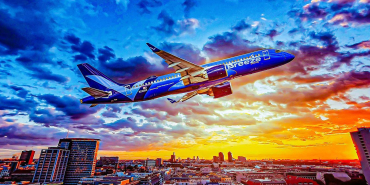

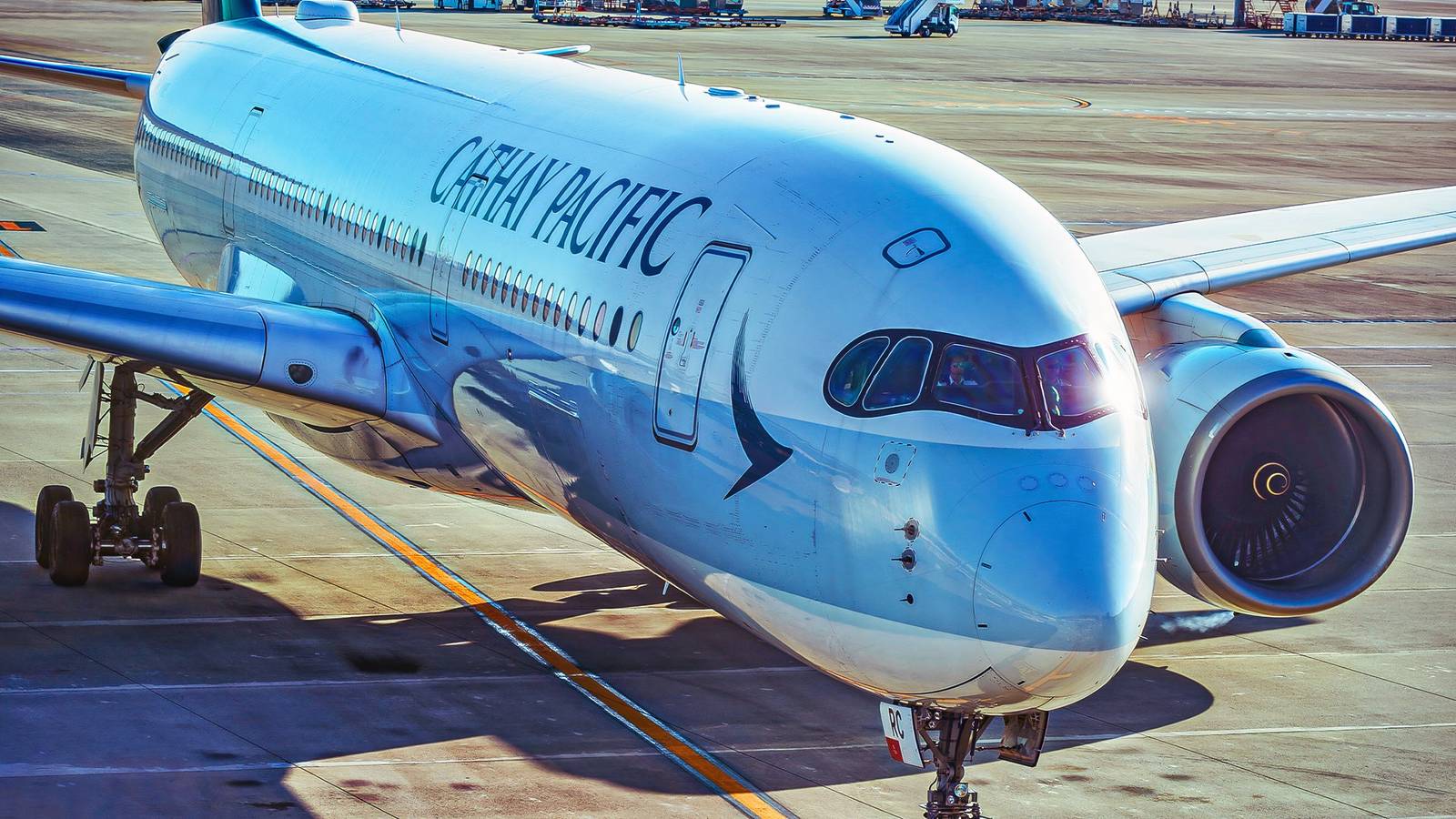


Cathay Pacific is one of only a few carriers to operate both the Airbus A350-900 and A350-1000. Ch-aviation shows that the oneworld member has 48 A350s, comprising 30 280-seat -900s and 18 334-seat -1000s. Averaging 7.8 years, neither variant has first class.
Registered B-LRA, the first frame was delivered to Hong Kong International Airport (HKG) in May 2016. It was the 29th A350 off the production line. OAG data indicates that the aircraft entered service on June 1, 2016, from HKG to both Manila and Taipei. Obviously, these routes are many times too short to be included in this article.
The maximum block or scheduled time was used to determine Cathay’s longest A350 services. This was based on operating at any point during Q3 2026 (July to September), when airlines usually make the most money or lose the least. It applies to nonstop and one-stop flights. This analysis follows the recent look at Delta’s new longest links, on which the A350 is exclusively deployed, as well as Qatar Airways’ longest services on the type.
Reflecting slot possession, block time is what is shown in booking engines, in schedules, and so on. It includes taxiing at both ends of a route, the flight time, and a period for short delays. If a specific flight was only based on the typical flight time, without adding the other elements, it’d always be late. It is measured as chocks-off-to-chocks-on, or stand-to-stand or gate-to-gate.
As the following table shows, the entry with the lowest maximum block time is HKG to Paris CDG, which is timed at up to 13 hours and 50 minutes. As usual with such analysis, multiple other routes were close to being included. For example, flights from HKG to Amsterdam and Brussels are up to 13 hours and 40 minutes in the examined peak summer, while Munich, Johannesburg, Rome, and Zurich are all between 13 hours and 13 hours and 20 minutes. Had the analysis been conducted on winter operations, more North American markets would have featured.
Dallas/Fort Worth International Airport (DFW) back to HKG
Daily A350-1000 (A350-900 on July 7 only); route started in April 2025
Four weekly A350-900 and A350-1000 (A350-1000 on some flights from September)
Daily A350-900 in July/August (then the 777-300ER)
Five weekly A350-900 (route returned earlier this year)
** Equipment or frequency may change at other times
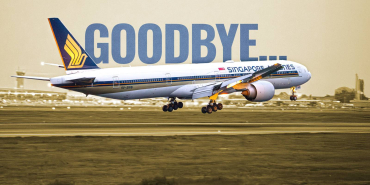
This very long passenger service materialized in April 2025. 16 months on, flights remain served daily, with the 334-seat A350-1000 scheduled throughout the peak summer. When all equipment is included, the maximum block time of 17 hours and 15 minutes means it is Cathay’s longest passenger route. While not a like-for-like comparison, it is two hours short of Singapore Airlines’ longest nonstop A350 service, but that’s only because that airline deploys the A350-900ULR.
DFW to HKG is the definition of a oneworld route. Cathay’s arrival last year came after close partner American Airlines served the route between 2014 and 2020. According to the US Department of Transportation (DOT) for the first 12 months of operating, Cathay transported 176,920 round-trip passengers and filled 91.0% of seats.
See which notable examples made the list this week!
The 91.0% load factor looks very impressive. Of course, it is always about how the load was achieved, including the fares needed to achieve that result. This information for the airline is unavailable. However, when all carriers, cabins, and passengers are included, booking data shows that HKG-DFW had the second-highest average HKG-US fare for all airport pairs with 30,000+ round-trip local passengers.
Given Cathay’s the only operator, it probably also gets a good price premium for the convenience of flying nonstop. However, booking passenger data suggests that only one in ten passengers were local. The remaining 90% of passengers (~159,000) connected to another Cathay flight in HKG or to an American flight in DFW or transited at both hubs. That’s a higher proportion than for many US routes operated by the Gulf carriers Emirates, Etihad Airways, and Qatar Airways.
The problem is that connecting passengers (technically sixth-freedom traffic) is lower-yielding and more expensive than local traffic. This is why it could be problematic if a flight is massively full of such passengers. Of those who did transfer, just over half did so at DFW; the HKG route would not exist but for the relationship with American. Of those who began or ended their journey in Dallas and connected to another flight in HKG, mainland China, Vietnam, India, Thailand, and the Philippines were the most popular countries. They are not usually known for high fares.
Orijinal Haberi Görüntüle