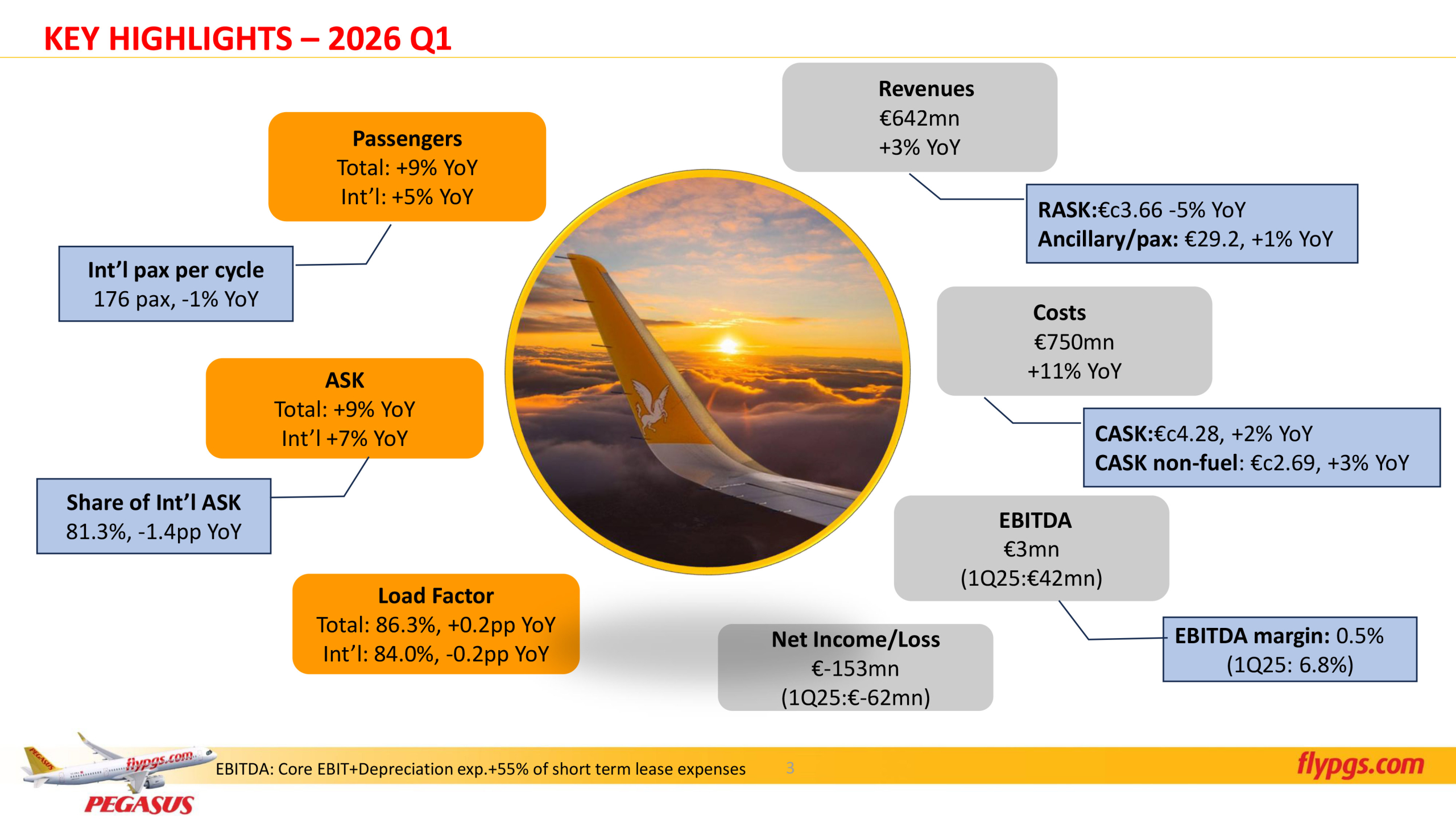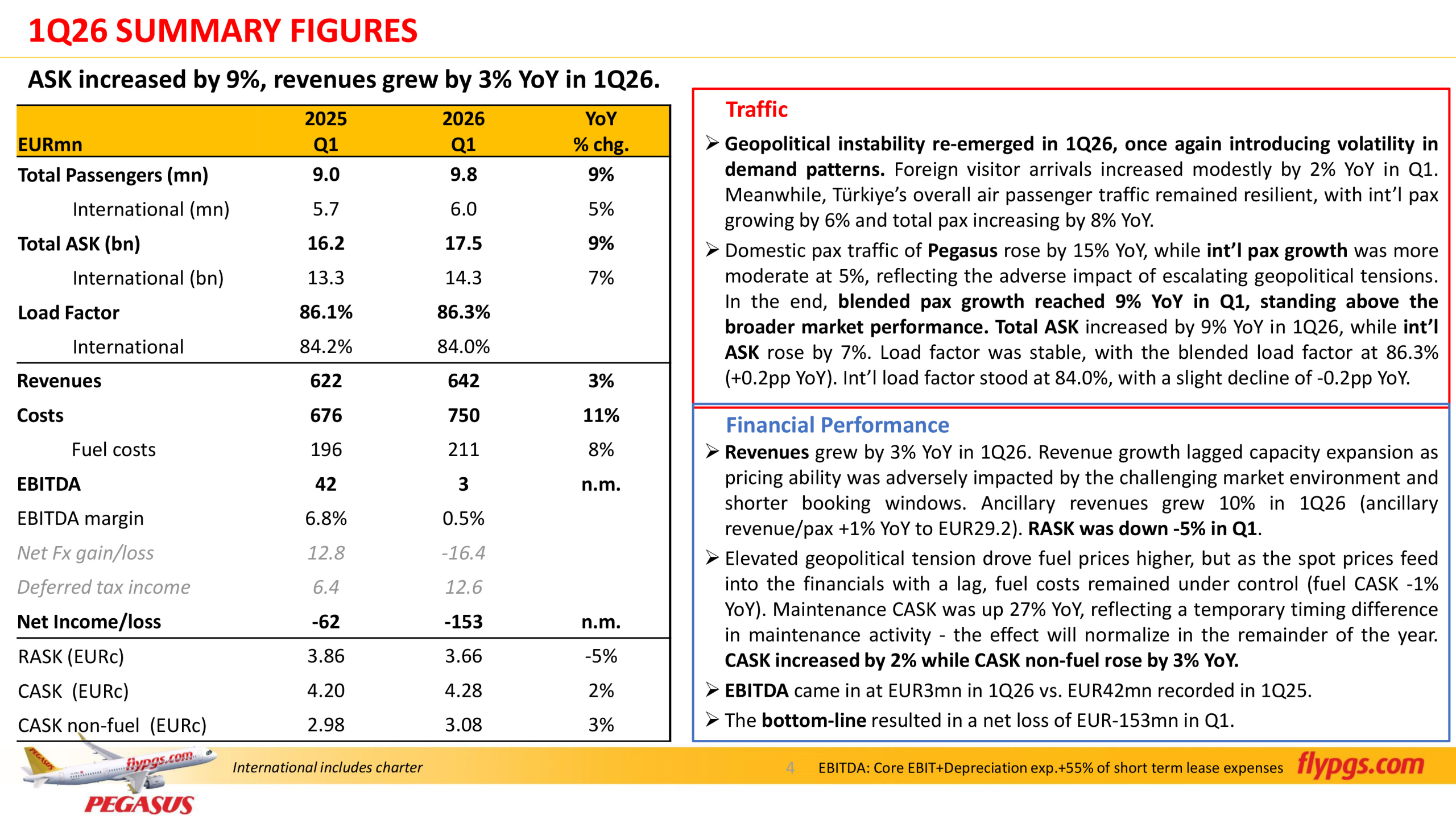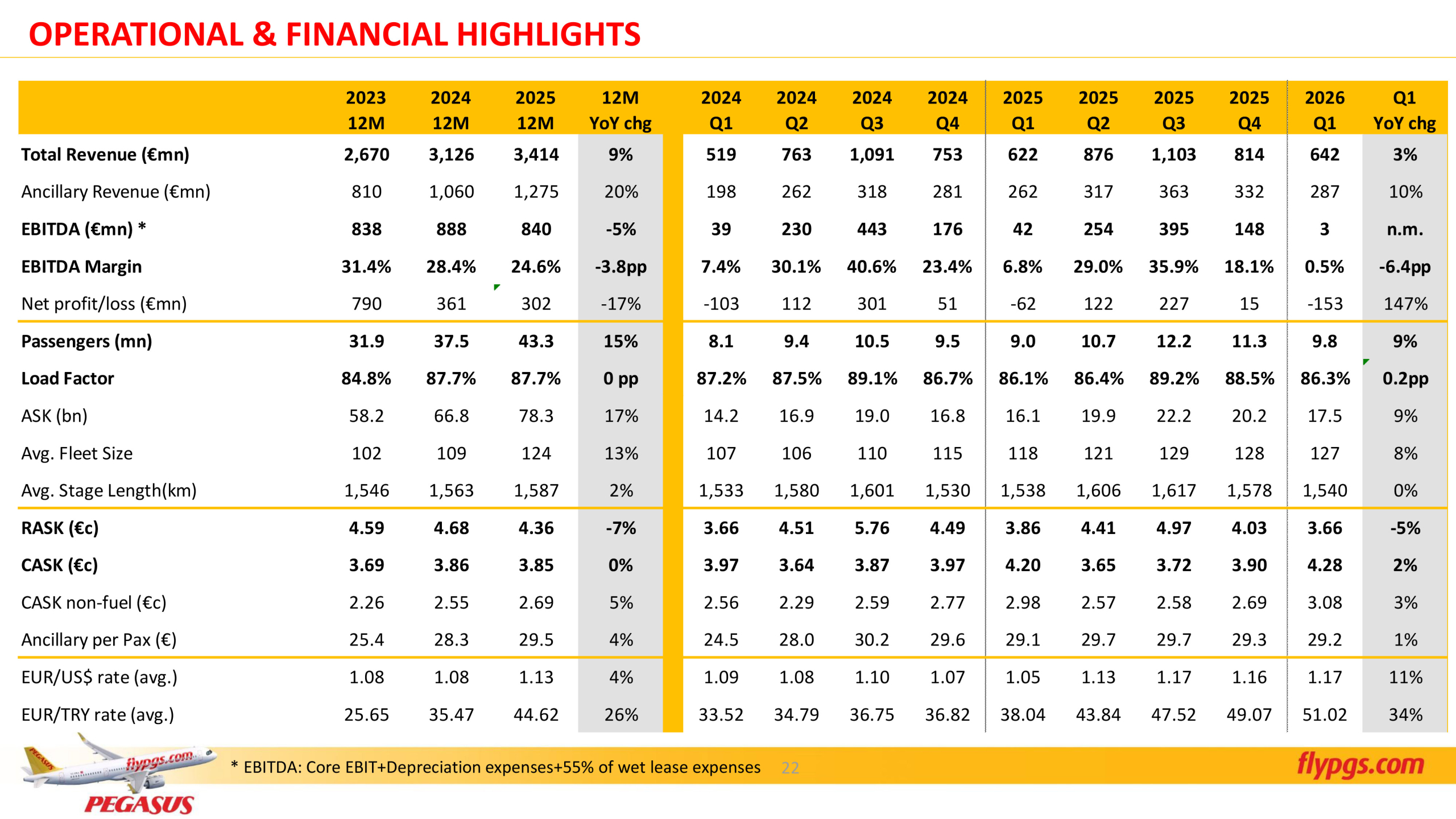

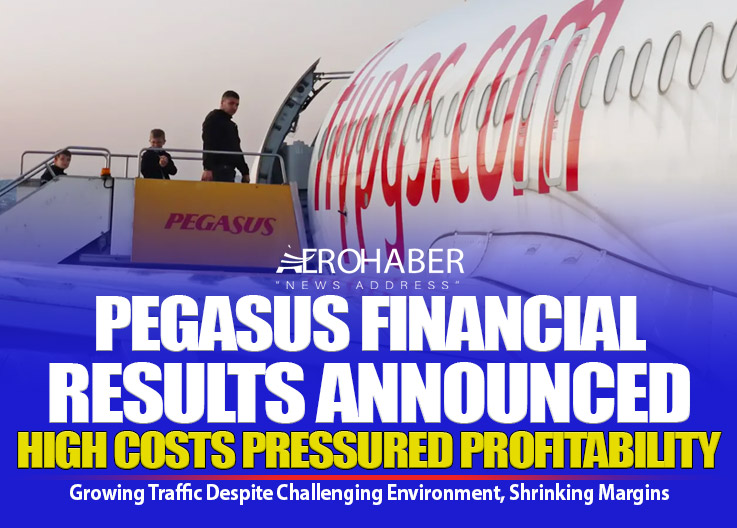


In Pegasus Airlines’ Q1 2026 financial results, revenues increased to €642 million, while net loss reached €153 million. Passenger traffic increased, while cost pressure and EBITDA decline stood out. Details regarding the fleet and Middle East operations are in our report.
Pegasus Airlines achieved a limited increase in revenue in the first quarter of 2026, while profitability indicators failed to progress at the same pace. Demand fluctuated due to global geopolitical tensions, weakening pricing power, while the company’s operational scale continued to grow.
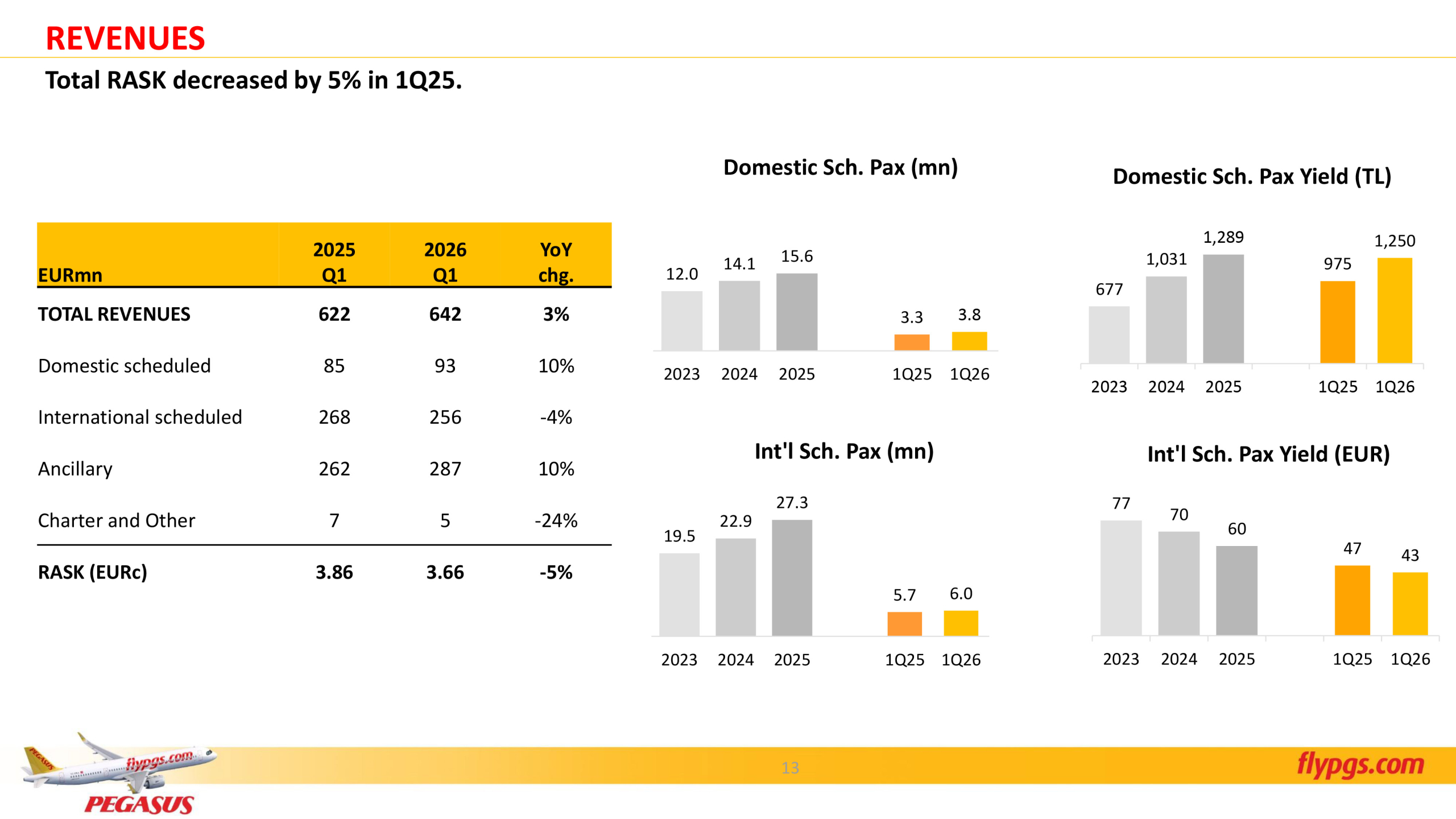
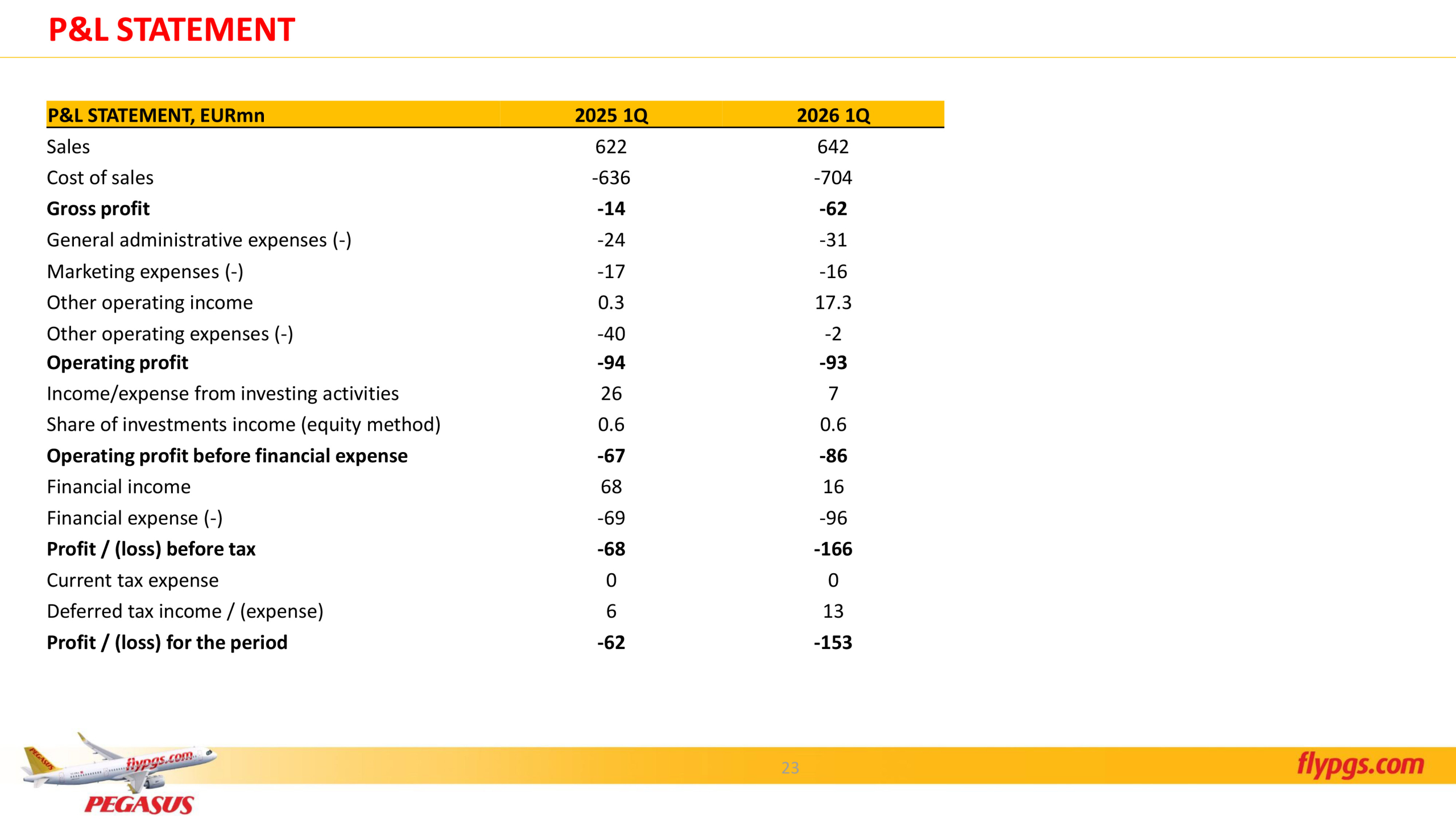
Sales revenues increased to €642 million. On the other hand, the rising cost structure, particularly increases in maintenance and personnel expenses, created pressure on financial results.
Passenger Traffic Growing, Load Factor Remains Strong
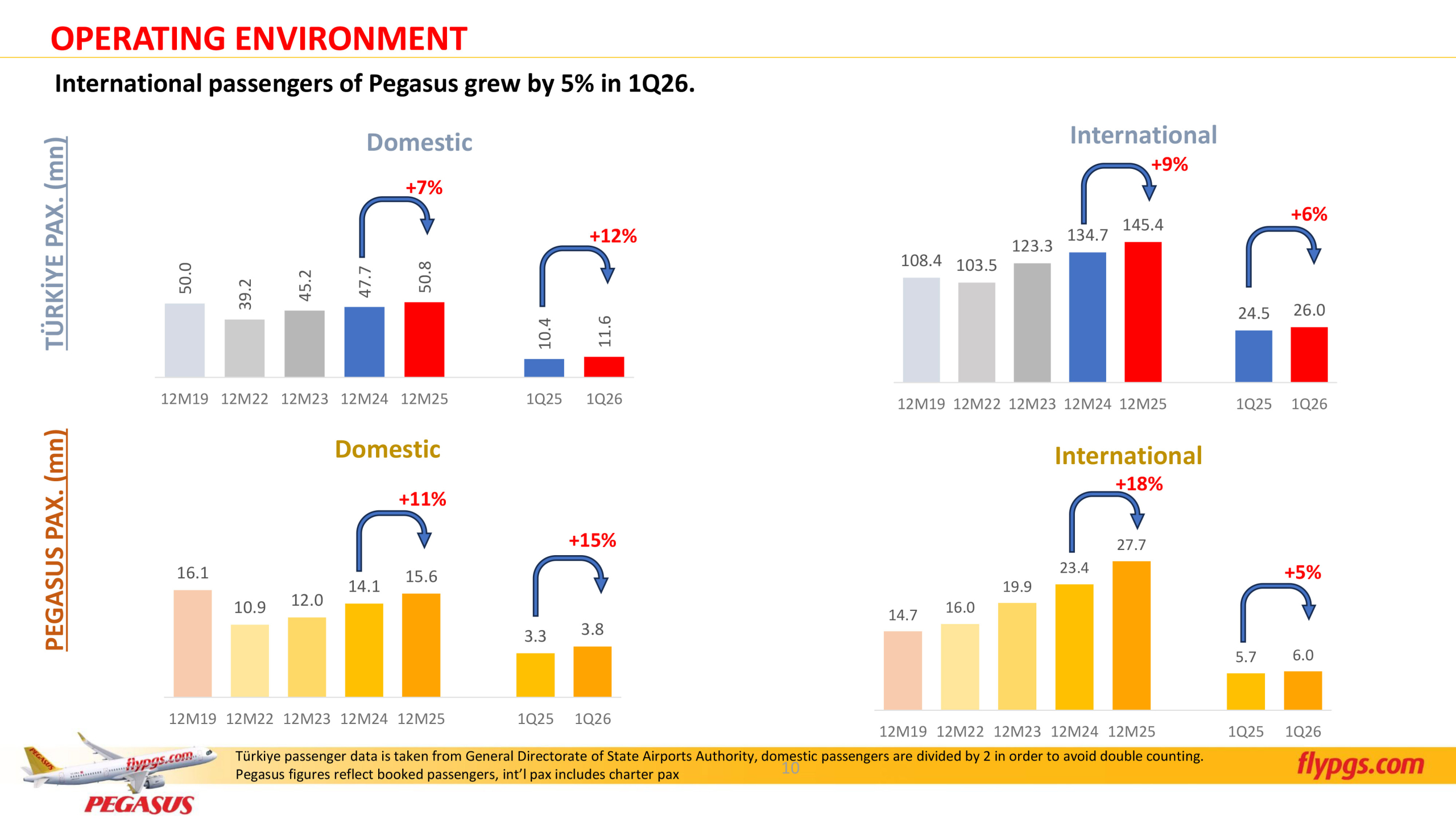
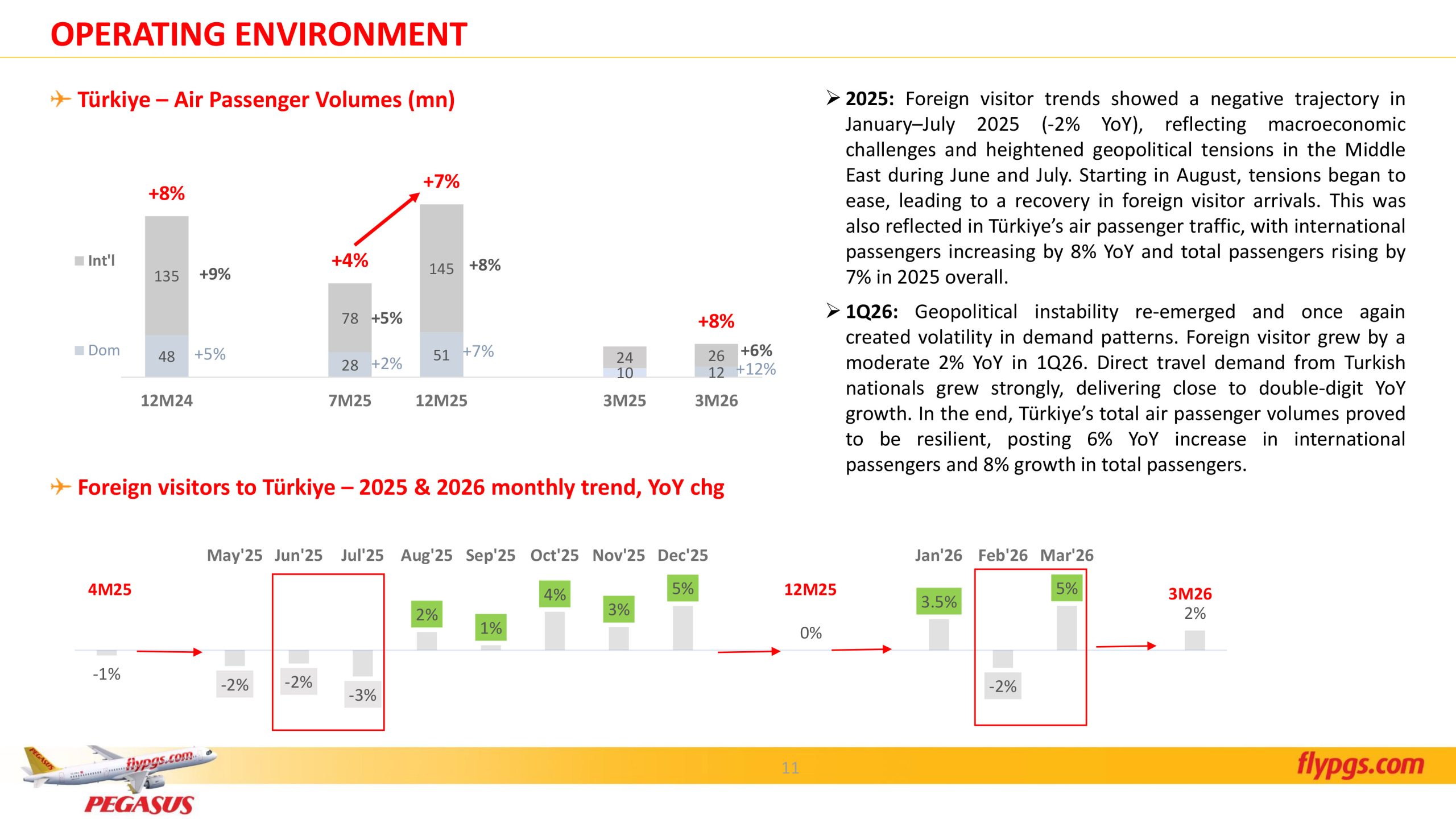
Total passenger numbers increased by 9% year-on-year. While international traffic growth remained at 5%, domestic traffic recorded a faster increase of 15%.
The load factor rose to 86.3%. This picture shows that capacity utilisation maintained its strong trend. However, a limited decline was observed in international load factors.
ASK (Available Seat Kilometres) increased by 9%, while international ASK growth stood at 7%. Network expansion and increased flight frequencies boosted operational volume.
Revenue Increasing but Unit Revenue Under Pressure
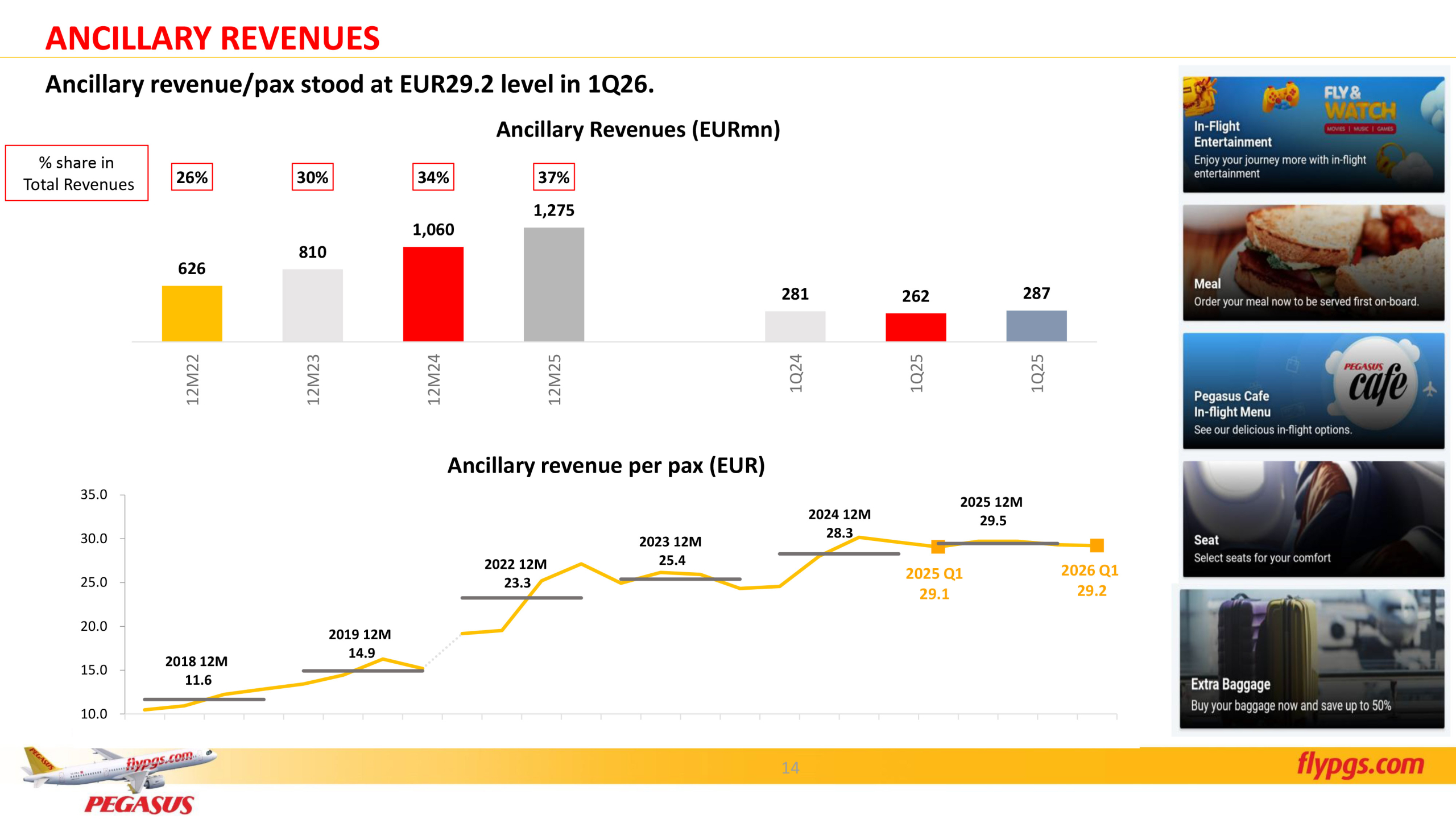
A 10% increase in ancillary revenues stood out. Despite this, total unit revenue (RASK) declined by 5% to 3.66 Euro cents.
Cost Increase Accelerated
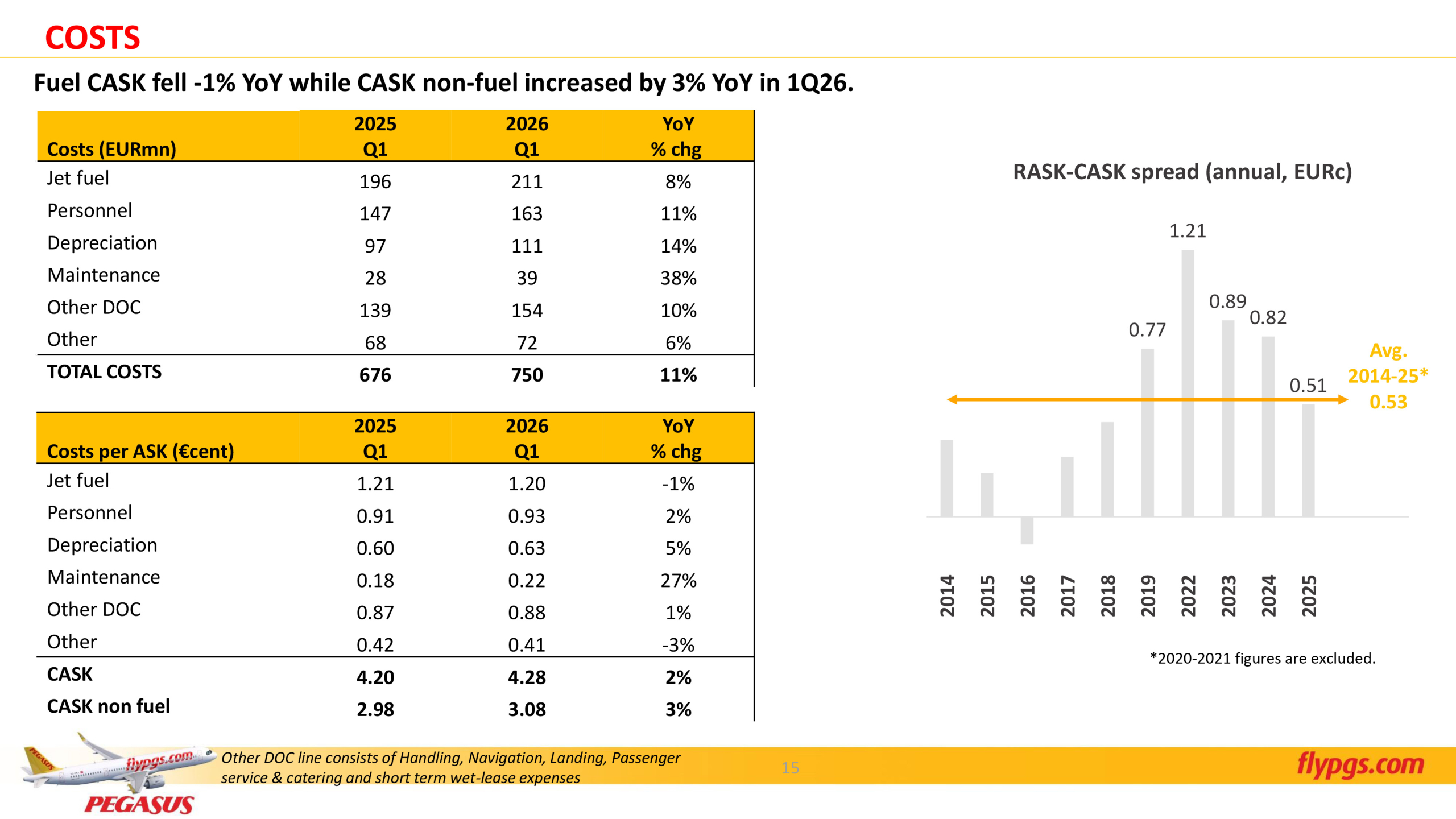
- Total expenses rose to €750 million, recording an 11% year-on-year increase. In particular:
- Personnel expenses: +11%
- Depreciation: +14%
- Maintenance expenses: +38%
The sharp increase in maintenance expenses resulted from shifts in operational planning schedules, with expectations that this would normalise later in the year.
On the unit cost side, CASK increased to 4.28 Euro cents, while ex-fuel CASK rose to 3.08 Euro cents.
EBITDA Declined, Net Loss Expanded
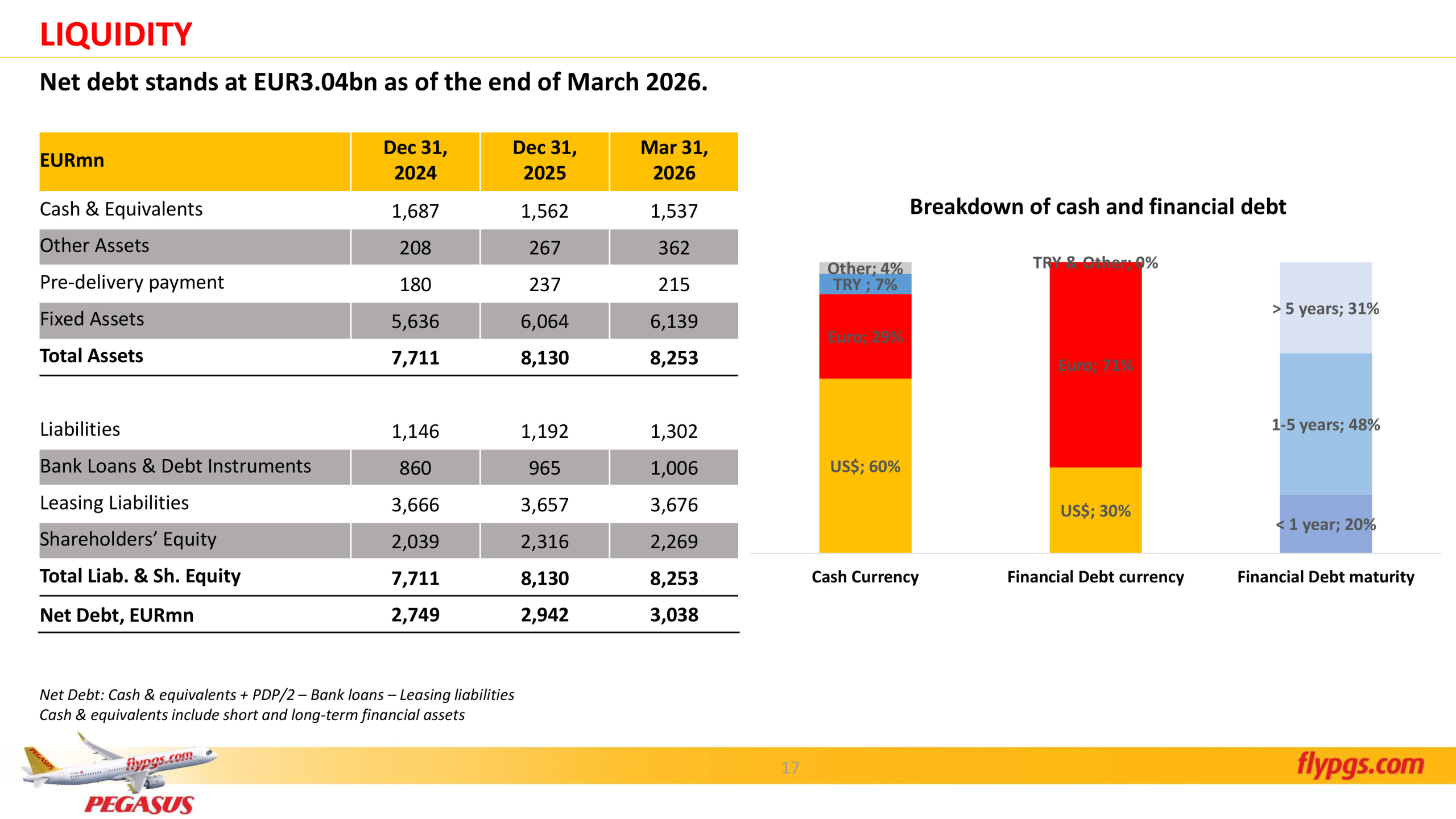
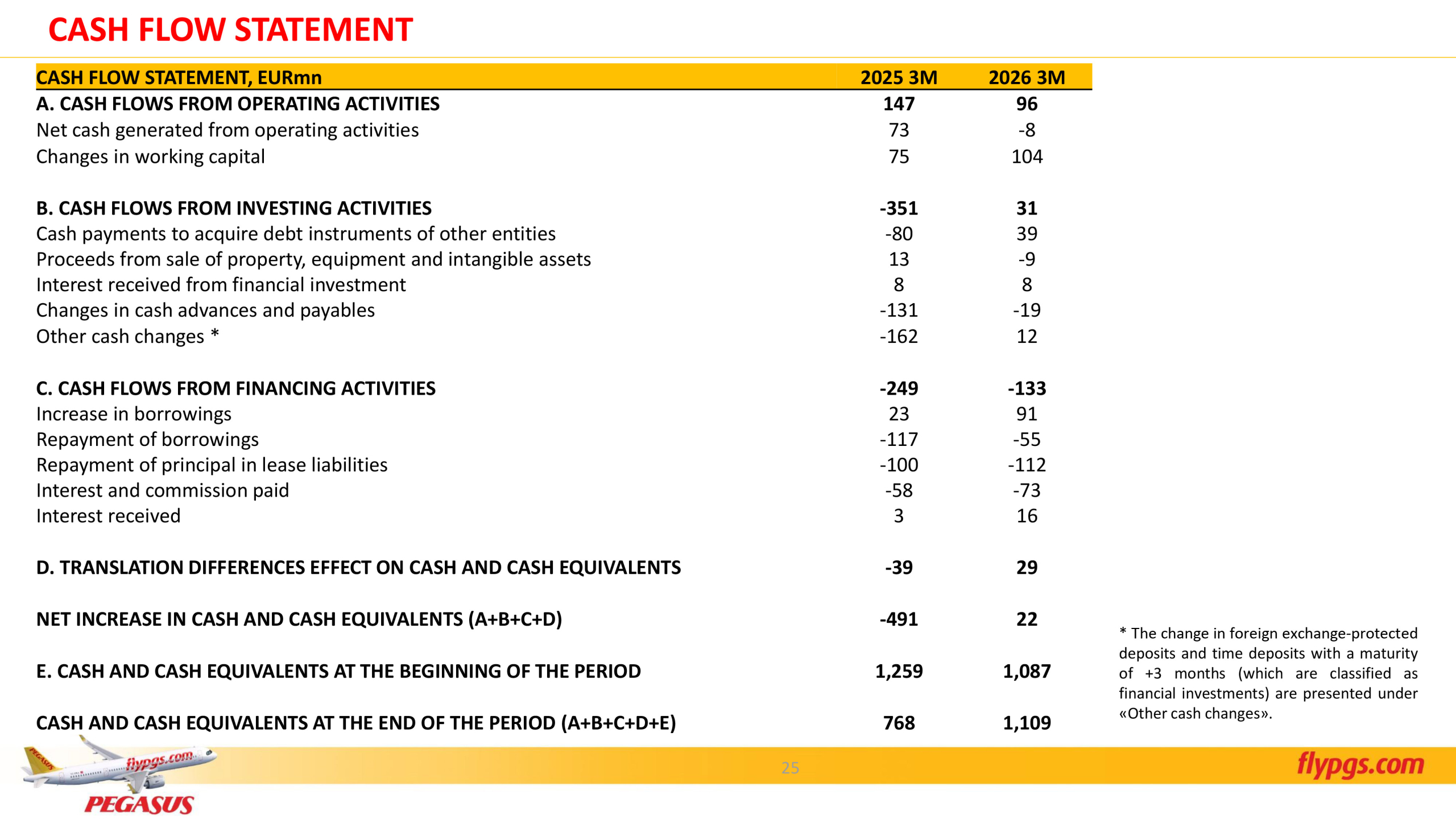
EBITDA amounted to €3 million. Compared to €42 million in the same period last year, this item highlights the pressure on profitability.
Net loss was recorded at €153 million. Financing expenses and foreign exchange impacts were among the main factors shaping this picture.
Fleet Renewal and Expansion Continue
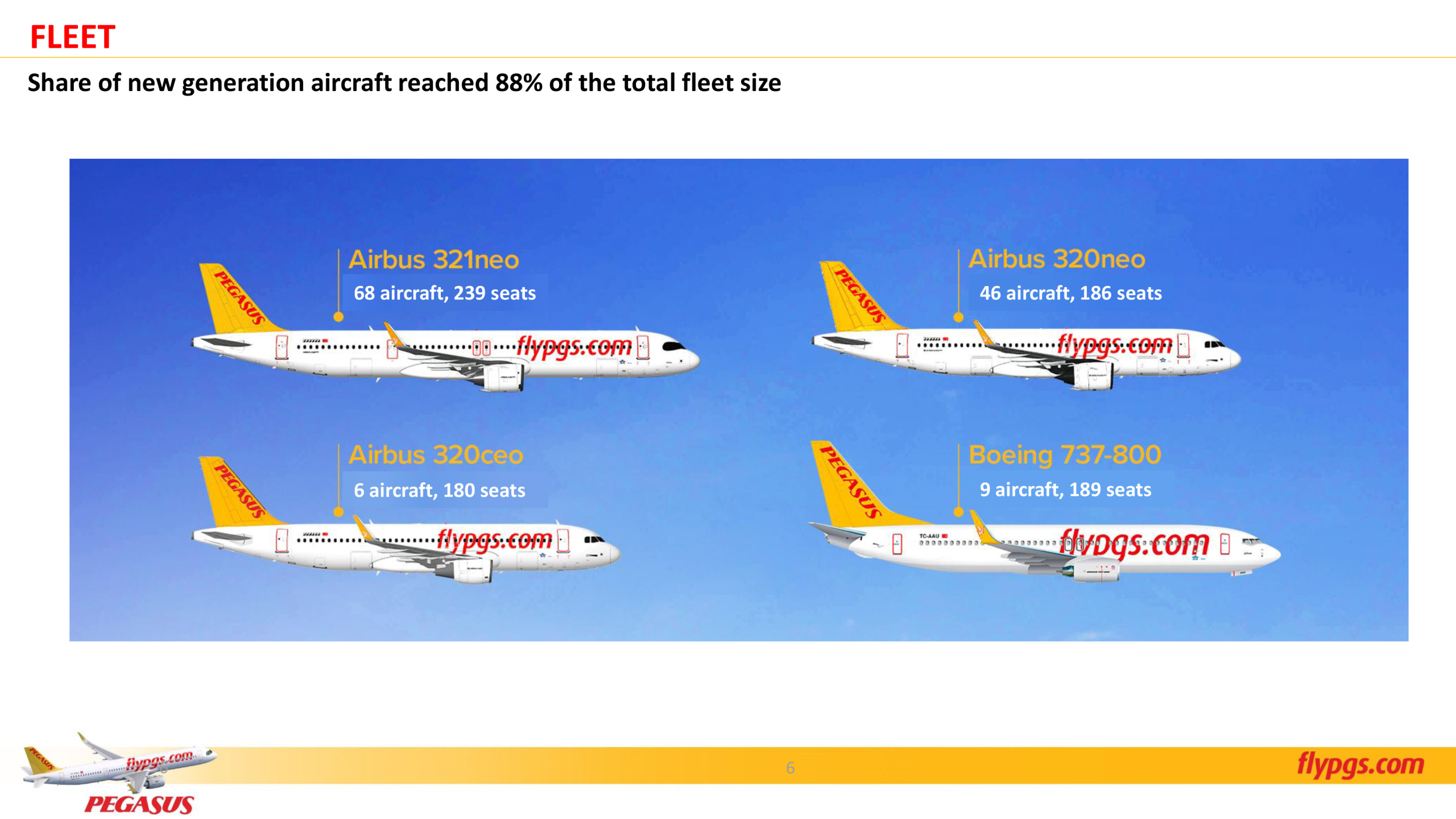
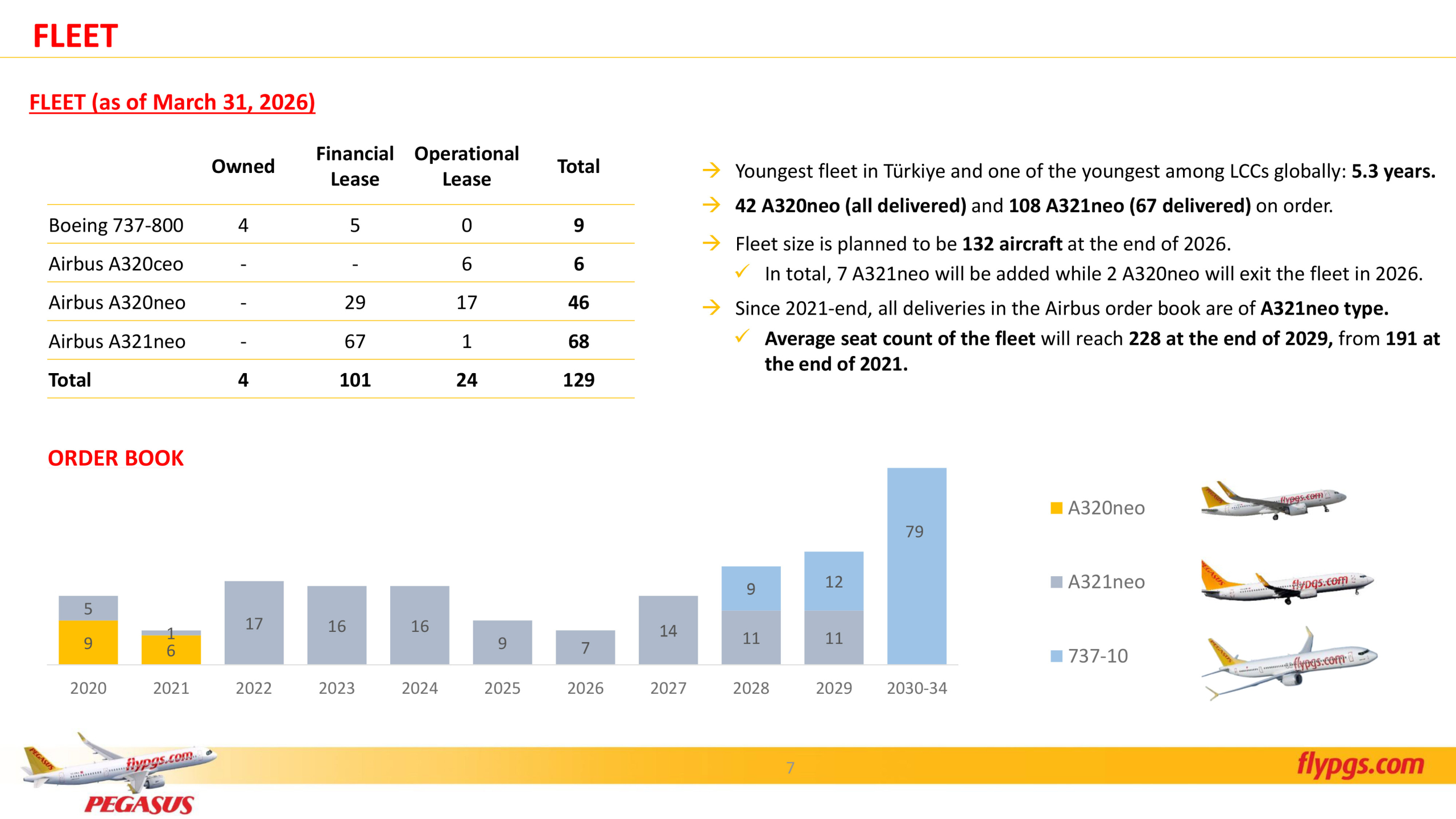
The company is accelerating its transition to next-generation aircraft within its fleet strategy. New-generation aircraft now make up 88% of the fleet. The average fleet age stands at 5.3 years.
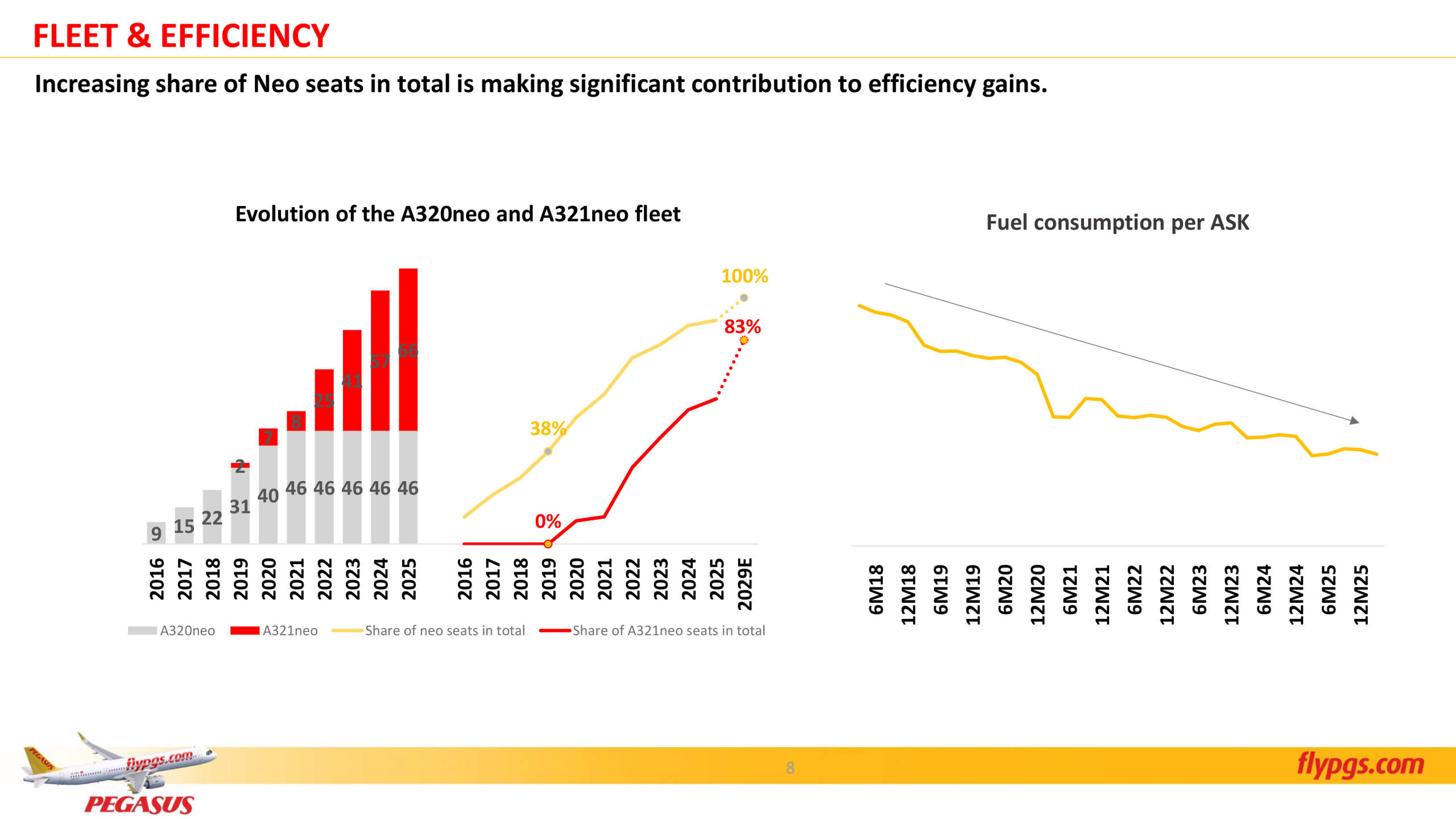
Pegasus Airlines aims to reach a fleet of 132 aircraft by the end of 2026. In particular, its Airbus A321neo-focused growth plan is creating a structure that simultaneously increases seat capacity and fuel efficiency.
Middle East Network Reshaping
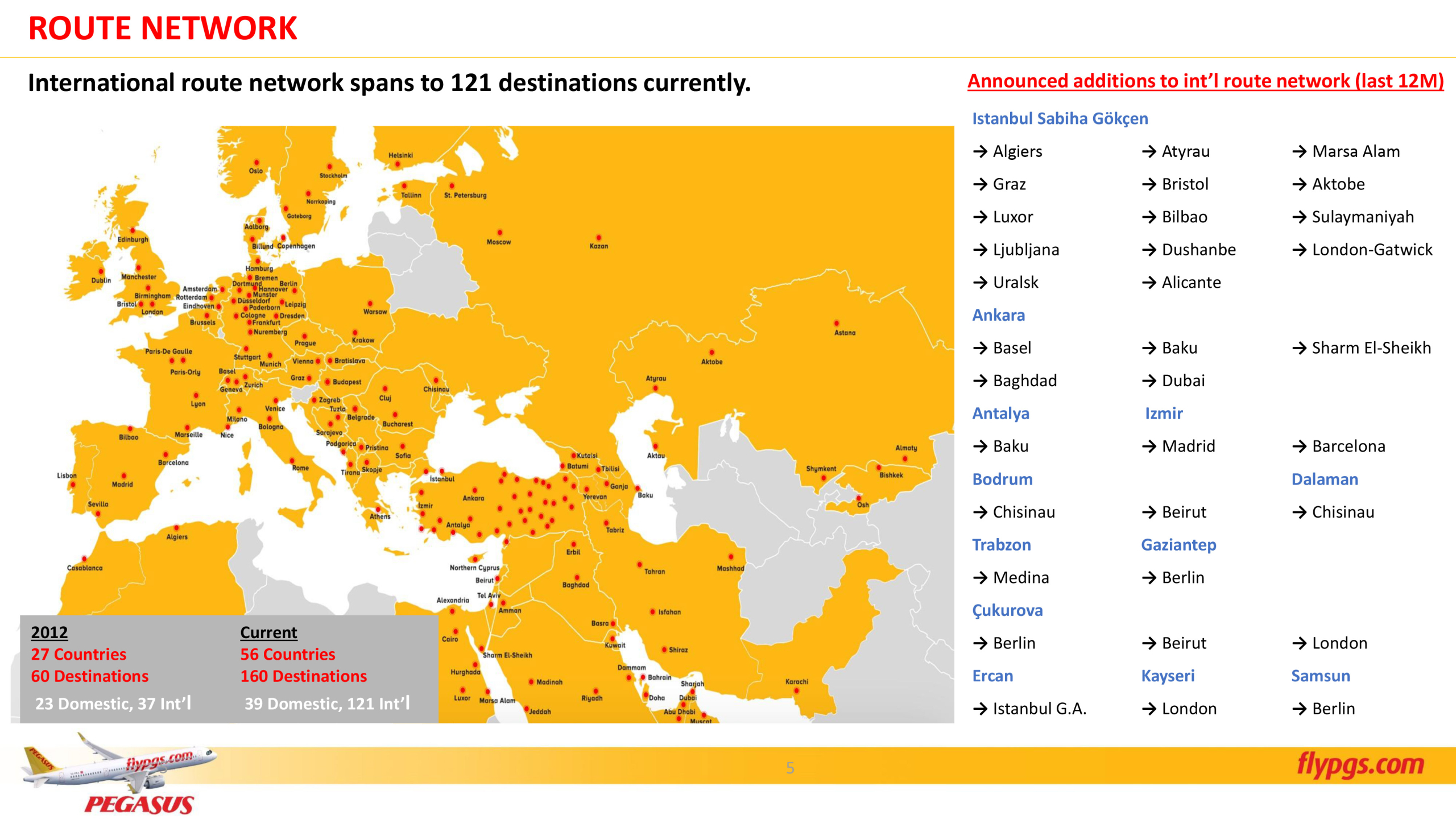
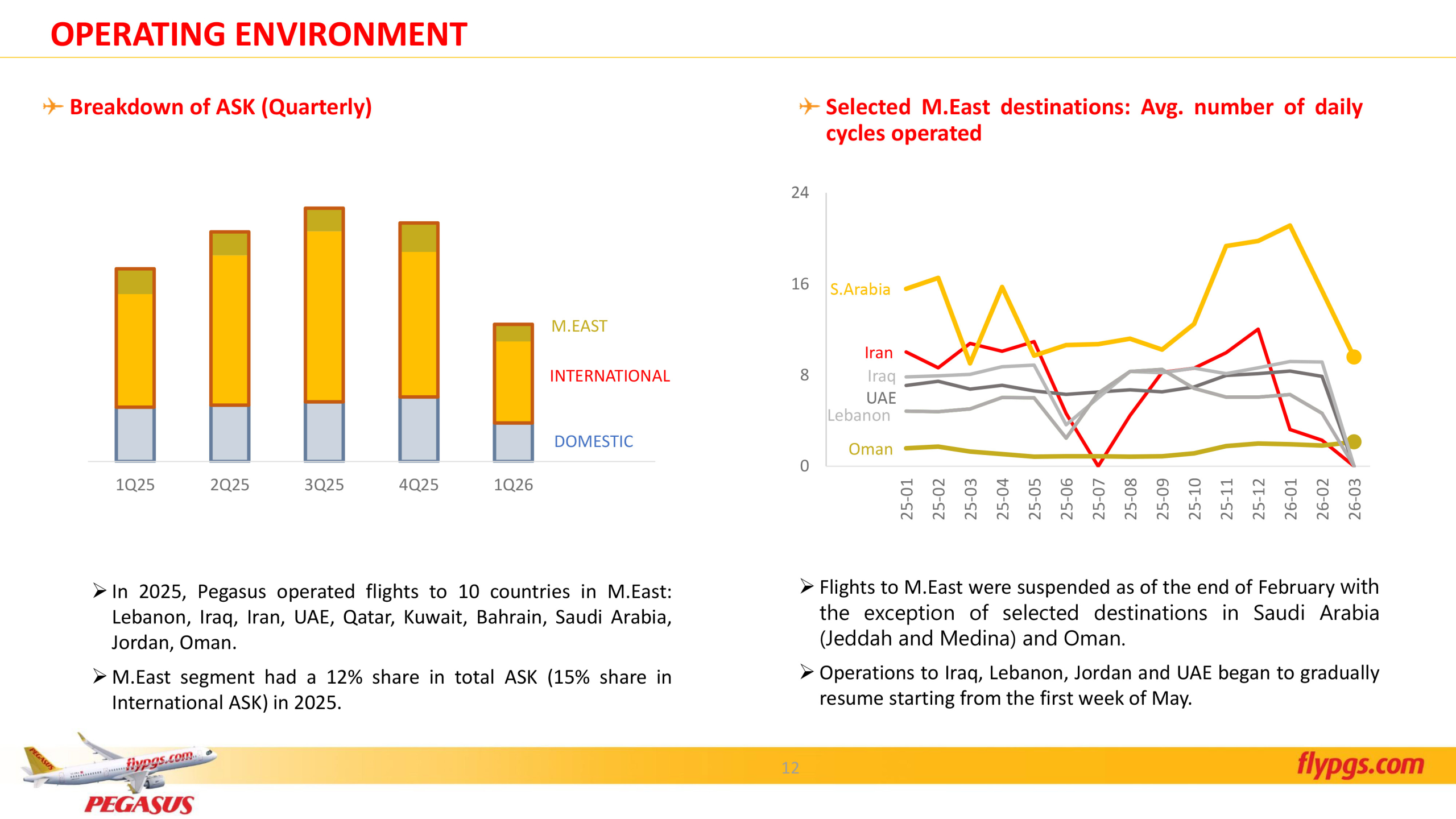
Although the Middle East flight network temporarily contracted due to geopolitical developments, it has entered a reopening phase. Gradual resumptions have started on routes to Iraq, Lebanon, Jordan and the UAE. This region accounts for approximately 12% of total ASK.
Financial Outlook: A Balance Squeezed Between Growth and Costs
While revenues recorded limited growth, costs increased at a faster pace, becoming the main factor challenging the company’s profitability balance. Nevertheless, passenger growth, fleet modernisation and network expansion preserved the operational scale.
At a time when geopolitical risks continue across the aviation sector, Pegasus is focused on managing capacity growth and cost efficiency simultaneously.