


Josh is an Aviation Journalist and lifelong aviation enthusiast who’s now turning that passion into a career. From watching planes and playing flight simulators at a young age to now sitting in the cockpit, Josh has always been drawn to the world of flight.
Currently training to become a commercial pilot, Josh aims to make aviation interesting and accessible to everyone, whether you’re in the industry or simply passionate about aviation.
Now actively building a career in Aviation, Josh is focused on telling stories from inside the aviation world, stories shaped by firsthand experience, curiosity, and a genuine love of all things that fly.
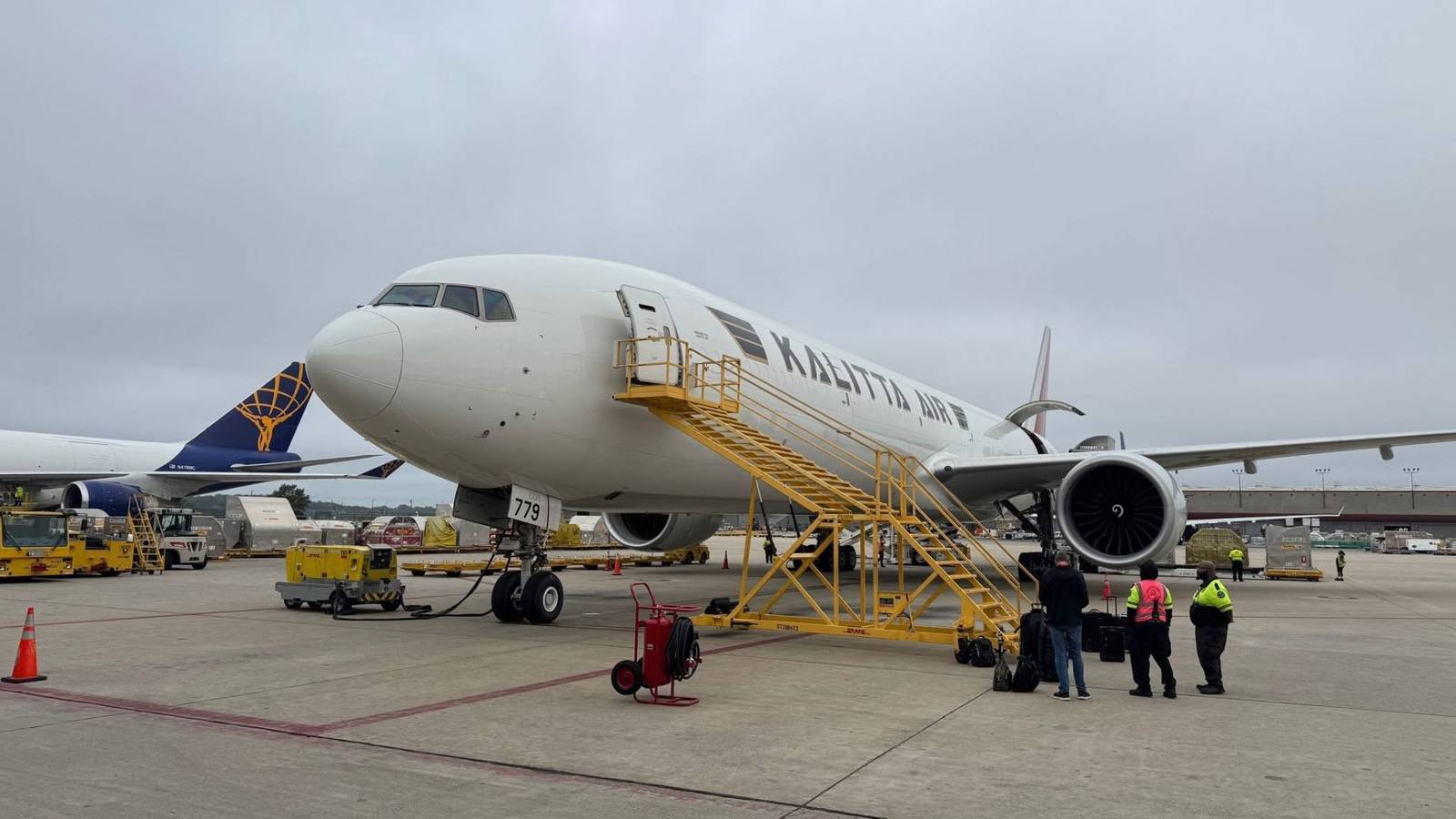
Kalitta Air appears to have repositioned one of its Boeing 777-300ER converted freighters to Michigan after the aircraft was involved in a tail strike during a landing attempt at Cincinnati/Northern Kentucky International Airport (CVG). FlightAware data shows that N778CK operated a flight to Oscoda-Wurtsmith Airport (OSC) after being withdrawn from commercial service following the incident.
The original incident occurred on July 19 while the aircraft was operating Kalitta Air flight K4264 from Brussels Airport (BRU) to Cincinnati. During an attempted landing, the crew initiated a go-around, with the aircraft’s tail contacting the runway and producing a shower of sparks captured on video. The crew safely climbed away before returning for an uneventful landing shortly thereafter with no injuries reported. The FAA has opened an investigation into the occurrence.
N778CK Heads To Kalitta Air’s Maintenance Base
Flight tracking data indicates that N778CK was ferried two days after the tail strike incident on Tuesday, July 21. Operating under flight number K4-9778, the Boeing 777-300ERSF departed CVG at 10:36 PM local time and was flown directly to Oscoda-Wurtsmith Airport (OSC) in northern Michigan. Kalitta Maintenance operates one of the airline’s principal facilities here, and the jet landed just over one hour after departing.
Ferry flights are routinely used when aircraft require specialist engineering work, allowing them to be repositioned without carrying commercial cargo or passengers. Although the visible damage from a tail strike is often confined to the underside of the rear fuselage, the inspection process can be extensive.
Engineers typically examine the aft fuselage, rear pressure bulkhead, empennage attachment points, fuselage frames, and skin for evidence of structural deformation or cracking before determining what repairs, if any, are required. Simple Flying reached out to Kalitta Air for a comment, but a representative wasn’t immediately available.
One Of The World’s Newest Converted Boeing 777 Freighters
N778CK is among the first aircraft produced under IAI’s ‘Big Twin’ Boeing 777-300ERSF conversion program. The converted freighter is capable of carrying around 220,000 lbs (100,000 kg) of cargo, while offering approximately 25% more cargo volume than Boeing’s factory-built 777F, making it particularly attractive for express freight operators that prioritize volume over maximum payload.
The aircraft regularly supports DHL Express operations through Cincinnati, one of the company’s largest global sorting hubs. On the day of the incident, flight K4264 departed Brussels at approximately 5:47 PM local time. The go-around was initiated during its first landing attempt following an eight-hour, 32-minute transatlantic crossing.
Kalitta Air was the launch customer for the 777-300ERSF and has rapidly expanded the type within its fleet. Today, the Michigan-based cargo carrier operates 37 freighters. Planespotters.net shows that the airline’s fleet comprises 22 747s and 15 777s.
These kinds of transformations can bring a lot to the table.
Tail Strikes Have Affected Several Aircraft In Recent Years
Although tail strikes remain relatively rare, they continue to occur across commercial aviation. On May 19 this year, a TAP Air Portugal Airbus A320 sustained a tail strike during takeoff from Rome Fiumicino, forcing the aircraft to return. In another notable case, a LATAM Airlines Boeing 777-300ER sustained a severe tail strike during takeoff from Milan Malpensa in July 2024.
Caused by a significant takeoff weight miscalculation, the aircraft scraped its tail along the runway during rotation, sustaining severe structural damage to the aft fuselage. The aircraft returned to the airport safely and remained out of service for months while extensive repairs and structural inspections were completed.
To combat and limit the effects of tail strikes, manufacturers incorporate tail strike protection systems, pitch guidance, and strict operating procedures designed to minimize the risk during critical phases of flight. For Kalitta Air, the incident involving N778CK marks the first major event involving one of its relatively new 777-300ERSFs. The aircraft’s transfer to Michigan suggests the airline is now focused on returning one of its most valuable cargo assets to service as quickly and safely as possible.
Orijinal Haberi Görüntüle