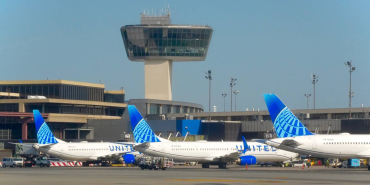

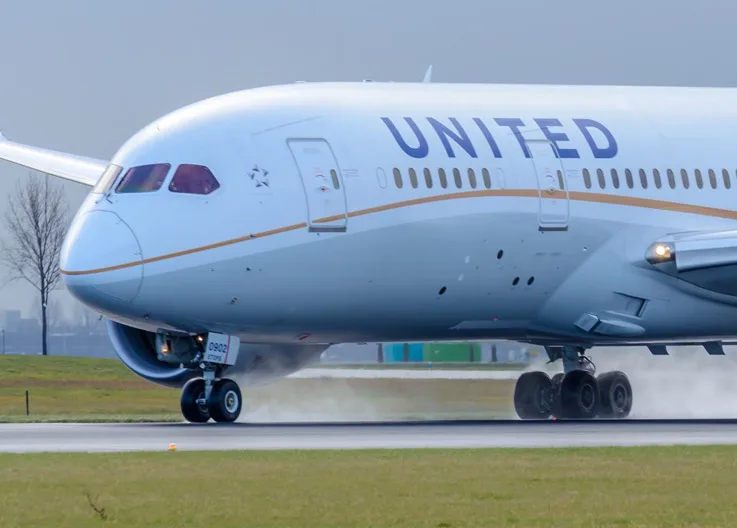


A United Airlines Boeing 787 Dreamliner operating flight UA108 was forced to make an emergency landing shortly after taking off from Washington Dulles International Airport due to an engine malfunction. The aircraft successfully returned to Dulles after pilots issued a “Mayday” call at an altitude of 1,500 metres.
The aircraft, en route to Munich, experienced a malfunction in its left engine during the climb phase. The crew quickly contacted air traffic control (ATC) and activated emergency protocols. No passengers or crew members were injured during the incident.
Fuel Dump and Emergency Landing After Engine Failure
According to flight data and ATC recordings, the aircraft was directed to a holding position northwest of Washington to safely dump fuel. This manoeuvre aimed to reduce the aircraft’s landing weight and minimise structural stress on the runway.
During communication with air traffic control, the message “Dumping fuel at six thousand. We’ll let you know when it’s complete,” stood out. The aircraft flew designated holding patterns at an altitude of approximately 1,800 metres to prepare for a safe return.
After the fuel dump, the aircraft was guided to runway 19C at Dulles Airport using the Instrument Landing System (ILS). The landing was completed without incident; however, due to the engine failure, the aircraft was unable to taxi under its own power and was towed from the runway by ground crews.
Boeing 787 Dreamliner Safety Record Under Scrutiny
This incident has reignited concerns about the safety of Boeing 787 Dreamliner aircraft. Last month, another Dreamliner operated by Air India crashed after both engines reportedly failed shortly after takeoff, resulting in the deaths of more than 260 people. That tragic event remains under investigation by international aviation authorities.
Statements Expected from United Airlines and the FAA
An official statement from United Airlines is expected regarding the incident. Additionally, the Federal Aviation Administration (FAA) continues its technical review of potential systemic issues affecting Boeing 787 aircraft.