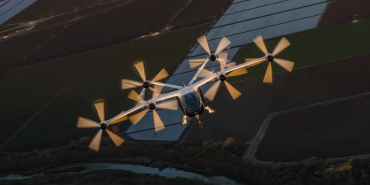



Army aviation is undergoing a profound transformation – one that will shape the force for decades. The platforms entering the fleet today are faster, more capable and increasingly autonomous to give our Army a decisive advantage on the modern battlefield.
To maximize Army aviation’s speed, range and convergence in support of the Joint Force, existing and new platforms must be able to operate collaboratively across all mission sets. Today’s operating environment demands real‑time, cross‑domain connectivity where no aircraft operates on its own.
Connectivity is the Combat Multiplier
Link 16 is the proven NATO-standard tactical data link that has connected U.S. and allied forces across air, land and sea for decades – and now connects to space assets as well. When warfighters gain direct access to the Link 16 network, targeting timelines compress by nearly 95 percent. Fratricide risk drops. Commanders make better decisions, faster.
Every rotary-wing asset that joins the Link 16 network makes every other platform on the network more effective. Engagement windows widen, survivability improves and the operational picture that commanders depend on becomes more complete, more accurate and more actionable.
Equipping these platforms with Link 16 transforms them into fully networked nodes in the joint fight, extending the common operational picture deeper into every mission.
This aligns closely with the direction of Army aviation modernization. Modular Open Systems Architecture, a digital backbone and interoperability with the Future Long-Range Assault Aircraft point to an essential requirement: platforms that fight connected, from day one, across the joint and coalition force.
Proven Support Across Every Domain
Achieving a fully connected aviation fleet demands proven integration expertise and technology purpose-built for the realities of rotary-wing operations. The Apache already employs Link 16, and the Cheyenne II is expected to field the capability.
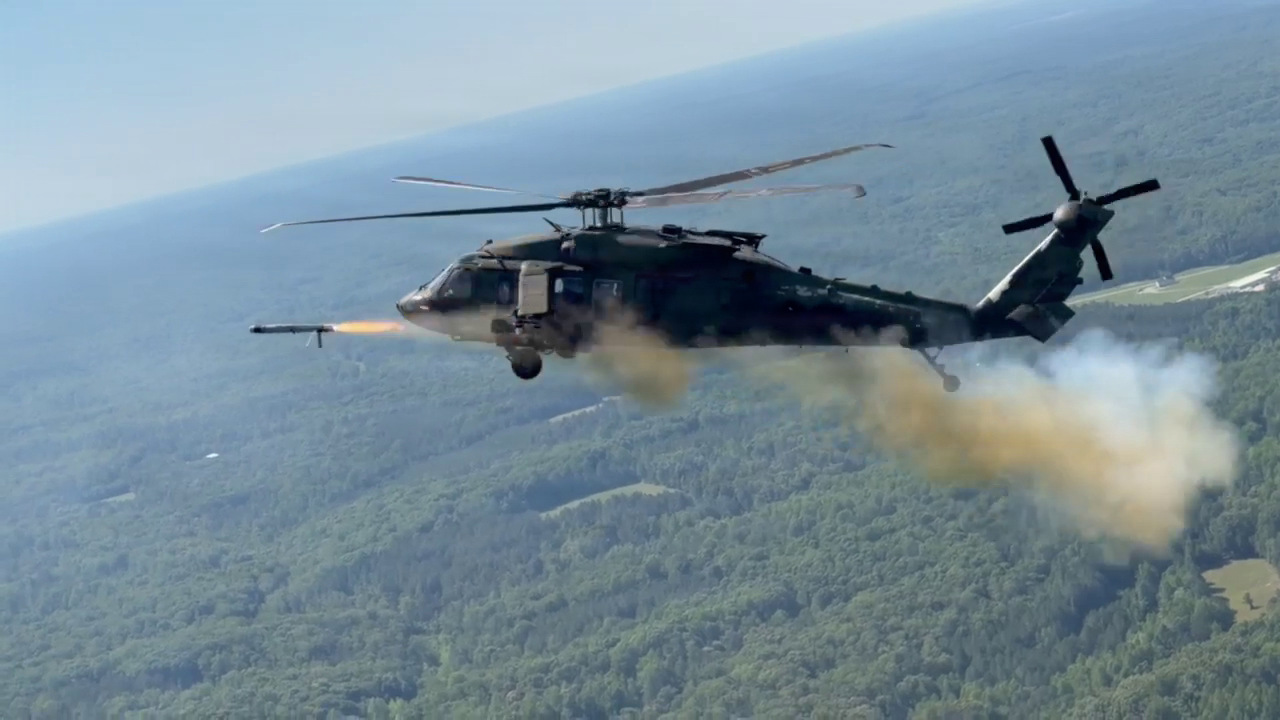
The Army is also integrating Link 16 into the Black Hawk through launched effects experimentation and operational learning. These efforts are expected to help shape plans for broader fleet integration. As the Army fields new effectors from both crewed and uncrewed systems, Link 16 can deliver enhanced situational awareness and stronger connectivity across the full spectrum of future joint operations.
L3Harris brings more than 25 years of tactical data link development to this challenge. The team developed the BATS-D – the world’s first handheld Link 16 radio – putting the network directly in the hands of the individual warfighter. More than 37,000 terminals are now fielded across U.S. and allied forces, spanning fighter aircraft, ground vehicles and naval vessels.
That reach extends to operators in more than 50 countries, across every U.S. military branch, the Coast Guard, federal law enforcement agencies and partner nations worldwide.
As autonomous fleets emerge, the United States and its allies are strengthening the communications foundation across today’s platforms to ensure forces enter the future already networked, interoperable and prepared.
Modern missions demand engagement timelines measured in seconds and a shared joint air picture that provides common understanding. Every platform must speak the same language.
Whether an aircraft is piloted or autonomous, it must operate as part of a networked joint force. For the next generation of Army aviation, connectivity will be essential to operating effectively in the modern all-domain battlefield. Link 16 provides a proven foundation for that connected fight.
Eric Vanek was commissioned as an aviation officer from the United States Military Academy at West Point. He has more than 2,000 flight hours in the Black Hawk, Kiowa and Lakota, and he has completed 14 combat tours. Vanek has served in a variety of assignments throughout his U.S. Army career, including operations officer for the Special Operations Aviation Command, commander of the 3rd Combat Aviation Brigade, and U.S. Army Forces Command deputy chief of staff and commander’s initiatives group. Vanek currently leads business development for Army ground combat and autonomy programs at L3Harris Technologies.
Orijinal Haberi Görüntüle