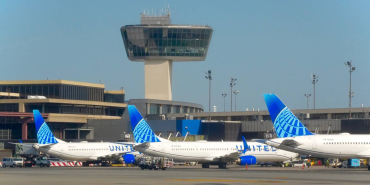

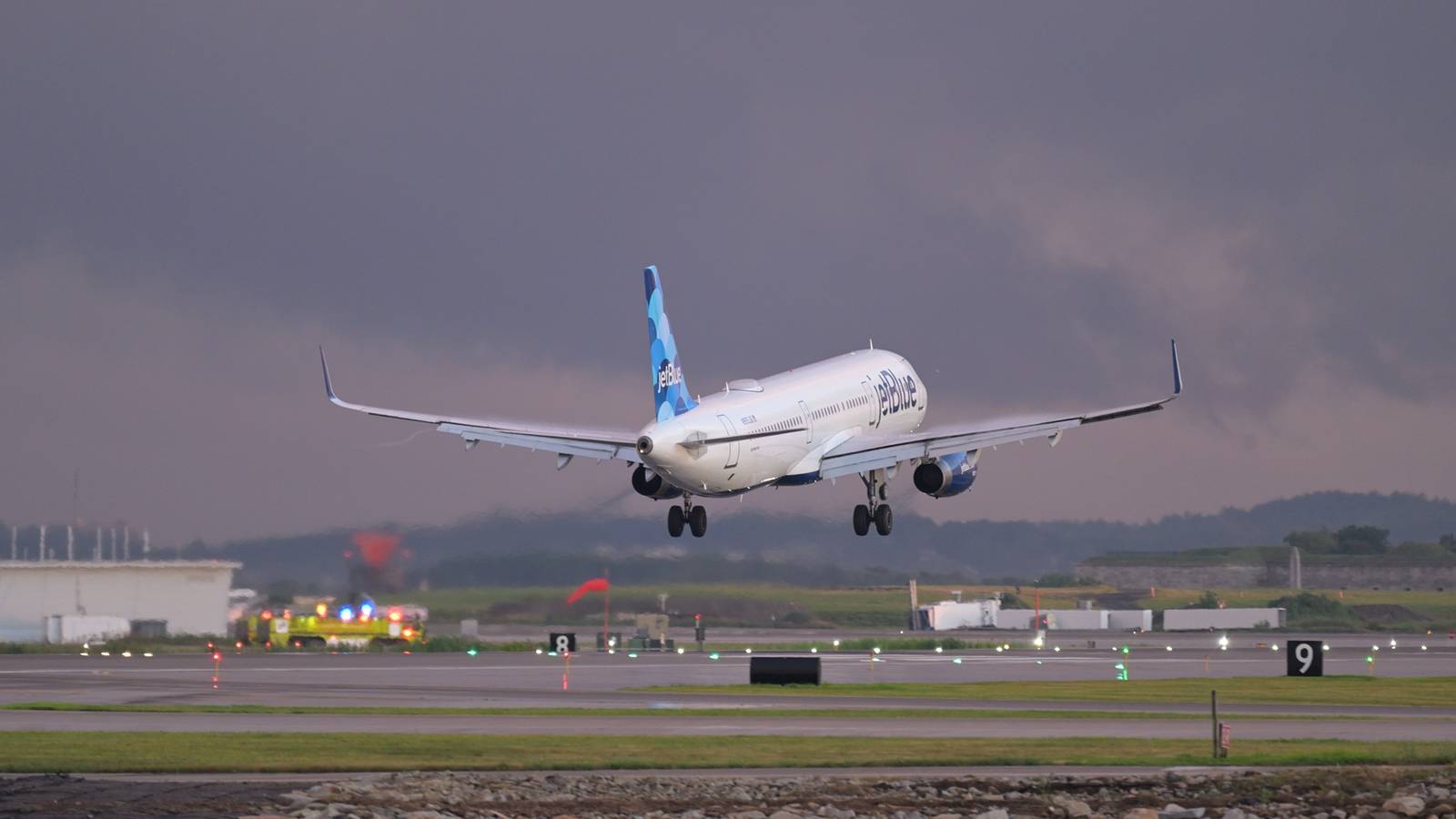


Heavy thunderstorms in the US Northeast and down to Florida have hampered JetBlue’soperations this week, with the airline recording its worst week ever for cancellations. On Thursday, July 9, approximately one in 20 JetBlue flights were canceled, leaving passengers stranded across the country.
The wild weather has played havoc at key JetBlue hubs, including New York JFK Airport (JFK), Boston Logan International Airport (BOS), and operations to and from Newark Liberty International Airport (EWR). Due to the thunderstorms, the Federal Aviation Administration ( FAA) even implemented flow management stops to handle increased traffic entering turbulent airspace.
As first reported by Simple Flying’s sister site, The Travel, our aviation analyst Enilria found that JetBlue had canceled approximately 5% of all flights on Thursday, with another 38% delayed. More than 1,000 flights were canceled on Thursday across all major carriers, as the FAA ground stops caused widespread disruption.
Due to the heavy rain and thunderstorms pummeling New York and New Jersey, flight disruptions were high at all major New York airports, with JFK and EWR both recording more than 100 cancellations on Thursday. Some areas, most affected by the weather in and around the Big Apple, even received flash flood warnings.
Due to the challenging weather conditions, the high volume of cancellations and delays has seen airlines forced to reschedule hundreds of flights and rebook stranded passengers. Airlines have added additional flexibility and rebooking offers to support displaced travelers over the weekend.
On Thursday, there were Ground Stop or Ground Delay forced FAA advisories due to thunderstorms, which affected Boston (BOS), Baltimore/Washington International Thurgood Marshall Airport (BWI), Ronald Reagan Washington National Airport (DCA), Denver International Airport (DEN), Newark (EWR), Washington Dulles International Airport (IAD), New York JFK (JFK), LaGuardia Airport (LGA), and Philadelphia International Airport (PHL).
Displaced aircraft also meant that widespread cancellations and delays were felt across the network, including as far as the US West Coast and south. For Delta Air Lines, its operations were hard hit at Hartsfield-Jackson Atlanta International Airport (ATL), where the airline recorded more than 500 delayed flights. No ground stop was issued at ATL, but the airline experienced significant delays.
The FAA commonly issues ground stops to alleviate pressure on the national system. This supports the ability to manage airspace capacity and, by handling departures before they take off, prevents airborne gridlock, holding, or the need for last-minute diversions. Severe weather is usually a common trigger for ground stops, alongside technology failures, emergencies, or other extreme congestion.
A powerful convective weather system moved across the Midwest, forcing the FAA to halt all inbound traffic at Chicago O’Hare International Airport.
Other Airlines Affected Include Frontier, Southwest, and Allegiant
Looking at data for cancellations and delays on Thursday, JetBlue was one of the hardest hit, followed by Frontier with 2% of cancellations and 29% of its operations delayed. This was followed by Southwest at 1% cancellations and 30% of its flights delayed. Further details for all major airlines are below as per TheTravel:
Cancellations have trickled into Friday, July 10, where there are reports of close to 200 canceled flights either to, from, or within the United States, and these are focused primarily around the New York metropolitan area while thunderstorm warnings remain in effect. Passengers are reminded to check their flight status before heading to the airport and to remain patient as airlines look to reaccommodate displaced aircraft and passengers on flights.
There is the potential that additional ground stops could be issued today to manage congestion at major airports, and they will be at the mercy of Mother Nature as the region handles the adverse weather conditions that have played havoc for hundreds of thousands of passengers. Most airlines have added additional flexibility to tickets in light of the storm, so if you are able to delay travel, or have been affected, make contact with your airline or travel agent.
Orijinal Haberi Görüntüle