


Japan Allocates $690 Million for UAVs in 2026 Defense Budget: Bayraktar TB2 and Heron 2 in Focus
The Japanese government has initiated large-scale deployment of unmanned aerial vehicles (UAVs) by allocating approximately $690 million in its 2026 fiscal year defense budget. The defense plan includes the evaluation of international UAV platforms, particularly Turkey’s Bayraktar TB2 and Israel’s Heron 2, which have proven effective in Ukraine’s conflict with Russia.
Quantity-Focused Defense Strategy
The Japanese Ministry of Defense prioritizes numerical superiority over quality. In line with this approach, domestic production capacity is targeted for the medium and long term, while in the short term, ready-made platforms will be procured to rapidly enhance the attack and reconnaissance capabilities of land, sea, and air forces.
UAV Budget Items
The 2025 fiscal year budget for UAV procurement includes:
-
¥41.5 billion ($280 million) – U.S.-made MQ-9B maritime surveillance UAV
-
¥3.2 billion ($22 million) – Small attack drones
Bayraktar TB2 and Heron 2 Competition
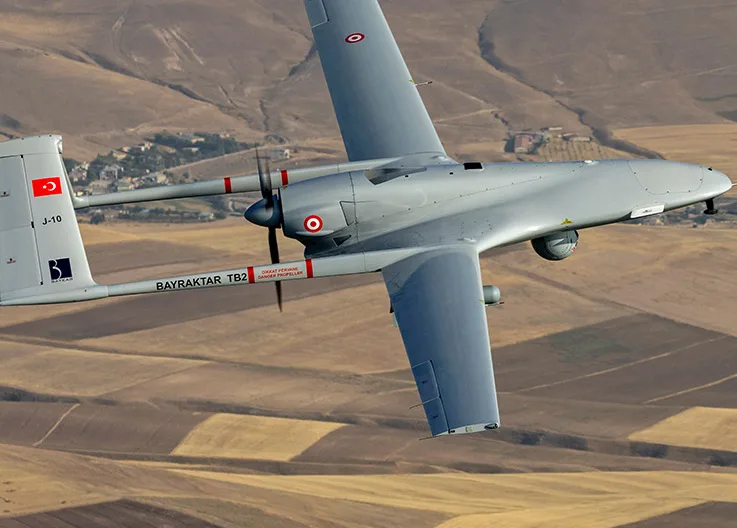
Japan is continuing testing and evaluation for both the Bayraktar TB2 and Heron 2. While the Heron 2 acts as a “sensor truck” with high-altitude and multi-intelligence capabilities, the TB2 stands out for its low cost, durability, and proven combat performance.
Key features of the Bayraktar TB2:
-
20–24 hours flight endurance
-
22,000–27,000 feet service ceiling
-
55–150 kg payload capacity
-
Proven effectiveness in conflict zones
Potential Strategic Partnerships
Both Israeli and Turkish manufacturers are open to licensed production and maintenance agreements with Japanese giants such as Kawasaki Heavy Industries and Subaru. This move could provide Japan with industrial benefits as well as autonomous defense capabilities.
Role of UAVs in Defense Doctrine
According to defense analysts, the Heron 2 will enhance maritime awareness through long-range reconnaissance and targeting missions, while the TB2 will provide cost-effective deterrence in coastal areas and island chains. Deployment scenarios are particularly being considered for the Ryukyu Islands.