
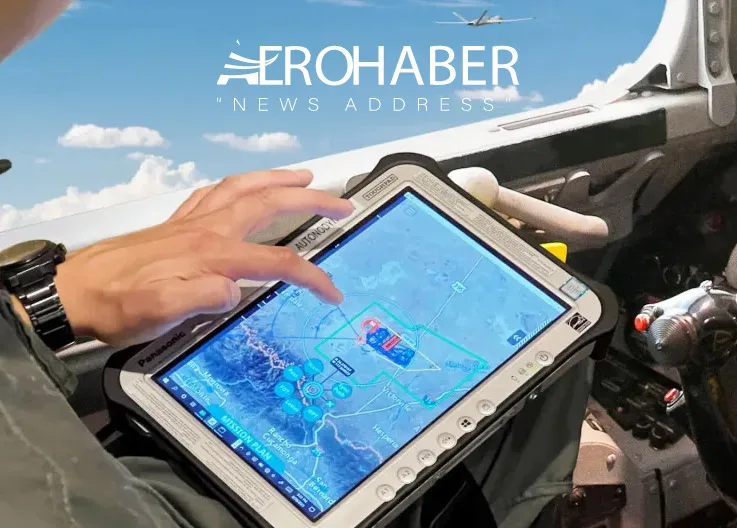


The U.S. Air Force has achieved a groundbreaking technology that will radically transform the air combat concept. In the trial conducted at the Nevada Test and Training Range, an F-22 Raptor pilot managed to control the MQ-20 Avenger unmanned combat aircraft through a tablet interface in the cockpit. This test has gone down in history as one of the most concrete implementations to date of the “manned-unmanned teaming (MUM-T)” concept.
Commands from the Cockpit to the ‘Robot Wingman’
In the test carried out through the collaboration of General Atomics and the U.S. Air Force, the pilot sent real-time commands to the Avenger via highly secure data links, enabled by an open-architecture software infrastructure developed by Lockheed Martin and L3Harris. This allowed the pilot to maintain his own mission while simultaneously demonstrating the capability to control a “robot wingman.”
According to experts, this technological milestone represents the beginning of a new era in which fully autonomous, AI-supported combat drones will accompany manned aircraft in aerial warfare.
A Significant Milestone in the CCA Program
The test, which General Atomics announced as a “critical advancement,” forms one of the core components of the U.S. Air Force’s ongoing Collaborative Combat Aircraft (CCA) program. The program aims to increase multi-domain operational effectiveness by pairing fifth-generation fighter jets such as the F-22 and F-35 with lower-cost, autonomous drones.
With the CCA concept, the notion of the “wingman” is being redefined within the air force: traditional human pilots are being prepared to be accompanied—and when necessary replaced—by AI-supported unmanned combat aircraft that are expendable.
A New Doctrine for the Air Battles of the Future
Defense analysts state that the dynamics of air operations will significantly change with the implementation of MUM-T technology. Thanks to this new concept:
Pilots will be able to send unmanned combat aircraft ahead into risky zones before entering themselves.
A single pilot will be able to control multiple drones simultaneously, overseeing a much larger operational area.
Enemy air defense systems can be tested with “cost-expendable” drones instead of manned aircraft.
This groundbreaking test is regarded as one of the clearest indicators of the future of combat aviation.