


Josh is the Content & Growth Lead for Simple Flying’s Flight Tracker. From watching aircraft and playing flight simulators at a young age to now sitting in the cockpit, Josh has always been drawn to the world of aviation.
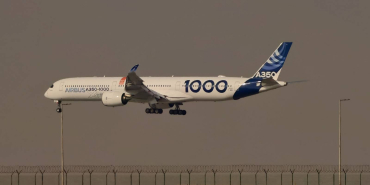
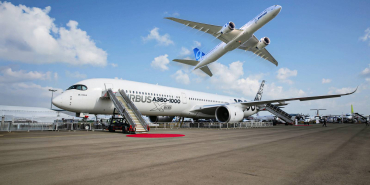
The Airbus A350-1000, according to Airbus, has a maximum range of up to 8,700 nautical miles (16,100 km), giving it a measurable edge over the Boeing 777-300ER, which, according to Boeing, has a range of 7,370 nm (13,649 km). Still, the real story is how that 1,330 nm (2,463 km) gap can actually become a lot closer in airline operations.
Drawing on manufacturer data from Airbus and Boeing, both aircraft remain capable of impressive range and ultra-long-haul route capability. This is especially true for those linking major US hubs like Los Angeles International Airport (LAX), John F. Kennedy International Airport (JFK), and Dallas/Fort Worth International Airport (DFW), the Middle East, and Asia.
However, the A350-1000’s range advantage rarely determines route viability on its own. Instead, many airlines prioritize fuel efficiency, cargo payload, and network flexibility when choosing between these aircraft. In this article, we will compare six key factors: range, real-world performance, engineering design, payload trade-offs, efficiency, and operational relevance, to explain why the A350-1000 leads on paper but not always in practice.
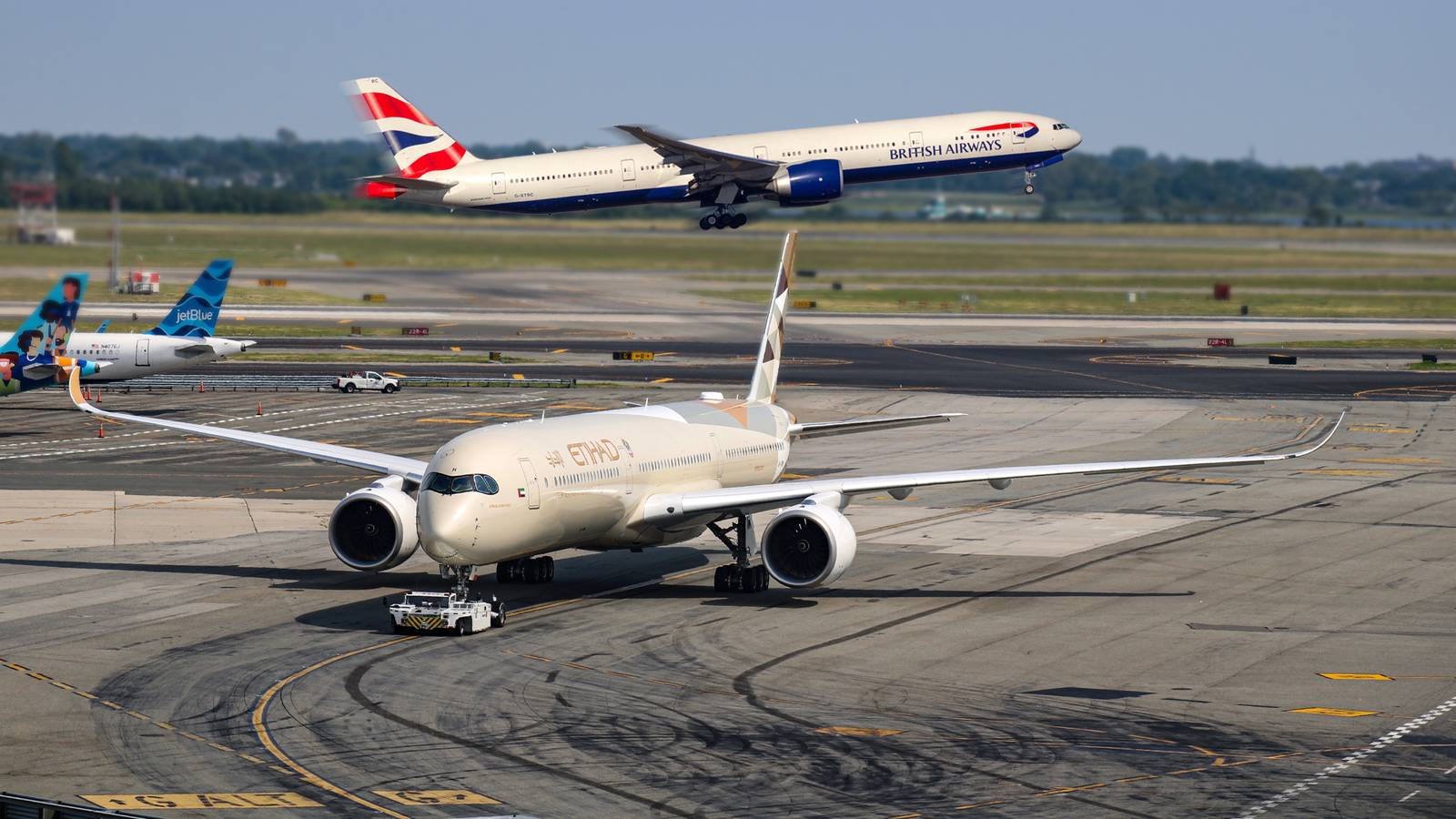
The Airbus A350-1000 and the Boeing 777-300ER sit at the very top of the long-haul aviation hierarchy, representing two different generations of engineering excellence aimed at solving the same challenge: transporting large numbers of passengers and cargo across vast intercontinental distances efficiently and reliably. These aircraft are commonly deployed on some of the world’s longest and most strategically important routes.
They connect major global hubs such as London Heathrow Airport (LHR), Singapore Changi Airport (SIN), Dubai International Airport (DXB), Sydney Kingsford Smith Airport (SYD), and Los Angeles International Airport (LAX) without refueling stops. The A350-1000 reflects a more modern design philosophy, developed by Airbus to challenge Boeing’s dominance in the long-haul widebody market directly.
It incorporates advanced materials, improved aerodynamics, and next-generation systems that aim to reduce fuel burn, increase efficiency, and enhance passenger comfort. This aircraft is part of a broader industry shift toward sustainability and cost optimization, where even small efficiency gains can translate into significant savings over time.
In contrast, the 777-300ER represents a mature and highly refined platform that has proven itself over decades of service. Airlines around the world rely on it for its durability, versatility, and impressive payload capabilities. While it may not feature the same level of modern materials or aerodynamic refinement as the A350, its track record and performance consistency have made it a cornerstone of long-haul operations globally.
When comparing the two aircraft on paper, the A350-1000 holds a clear advantage with a maximum advertised range of approximately 8,700 nautical miles (16,100 km). This figure is derived under optimal conditions defined by the manufacturer, including a specific payload, cruising altitude, and fuel assumptions that may not always reflect real-world operations but provide a useful benchmark for comparison.
The 777-300ER follows behind with a published range of about 7,370 NM (13,649 km). Although lower, this figure still places it firmly within the ultra-long-haul category, enabling it to operate nearly all major intercontinental routes with ease. For most airlines, this range is more than sufficient for their network requirements.
The difference between the two aircraft, at roughly 1,330 nautical miles (2,463 km), is significant in operational terms, particularly for ultra-long-haul missions where additional range can expand route options and reduce payload restrictions. When expressed as a percentage, the A350-1000 advantage is closer to 15–17% over the 777-300ER, underscoring a much more meaningful gap in capability rather than near parity in performance.
Comparing and contrasting the modern widebody variants.
While manufacturer specifications provide a useful starting point, real-world airline operations introduce a wide range of variables that can significantly affect how far an aircraft can actually fly under real operating conditions. Factors such as passenger load, cargo weight, weather conditions, air traffic routing, and regulatory fuel reserves all play a role in determining effective range on any given flight.
For example, strong headwinds on long transoceanic routes, particularly across the North Atlantic or Pacific, can reduce range by hundreds of miles, forcing airlines to adjust payload or, in rare cases, make technical stops. On the other hand, favorable tailwinds or lighter-than-expected loads can allow aircraft to exceed typical operational distances, demonstrating the flexibility built into these designs.
Because of these constantly changing conditions, the small theoretical range advantage of the Airbus A350-1000 often becomes less significant in practice. Both aircraft are capable of performing the same missions under most circumstances.
As such, airlines typically plan routes with enough flexibility to account for these operational uncertainties rather than relying strictly on maximum range figures. As a result, the Boeing 777-300ER can often match the A350-1000 on real-world routes despite its slightly lower advertised range, reinforcing how closely aligned these aircraft are in day-to-day airline operations.
Engineering Evolution: Why The A350 Pulls Ahead
The A350-1000’s slight edge in range is largely due to its more advanced engineering and design. One of its defining features is the extensive use of carbon-fiber-reinforced polymer composites in the fuselage and wings, which significantly reduces weight while maintaining structural strength and resistance to fatigue and corrosion.
In addition to its lightweight structure, the A350 features a highly optimized wing design that improves aerodynamic efficiency during long-haul cruise. This is complemented by its Rolls-Royce Trent XWB engines, which are designed for efficiency and lower fuel consumption, allowing the aircraft to travel farther on less fuel than older engine designs.
The 777-300ER, while based on an older design, still delivers impressive performance thanks to its powerful GE90 engines and robust airframe. However, its engineering reflects an earlier era when emphasis was placed more on thrust and durability than on the fine-tuned efficiency and weight savings seen in newer aircraft. This difference in design philosophy helps explain why the A350-1000 can achieve a modest range advantage.
One of the most important factors influencing aircraft range is payload, which includes both passengers and cargo. Airlines must constantly balance these elements to maximize revenue while staying within the aircraft’s operational limits, making range a dynamic rather than a fixed characteristic.
The 777-300ER is particularly well known for its strong cargo capabilities, offering significant belly cargo capacity alongside a full passenger load. This makes it highly attractive for routes with high freight demand, as airlines can generate additional income without significantly compromising operational performance.
The A350-1000, while still capable of carrying substantial payloads, is more focused on efficiency and range optimization. Its design allows airlines to operate long-haul routes with lower fuel consumption, which can be especially advantageous in an environment where fuel costs and environmental concerns are increasingly important. This difference highlights how each aircraft is optimized for slightly different operational priorities.
Final Verdict: A Marginal Edge, Not A Decisive Win
When comparing the Airbus A350-1000 and the Boeing 777-300ER purely by range, the A350-1000 comes out ahead, but only by a narrow, largely symbolic margin. With a difference of roughly 1,330 nm (2,463 km), the gap is measurable on paper yet minimal in real-world operations. On ultra-long-haul routes such as New York to Hong Kong or Los Angeles to Sydney, both aircraft already operate close to practical limits shaped by payload, winds, and fuel reserves.
This means that this small advantage rarely changes what routes are actually possible. In practice, airlines place far greater weight on economic and operational factors than on a marginal difference in range. Fuel efficiency, maintenance costs, fleet commonality, and passenger experience often play a more decisive role in aircraft selection. For example, carriers focused on reducing operating costs and emissions may favor the A350-1000 for its newer, more efficient design.
At the same time, those prioritizing fleet consistency or cargo revenue may continue to rely on the 777-300ER. These considerations ultimately have a much larger financial impact over time than a slight increase in maximum range. Cargo capability further highlights the trade-offs between the two aircraft. The 777-300ER’s higher thrust and maximum takeoff weight allow it to carry heavier payloads, making it especially valuable on routes with strong freight demand.
Meanwhile, the A350-1000 delivers lower fuel burn and improved efficiency, aligning with modern airline priorities and environmental pressures. As a result, both aircraft remain highly relevant: the A350-1000 as a next-generation efficiency leader, and the 777-300ER as a proven, high-capacity workhorse that continues to perform reliably across global long-haul networks.
Orijinal Haberi Görüntüle