
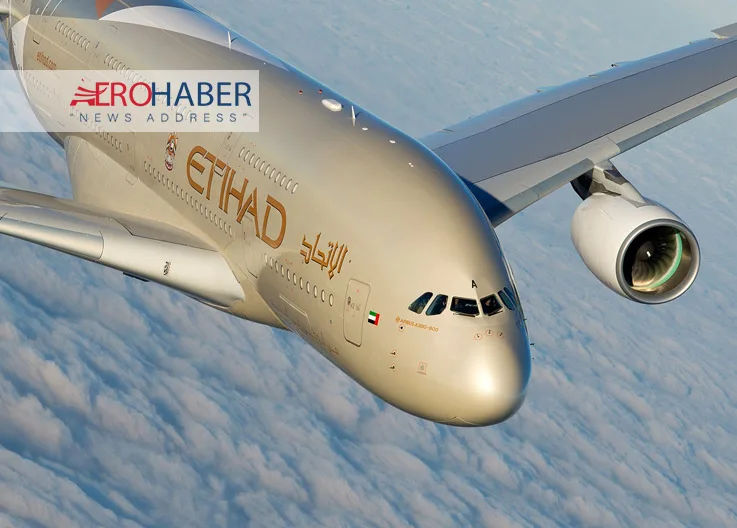


Abu Dhabi-based Etihad Airways (EY) is preparing to return two of its Airbus A380 superjumbos to service due to the tightening global aircraft supply and ongoing supply chain delays. The airline currently operates seven of its ten A380s, while the eighth and ninth aircraft are scheduled for delivery on 15 June 2026 and 1 January 2027, respectively. The tenth A380 will remain out of service to be used for spare parts.
Global Aircraft Shortage and Rising Demand
Etihad’s move comes in response to growing air travel demand and delays in aircraft production, according to data from the International Air Transport Association (IATA). IATA’s 2024 report shows that commercial aircraft orders have surpassed 17,000, reaching a historic peak. The production bottleneck is forcing airlines to keep older aircraft in service longer and optimise their existing fleets.
As of August 2025, Middle Eastern airlines recorded an 8.2% increase in passenger traffic, surpassing the global demand growth rate of 4.6%. The regional load factor reached 83.9%, with capacity up by 6.9%.
Financial Impact and Fleet Management
A joint analysis by IATA and Oliver Wyman predicts that the airline industry will face cost pressures exceeding USD 11 billion in 2025 due to production slowdowns. In response, Etihad has adopted a strategy focused on leasing narrow-body jets, renewing its wide-body fleet, and gradually reintroducing its A380s into service.
Etihad’s A380 fleet currently operates on high-demand routes such as London (LHR), Toronto (YYZ), Paris (CDG), and Singapore (SIN). The superjumbo continues to represent the pinnacle of luxury travel with its exclusive three-room suite “The Residence,” featuring a private shower, personal butler service, and first-class apartments.
Expanding Route Network and Strong Passenger Growth
During the first nine months of 2025, Etihad’s passenger traffic rose by 18% to reach 16.1 million. In September alone, the airline carried 1.9 million passengers, marking a 21% year-on-year increase. The airline currently operates a fleet of 115 active aircraft serving 82 destinations.
Etihad plans to expand its network further with new routes to Sumatra, Phnom Penh, Addis Ababa, and Krabi, followed by Kabul, Damascus, Palma de Mallorca, and Zanzibar in 2026.