
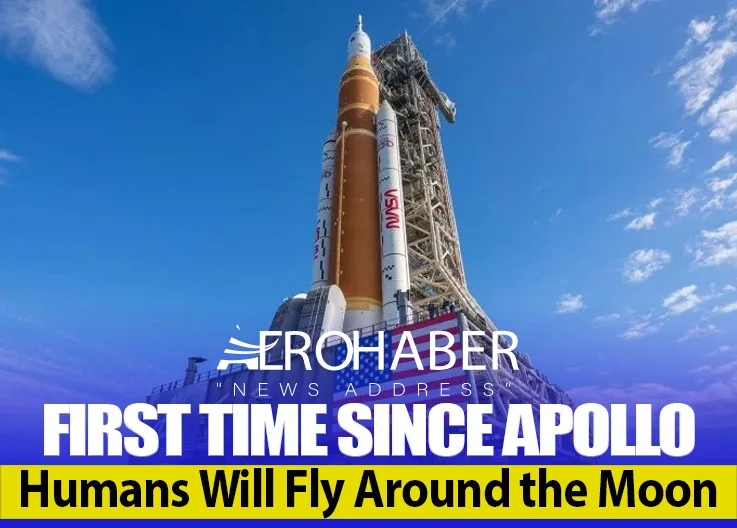


NASA is preparing to introduce the Space Launch System (SLS), the most powerful rocket it has ever developed, ahead of the Artemis II mission. The mission will restart crewed flights around the Moon after a gap of more than 50 years.
The US National Aeronautics and Space Administration (NASA) is preparing to introduce the Space Launch System (SLS), the most powerful rocket it has developed to date, ahead of the first crewed lunar flight to be carried out after a break of more than 50 years.
Integrated with the Orion crew capsule, the SLS rocket will begin an approximately 6-kilometre transfer from the Vehicle Assembly Building (VAB) at the Kennedy Space Center in Florida to the launch pad. This process is considered one of the final major preparation stages ahead of the Artemis II mission.
Artemis II Mission: A 10-Day Journey Around the Moon
As part of the Artemis II mission, which is planned to launch no earlier than 6 February, astronauts will carry out a journey of approximately 685,000 miles (about 1.1 million kilometres) around the Moon. The crew is planned to return to Earth after a mission lasting around 10 days.
In addition to being the second test flight of the SLS rocket, Artemis II will be the first SLS mission to carry astronauts. The four-person crew will remain inside the Orion capsule throughout the mission, conducting system tests and performance evaluations.

International Crew on the Mission
The mission will include NASA astronauts Reid Wiseman, Victor Glover and Christina Koch, along with Jeremy Hansen from the Canadian Space Agency. The crew will not land on the Moon but will be the first people to fly around it since the Apollo 17 mission in 1972.
NASA officials emphasise that Artemis II is a critical milestone for the Artemis III mission, which aims to land humans on the surface of the Moon.