
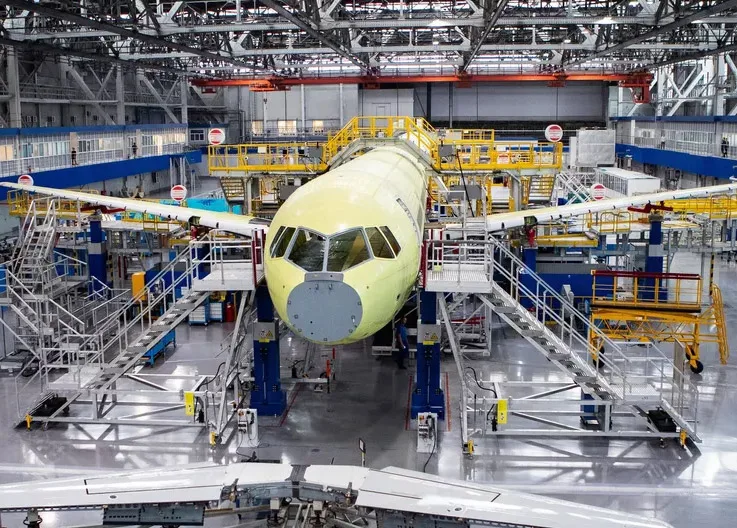


Russia is accelerating its domestic civil aviation manufacturing. Rostec CEO Sergey Chemezov announced that the Russian-made MS-21, SJ-100 (Superjet-100), and Il-114 passenger aircraft will enter serial production starting in 2025.
In the public portion of his meeting with Prime Minister Mikhail Mishustin in Moscow, Chemezov emphasised that more than 70 systems used in the MS-21 are now entirely produced in Russia.
“This month, we plan to carry out the first flight of the fully import-substituted MS-21. Once the certification process is complete, we will launch serial production by the end of 2025,” he said.
Target for Superjet and Il-114: 2026
Chemezov also shared a major development regarding the SJ-100, which is expected to meet Russia’s regional jet demand:
“The Superjet is now fully domestically equipped. Certification flights are currently ongoing. According to our plans, we aim to start mass production in 2026. The same timeline applies to the Il-114 model.”
Infrastructure for Maintenance and Spare Parts Being Established
Chemezov noted that alongside production, a domestic maintenance and spare parts supply chain is being built:
“We have established eight service points so far. By 2030, this number will reach 15, and with the cooperation of airlines, a total of 50 maintenance centres will be in operation. We will provide technical services and ensure timely delivery of spare parts for the aircraft.”
Sanctions Have Strained the Aviation Sector
Following the outbreak of the Russia–Ukraine war in February 2022, sanctions imposed by the United States and the European Union had a direct impact on Russia’s civil aviation sector.
-
Boeing and Airbus halted aircraft and parts deliveries to Russia.
-
Leased aircraft were recalled.
-
Russian companies lost access to maintenance and technical support.
This situation pushed Russia to intensify its efforts towards full independence in aviation by prioritising domestically developed aircraft projects.
Expectations Still High
Although the MS-21 and SJ-100 projects are of strategic importance, production and delivery stages have yet to fully meet expectations. However, Russian officials state that the gap will be closed after 2025 and that the sector will once again operate independently of foreign suppliers.