
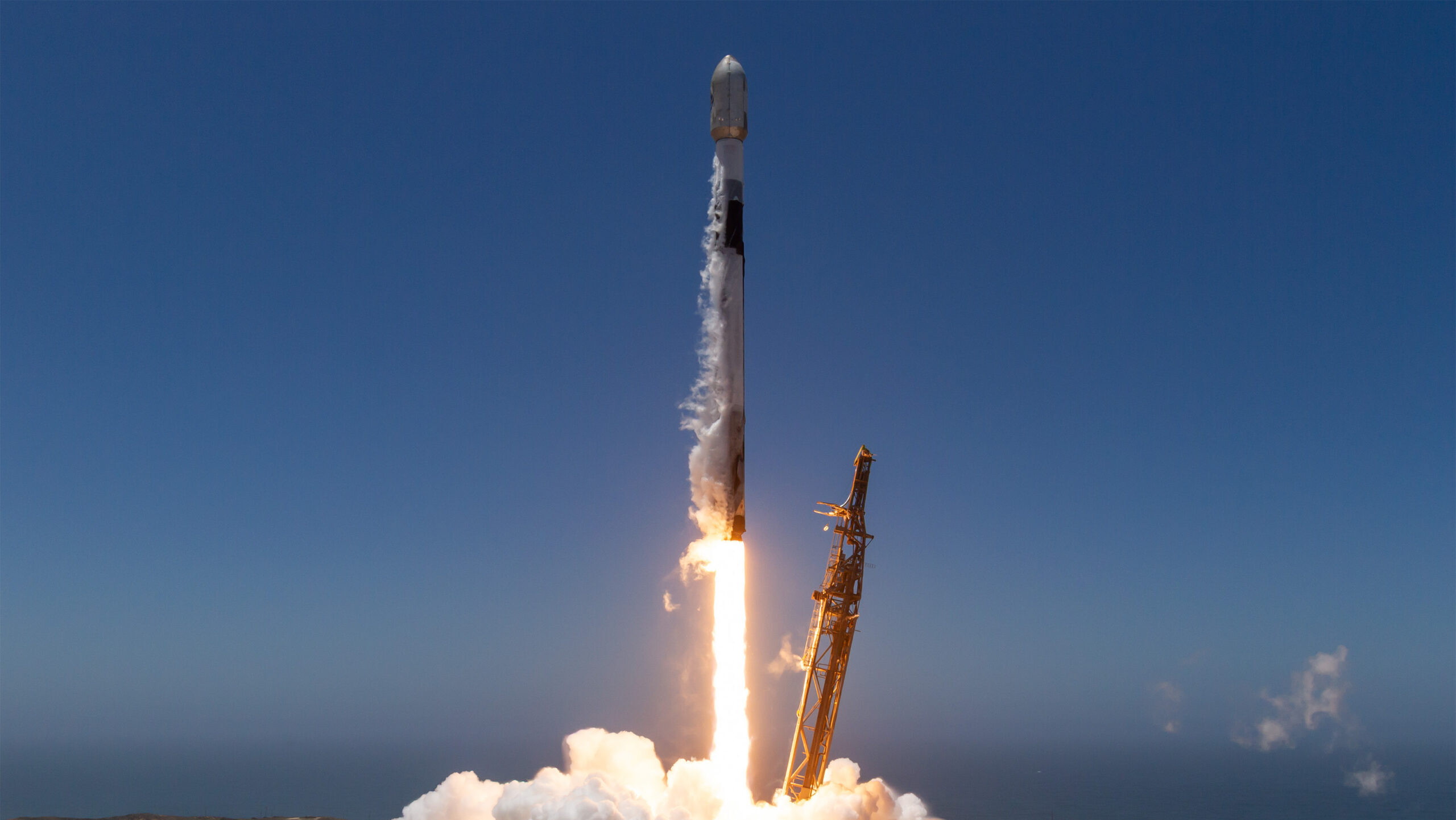


WASHINGTON — The Space Force’s move to increase the contract ceiling for less complex, less critical launches by $11.4 billion will cover an additional 110 launches, raising the total number of expected missions to 170 over the next decade, according to a Space Systems Command (SSC) spokesperson.
The Space Force on July 17 announced the tripling of its original $5.6 billion ceiling for the the National Security Space Launch Phase 3 Lane 1 program, bringing the total to $17 billion. The indefinite delivery/indefinite quantity (ID/IQ) contract has a five-year base plus a five-year option between 2025 and 2034.
“When the Phase 3 Lane 1 contract was awarded in June 2024, there were a total of 60 missions expected for order,” the SSC spokesperson told Breaking Defense today. “The total number of estimated missions has now increased to approximately 170 due to the growing demand to deliver critical capabilities to orbit. … As a result, it was necessary to increase the ID/IQ contract value in response to the new estimated mission quantities expected to be ordered.
“The Lane 1 ceiling increase allows for launch services to be funded through a combination of reconciliation and baseline budget funds,” the spokesperson added.
SSC originally chose SpaceX, United Launch Alliance (ULA) and Blue Origin to compete under the Lane 1 program. Last March Rocket Lab and Stoke Space were added to the pool, followed by startups Impulse Space and Relativity Federal on July 8.
Vendors selected under the ID/IQ compete for individual launch task orders. So far, SpaceX has nabbed the bulk of them.
In October 2024, SpaceX was awarded the first such order, worth almost $734 million for seven Space Development Agency (SDA) launches and an undisclosed number for the National Reconnaissance Office (NRO). On Jan. 9, SpaceX won a task order for another nine launches for both SDA and NRO worth $739 million. On April 1, it won yet another two SDA launches, worth $178 million.
How defensive cyber responds to hockey-stick growth of AI-driven threats
Artificial intelligence is reshaping adversarial cyber operations at machine speed, requiring defenders to increase operational tempo while imposing pain and cost.
Blue Origin won its first task order on May 28, just hours before the spectacular explosion of its New Glenn rocket that also heavily damaged its launch pad at Cape Canaveral.
Orijinal Haberi Görüntüle