


Airbus has begun intensive testing of the main deck cargo door and cargo loading systems for its next-generation freighter, the A350F, in Bremen.
European aircraft manufacturer Airbus has entered a critical phase in the testing campaign for its next-generation freighter aircraft, the Airbus A350F. Intensive engineering activities carried out at the company’s test facilities in Bremen, Germany, are drawing attention as the aircraft moves closer to operational reliability validation and certification readiness.
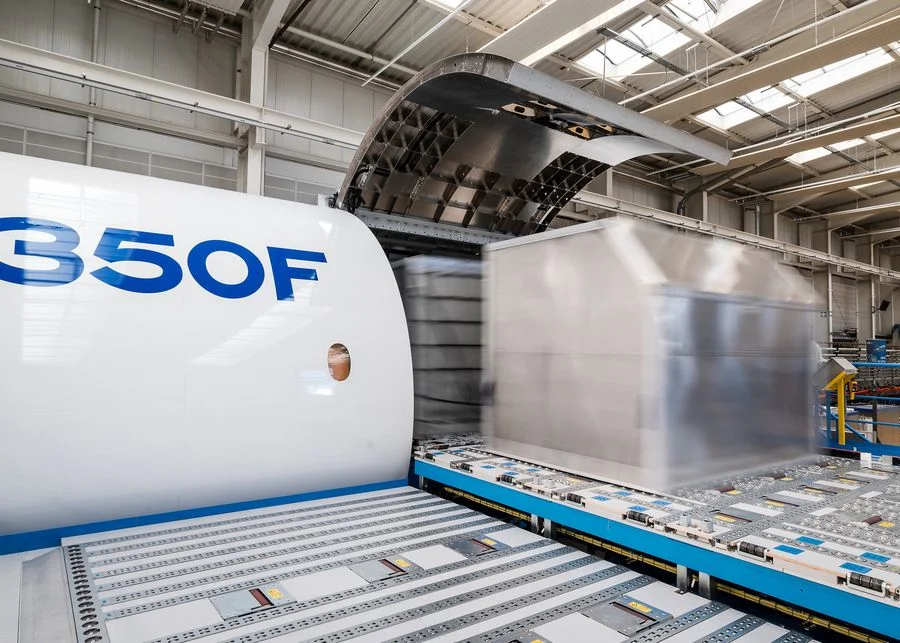
One of the key focus areas for Airbus is the validation of the “Main Deck Cargo Door” (MDCD) and the “Cargo Loading System” (CLS), both designed to enable the A350F to manage its massive payload capacity safely and efficiently. Airbus teams are testing digital designs under real operational conditions with the aim of bringing the systems to certification level.
More Than a Passenger Aircraft: A Cargo Platform Redesigned from Scratch
The A350F program is not simply about removing seats from a passenger aircraft and converting it into a freighter. Airbus’ approach is based on developing an entirely new-generation cargo operations infrastructure.
Among the systems forming the operational core of the aircraft are advanced loading and door mechanisms capable of carrying up to 111 tons of cargo. As the first flight and subsequent flight test campaign approach, the “Cargo Door Actuation System Integration Bench (CDAS SIB)” and “Cargo Zero” test rigs in Bremen have become central elements of the program.
Airbus Pursues a “More Electric” Freighter Concept
One of the key aspects highlighted by Airbus engineers is that the A350F has been developed under the concept of a “more electric aircraft.”
The new main deck cargo door has been designed to operate entirely with electric actuators instead of conventional hydraulic systems. This approach is not only a technical innovation, but also a strategic engineering choice that offers advantages in terms of space, weight, and maintenance.
Thanks to the new system, the giant cargo door can be opened and closed within 60 seconds and can operate even under 40-knot wind conditions. Airbus’ newly patented locking system has also attracted industry attention, as it will be used on a freighter aircraft for the first time.
The Industry’s Largest Cargo Door Under Testing
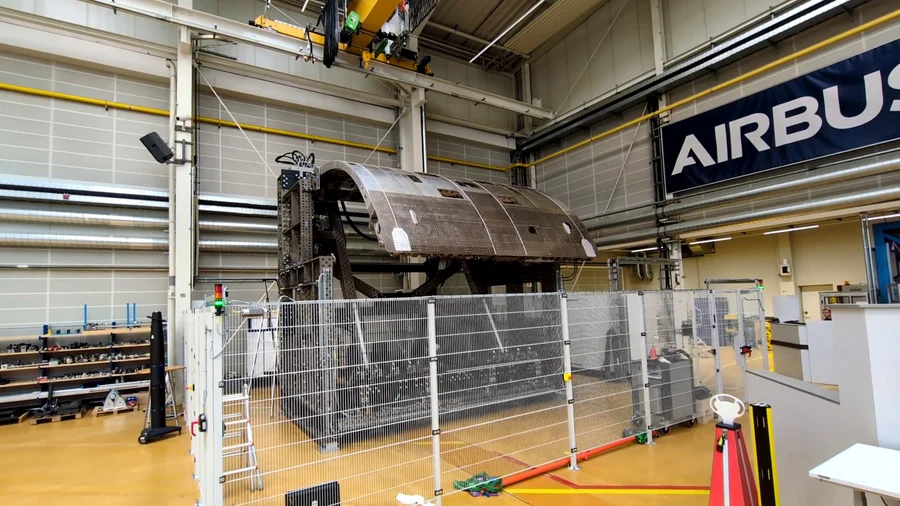
The main deck cargo door developed for the A350F features a 170-inch clear opening, making it one of the largest cargo doors in the industry.
During tests conducted on a dedicated rig weighing approximately 20 tons, the metal demonstrator door is repeatedly opened and closed under various structural load conditions. The structure, which shares the same center of gravity and stiffness characteristics as the carbon-fiber composite door to be used in final production, enables Airbus to simulate real operational conditions.
The tests are validating not only mechanical durability, but also sensors, software systems, electric actuators, and patented locking mechanisms. The resulting data will later form part of the core inputs for the European Union Aviation Safety Agency certification process.
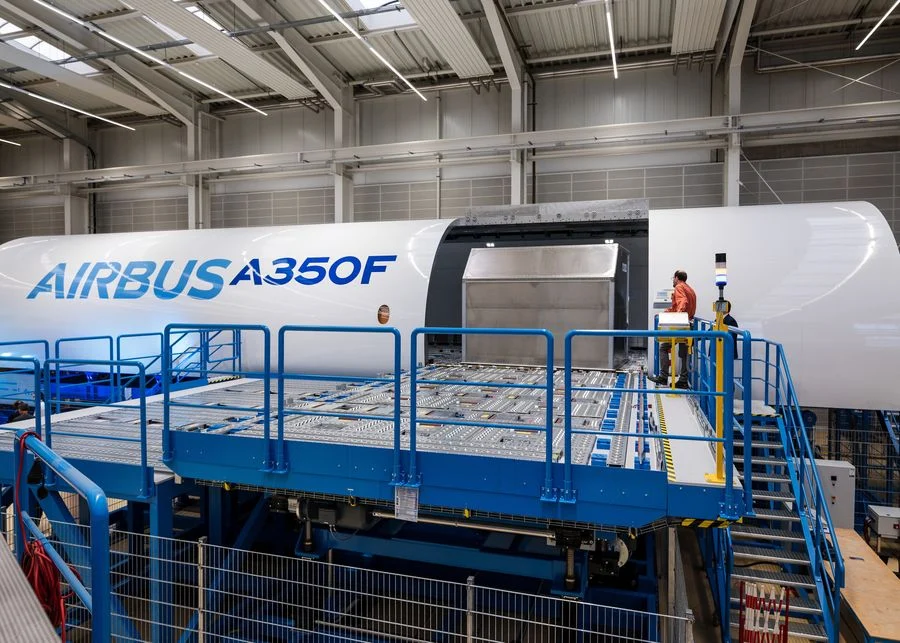
“Cargo Zero” Simulates Real Cargo Operations
The “Cargo Zero” system in Bremen is considered one of the most important validation platforms in Airbus’ A350F program.
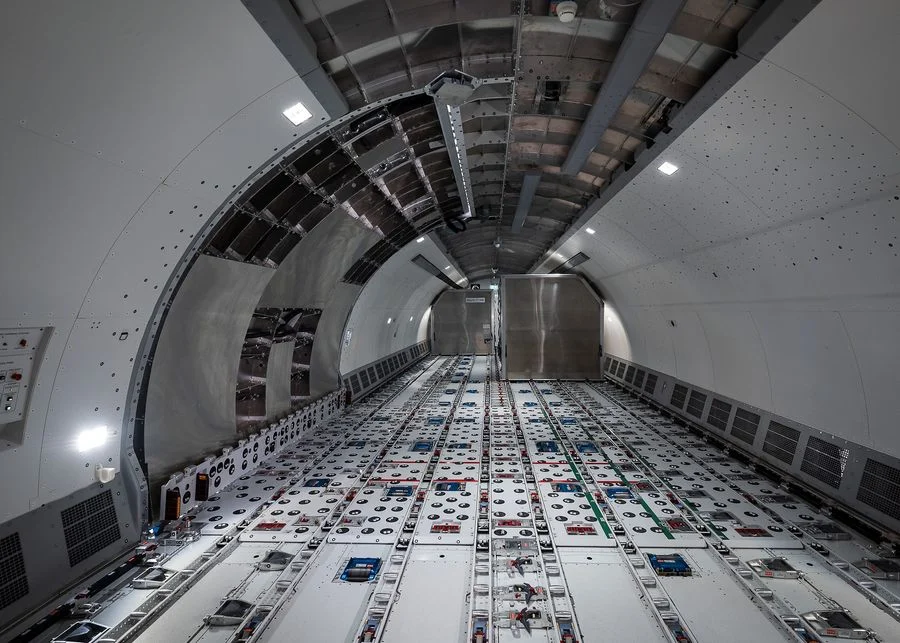
This full-scale test area, measuring 24 meters in length, accurately replicates a significant section of the actual A350F cargo compartment. The system includes:
- Electric power drive units (PDU),
- Control panels,
- Locking mechanisms,
- Mechanical cylinder systems,
- Real floor rails and beams.
Different cargo types, weight distributions, and aircraft tilt angles are tested on this platform. In particular, the simulation of operationally critical scenarios such as loading large turbofan engines has become an important milestone in preparing the A350F for real cargo operations.
Recovery Scenarios and Safety Tests Also Underway
Airbus teams are focusing not only on cargo loading operations, but also on emergency scenarios.
Tests carried out on Cargo Zero include:
- Medical evacuation scenarios,
- Access tests to areas behind the cockpit,
- Unbalanced loading conditions,
- Tail tip-over risk analyses.
The “tail tip-over warning system,” in particular, has been developed to prevent the aircraft fuselage from tipping backward in cases of excessive rear loading. The system is expected to play a critical role in future high-volume cargo operations.
A350F Could Become the Symbol of a New Era in Air Cargo
As the global air cargo market increasingly focuses on efficiency, automation, and lower operating costs, Airbus’ A350F program is positioning itself at the center of this transformation.
Its fully electric system architecture, high payload capacity, and advanced digital integration approach are shaping the A350F into a strategic platform for the logistics operations of the future.
Aviation industry reports suggest that, if the certification process is successfully completed, the A350F could secure a significant market share, particularly in long-haul cargo operations.