


Strong Message from Boeing on its 80th Year in Turkey: “Procurement Volume from the Turkish Aviation Industry Surpasses $2 Billion”
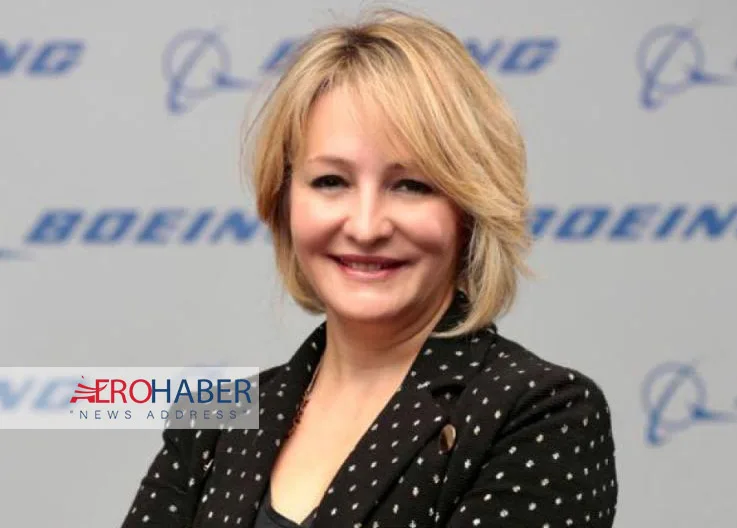
Boeing Turkey and Central Asia Managing Director Ayşem Sargın announced that Boeing’s total procurement volume from the Turkish aviation industry has exceeded $2 billion to date. Sargın expressed pride in Boeing’s long-standing partnership with Turkey, spanning more than 80 years.
Emphasising that Turkey is not only a priority growth market for Boeing but also a strategic resource country in terms of industrial, engineering, and technological capabilities, Sargın noted that under the Boeing Turkey National Aviation Plan (NAI), launched in 2017, cooperation in industry, technology, regional services, and capability development has been deepened.
Sargın stated that Boeing’s supplier network in Turkey includes more than 20 companies operating in Ankara, Istanbul, Izmir, Bursa, Kayseri, and Eskişehir. Turkish suppliers provide components for all next-generation commercial aircraft from the 737 to the 787, as well as defence platforms such as the Chinook and P-8.

Strategic Investments in Education and Engineering
Sargın highlighted that the Newton Flight Academy in Istanbul provides STEM-based education for young people, while the Engineering and Technology Centre established at Istanbul Teknopark in 2018 is one of Boeing’s select centres worldwide. With around 100 engineers, this centre contributes to the global product development process while also strengthening Turkey’s future leadership capacity in aviation.
A Vision for Sustainable Aviation
In line with Boeing’s global net zero targets, the company is investing in technologies such as sustainable aviation fuel (SAF), green hydrogen, and electric flight. Sargın emphasised that SAF has the potential to reduce carbon emissions by up to 80% compared to conventional jet fuel.
She further stated that, thanks to its strategic location, major airport infrastructure, and strong airlines, Turkey will play a key role in the regional development of sustainable aviation. Within the framework of the Turkey Sustainable Aviation Platform (TSAA), domestic biomass resources are being analysed for SAF production.
“Turkey Will Play a Critical Role in the Future of Global Aviation”
Sargın said, “Turkey is not only a valued customer; it is also a critical part of our global supply chain, a hub for advanced engineering, and an important partner in shaping the future of sustainable aviation. Our partnership is built on mutual benefit, and we are committed to strengthening it further in the coming decades.”
Boeing underlined that the journey, which began in 1945 with the delivery of its first DC-3 aircraft to Turkey, has evolved into a strategic partnership built on trust, innovation, and a shared vision.