


MELBOURNE — Australia and Japan have successfully conducted field trials of a co-developed high-energy laser that could see applications on board ground vehicles and naval vessels, Australia’s Minister for Defence Industry Pat Conroy said in a release today.
The laser, dubbed Project Boobook after an Australian species of owl, was a collaborative effort between Australia’s Defence Science and Technology Group (DSTG), Japan’s Mitsubishi Electric Australia (MEA) and Mitsubishi Electric Corporation (MELCO). The dates of the trial were unspecified in the release.
“The laser system draws on more than 20 years of research and development by DSTG to deliver a cutting-edge technology with the potential to enhance surveillance capability,” according to the release.
This is the first time the defense industries of both countries have undertaken a joint development, and Conroy said it was “a practical example of the growing defence industrial partnership between Australia and Japan, as well as the opportunities that partnership creates for both nations.”
MEA will be investing 70 million Australian dollars ($49.8 million USD) towards establishing new facilities “in preparation for large-scale manufacturing within Australia,” per the release.
The new facility at Rydalmere in the western suburbs of Australia’s largest city Sydney will support “future manufacturing opportunities in Australia and strengthening access to advanced Mitsubishi Electric defence technologies for the Australian Defence Force into the future,” according to the release. Conroy added that it “is a strong vote of confidence in Australia’s defence industrial future and will support new opportunities for advanced manufacturing, technology transfer and workforce growth.”
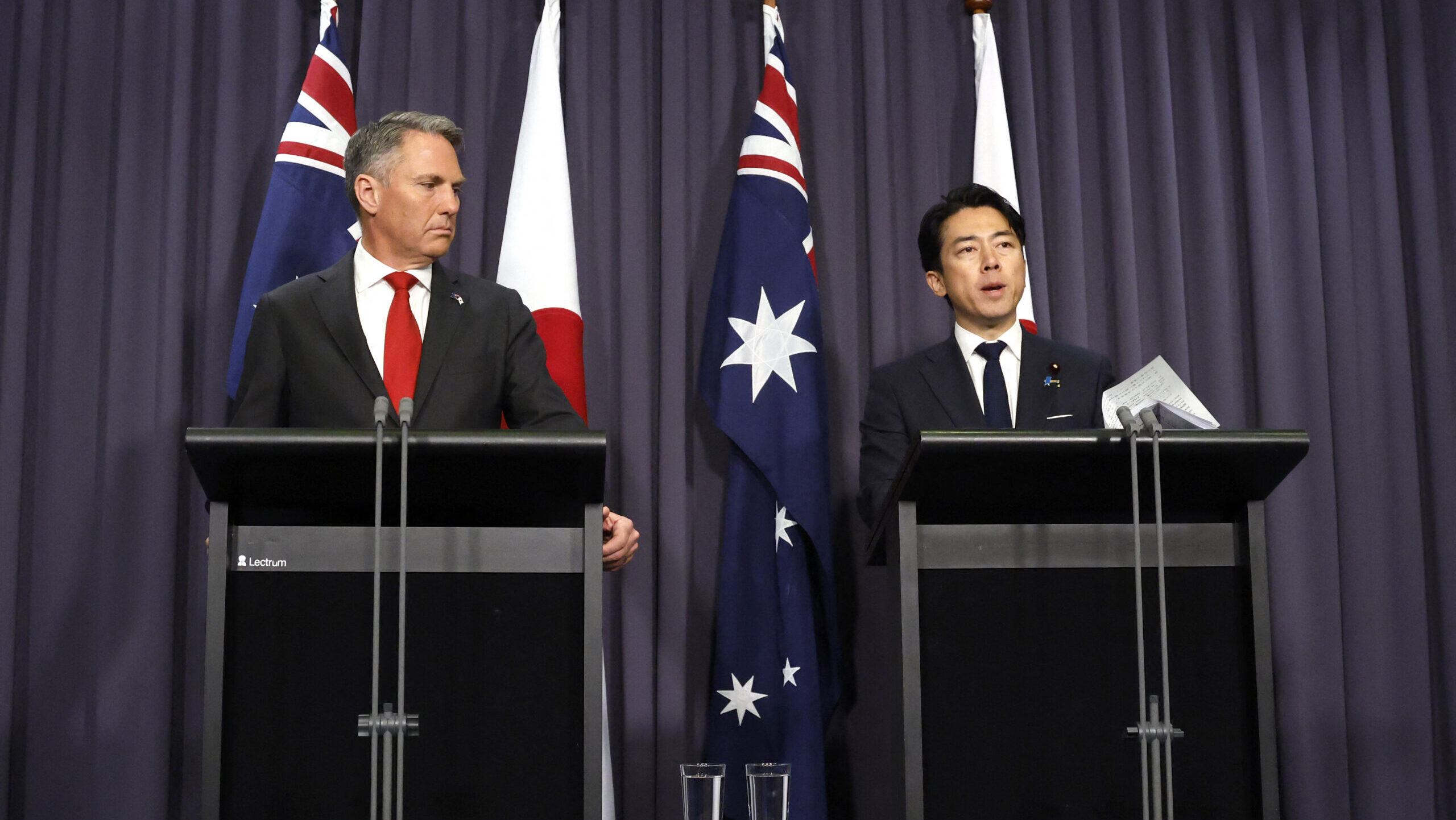
The news release did not disclose the power output of the laser or its applications, though Australian defense minister Richard Marles said at a joint press conference with his Japanese counterpart Shinjiro Koizumi today that Project Boobook “is about an enhanced laser capability that can be put on land combat platforms as well as littoral platforms, which gives greater protection and situational awareness by using lasers to optically detect incoming threats.”
Marles also said that Australia will “accelerate discussions with providing Japan with enhanced access to its missile ranges over the next decade for testing various missiles, including hypersonic weapons.
“If the Japan Self-Defense Forces are able to conduct test launches of stand-off missiles, such as hypersonic missiles, in Australia, it would be a groundbreaking development, second only to similar cooperation with the United States.”
Japan has previously launched surface-to-air and anti-ship missiles in Australia while participating in joint exercises, although it has not done so as part of testing missiles that are under development.
Orijinal Haberi Görüntüle