


WASHINGTON — The Army has fallen well short of its goal to produce 100,000 155mm ammo rounds per month, according to a new Pentagon watchdog report that singled out a facility in Texas as having failed to produce any usable components since it officially opened in 2024.
The report, published by the Defense Department Inspector General, warned that the service’s inability to ramp up the ammo production “could decrease the DoW’s readiness and increase its risk of not meeting the operational needs of the United States, allies, and partner nations in potential future conflicts.” DoW is the unofficial name for DoD.
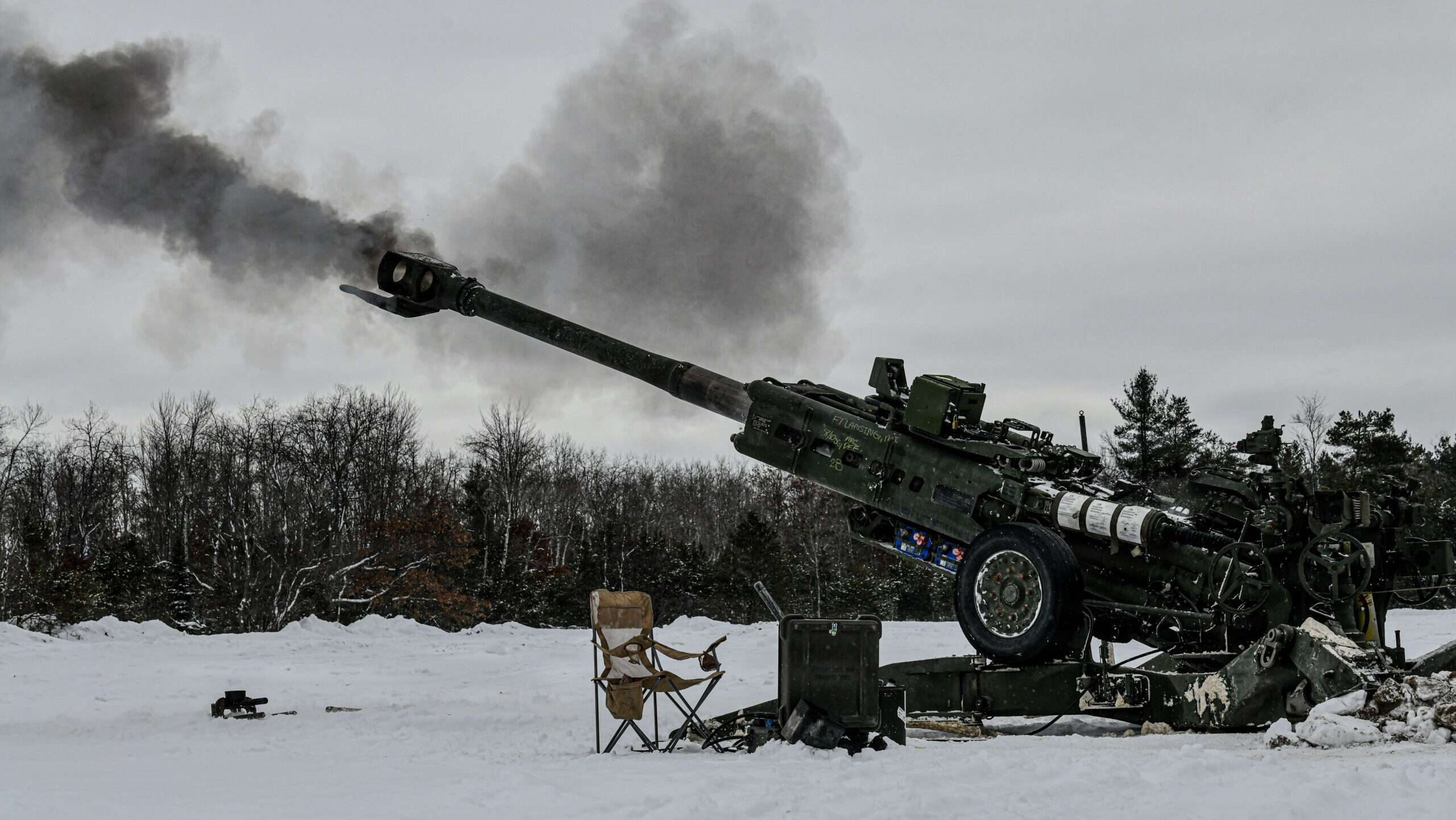
Following the heavy use of artillery after Russia invaded Ukraine in 2022, the US Army rushed to bolster 155mm production, looking to move from producing roughly 14,000 rounds per month to just north of 100,000 shells by October 2025. But as of March — five months after that deadline — the service only succeeded in boosting capability up to 36,000 rounds monthly.
The IG credited the modest increase in part due to “expansion and modernization efforts at both the projectile metal parts and the load, assemble, and pack facilities,” but said that the overall dramatic shortcoming came because two out of three existing metal parts production facilities each fell short of their goals — and one new facility was “unable to produce any projectile metal parts that meet contract specifications.”
That new facility, owned and operated by General Dynamics Ordnance and Tactical Systems (GD-OTS), is in Mesquite, Texas, and has drawn the ire of Army officials before. The facility, which cost the Army $469 million, was on the hook to produce 30,000 units a month. But as of March, that production was zero and without it, the Army “will reach only 71,000 rounds per month, or 71 percent of its month production capacity goal for 155-mm artillery rounds,” the IG said.
A company spokesperson told Breaking Defense it has now reached an agreement with the Army which “includes additional GDOTS investment to complete the project.”
“We appreciate the collaborative efforts of the US Army in working toward a positive resolution that enables this facility to deliver essential munitions to the US military,” the company spokesperson wrote in a short statement to Breaking Defense today.
An Army spokesperson did not directly respond to questions about that deal but pointed towards comments from the head of Army acquisition Brent Ingraham in May where he said the Army was not planning to invest more in the line. Rather, the plan is to move from three production lines down to two and only produce 20,000 units per month.
“They’re putting their own investment in to finish the line off with the focus on supporting a number of FMS [foreign military sale] allies and partners that want to continue buying 155 rounds,” Ingraham said at the time. “We’ll stay tightly connected with them. We’ll validate the product coming off the line. If the Army wants to buy rounds off that line, we can.”
The Army awarded a contract to GD-OST for the Mesquite facility in late 2022, and even then the Army knew it would be a “high-risk, high reward” opportunity, DoD IG wrote. Still, officials “accepted the contractor’s proposal to acquire [and] adapt unique production equipment and an unproven production process because equipment was already available.”
But within seven months of inking the deal, the company was missing initial milestones, and in June 2023, the service issued its first letter of schedule inquiry. By mid-2025, as Breaking Defense first reported, the Army was considering scrapping GD-OTS’s management of the project and issued a “show cause” letter. Part of the problem, that letter explained, is that equipment did not meet “technical requirements of the contract.”
By August 2025, the IG said the Army issued a 90-day “stop work” order and that was later extended in November, and then ultimately extended until April 30 to help the two parties “resolve production issues.”
According to the company spokesperson, a plan is now in place to get the project back on track. The spokesperson referred all specific questions on that plan to the Army, and the Army referred to its responses included in the IG report and previous comments by the service’s acquisition czar.
Among them, an Army official wrote in response to the IG’s findings that its “proposed plan” is to produce 20,000 units at the facility in Mesquite, but shift the production of another 9,000 over to “National Technological and Industrial Base (NTIB) sources that are currently being established and are projected to be available by December 2028.” (The IG does not seem convinced, writing in yet another response that the Army “does not provide details describing how the Mesquite contractor facility, which was not capable of producing M795 155-mm projectile metal parts as of March 2026, will achieve or start producing at the goal rate.”)
But problems with the Mesquite facility, only account for 30,000 rounds of that 64,000 round shortfall. Three other facilities are also working on 155mm projectile metal parts, and all but one is coming up short.
For example, the Scranton Army ammunition plant, also run by GD-OTS, should have been producing 35,000 units each month by October 2025 but was only at the 15,000 mark in March because of problems upgrading plant equipment. Up in Canada, the Ingwesoll facility operated by the IMT Group, should have been producing 15,000 rounds per month in March but was hovering around 10,000.
The one facility meeting its goals — a GD-OTS run facility in Wilkes-Barre, Pa., — is producing 21,000 rounds each month as planned.
Beyond finalizing a plan to rectify the shortcomings at Mesquite, the IG recommended the Army review GD-OTS’s contract for that facility to make sure it was money well spent. The Army largely agreed with those reviews, the IG said.
Orijinal Haberi Görüntüle