
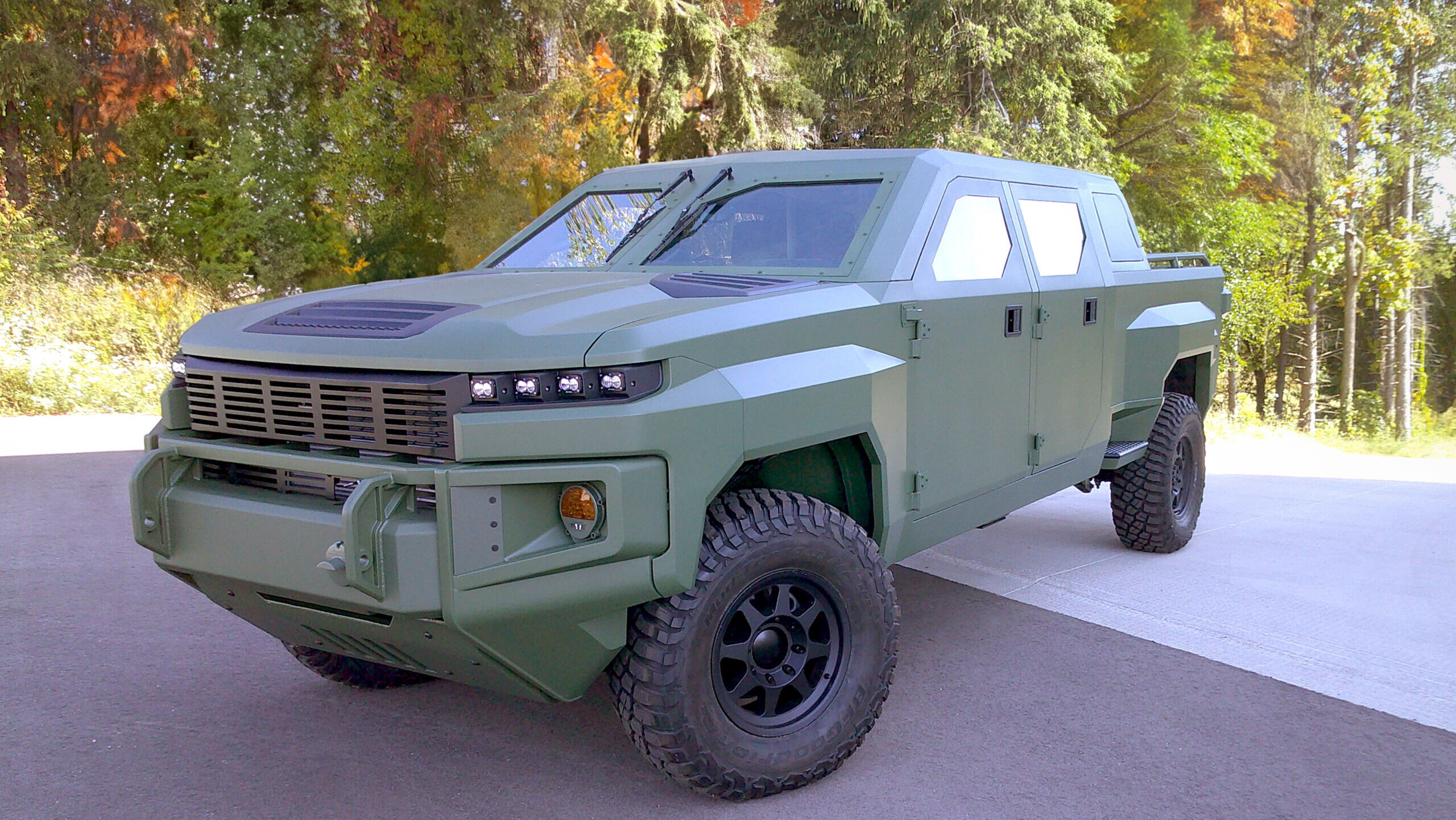


WASHINGTON — The Army recently awarded contracts to three vendors to develop prototypes for the heavy variant of the infantry squad vehicle, a service spokesperson told Breaking Defense today.GM Defense, Ford and BC Customs will provide three ISV-Heavy variants each to the service by March 30, 2027, per the other transaction agreements (OTA). The nine vehicles will then undergo operational assessments and “limited developmental testing” with the Army Test and Evaluation Command, according to the spokesperson, who added that the awards were made on June 30. The Wall Street Journal first reported the awards today. “This competitive prototyping effort directly advances Army Senior Leader directives to enhance lethality and operational flexibility on the modern battlefield,” the spokesperson said in a statement.
The Army did not respond to a request for comment on the dollar amount of the awards.
The news came as President Donald Trump toured GM Defense’s Milford Proving Ground in Michigan today ahead of a planned speech on manufacturing jobs and trade tariffs.
GM previously announced it would be offering the militarized version of its Chevrolet Silverado HD 3500 truck for the ISV-Heavy competition, and Ford confirmed to Breaking Defense today that it will provide its tricked-out version of the F-Series pickup truck for the competition. BC Customs did not respond to a request for comment by the time of publication.
“We are excited to start work on this Army contract and look forward to delivering several incredibly capable vehicle protypes [sic] that demonstrate the value Ford can provide to the Army and soldiers,” a Ford spokesperson said in a statement.
GM Defense is currently providing the Army with its original ISV variant based on the company’s Chevrolet Colorado.
Today’s news appears to indicate the Army is ahead of schedule on dishing out ISV-Heavy prototype awards. The Army’s principal deputy of Assistant Secretary of the Army for Acquisition, Logistics and Technology, Jesse Tolleson, told lawmakers last month that a request for prototype proposals for the vehicle were expected to be released by the fourth quarter of this calendar year.
Right sized for the fight, smaller Group 2 drones are solving for the limitations of larger UAS
It’s fuel cells, not batteries, that let Group 2 unmanned VTOLS fulfill many missions of larger Group 3s.
Tolleson explained that while the original ISV has allowed soldiers to zip around the battlefield with more agility and speed, the service is hoping the heavy variant will provide more mobile electrical power. The Army is currently facing a “critical capability gap” in this area, he added.The ISV-Heavy, given its bigger size, will allow soldiers to generate exportable power or onboard power, Tolleson said last month, explaining that the new variant will power command posts in the field. According to a commercial solutions opening from the service published in March, the Army is looking for vehicles that can fit six soldiers, can provide 60 kW of continuous high-voltage DC power, 15 kW of 28V DC power and 4.8 kW of 120V AC power.
Orijinal Haberi Görüntüle