
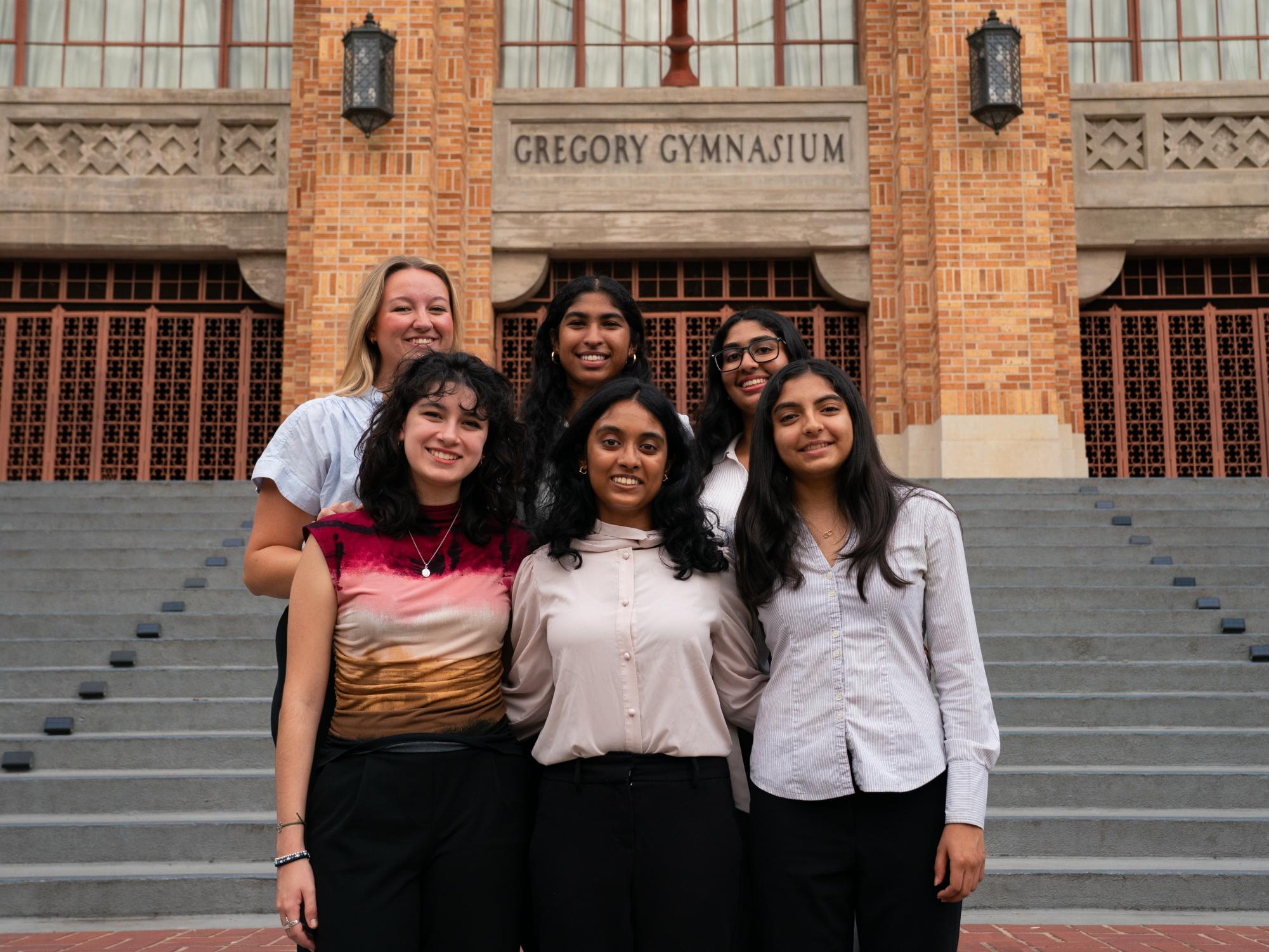


Two teams of all-women UT students won a total of more than $45,000 at a July NASA competition for developing a heart-monitoring device and lunar infrastructure designed to function in the Moon’s environment.
The teams developed the technologies for NASA-ORBIT, a competition that challenges students to turn NASA patents into new technology that solves problems on Earth or in space. For the competition, the heart-monitoring project called HeartSense and a project called CRYO-MORPH focused on addressing current limitations in technology.
Now, the HeartSense team, which won $30,000, are investing that money into making their device smaller and more accurate.
“It’s a 3D-printed case with a full microcontroller, which is like (a) computer. It’s what has the code run through it to understand and interpret the signals coming from the heart,” said Piyali Bhattacharya, an electrical and computer engineering sophomore. “It’s very bulky… so one thing that we have wanted to do was make it into a smaller, condensed (device).”
Bhattacharya said they got the idea after they noticed that traditional stethoscopes and smartwatches often miss signs of heart irregularities.
Ramesh Yerraballi, a professor of instruction in the Department of Electrical and Computer Engineering who served as the group’s project advisor, said he cannot take credit for the independent work of the “self-driven” students.
“There were around 15 or so (teams) that were selected from all over the country, and they were one of them, and they were freshmen,” Yerraballi said. “I thought that was pretty impressive that they proposed something that got that much traction.”
Aerospace engineering senior Quynh Nguyen worked on the CRYO MORPH project, which focused on designing infrastructure that can successfully operate in the lunar environment. She said they designed the technology to operate without gears or motors, due to the large amount of dust surrounding the moon.
“It just made aerospace feel more real because I’m doing something hands-on, not just reading material off of the textbook,” Nguyen said. “It’s just a real problem that we’re trying to fix with NASA.
Bhattacharya said their team continues to stay close friends and talk about HeartSense every day between classes and other commitments.
“One thing that has really stuck with me is that passion is something that’s an inherent motivator,” Bhattacharya said. “It will push you more than any other motivator will.”