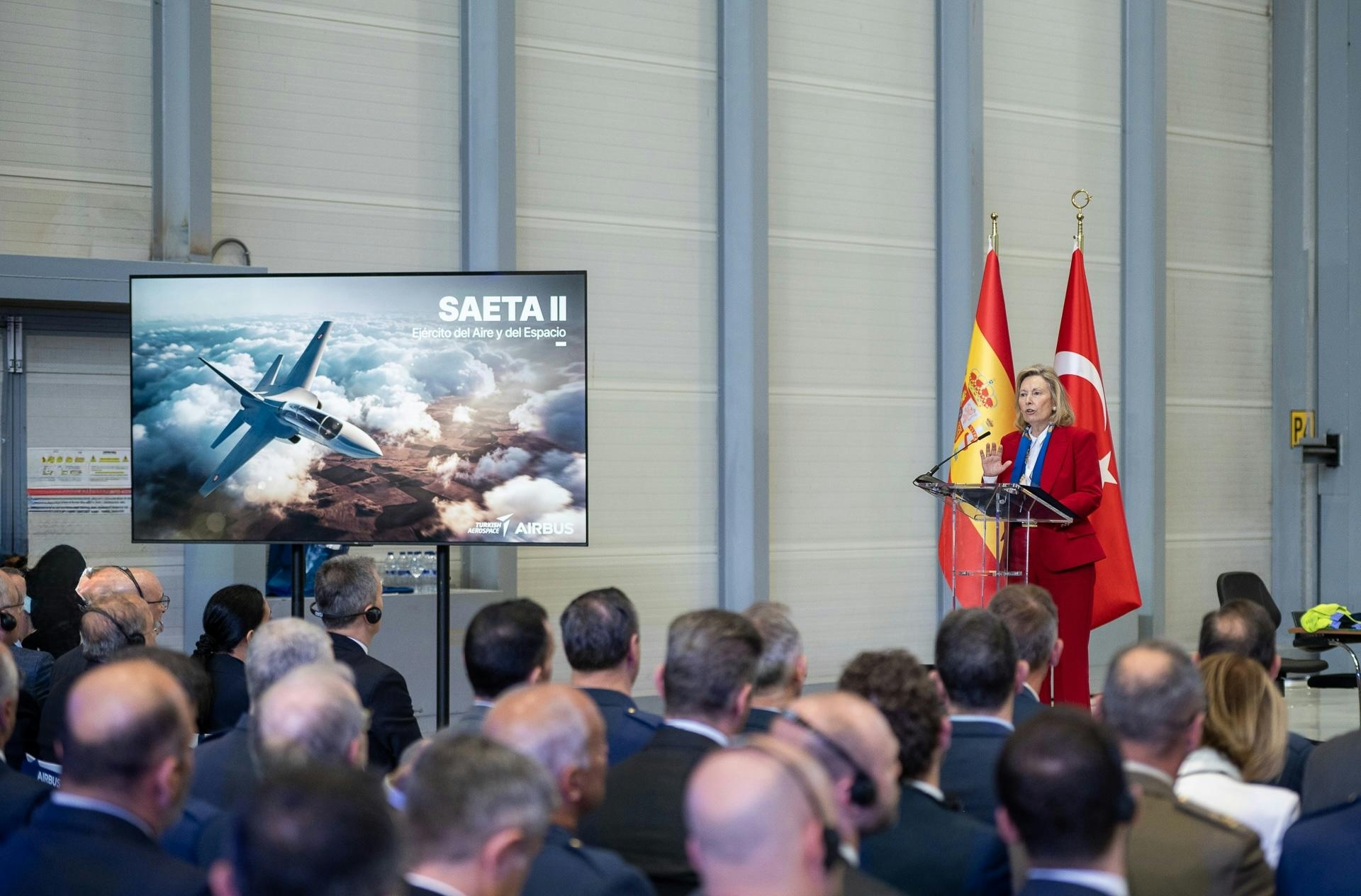

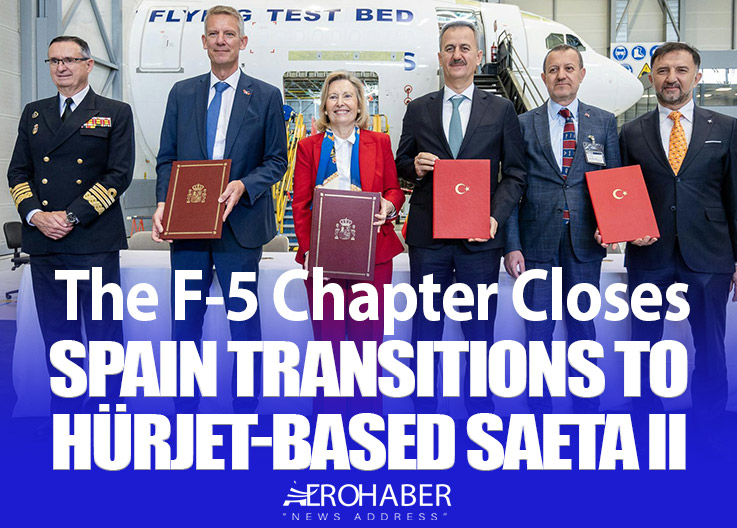


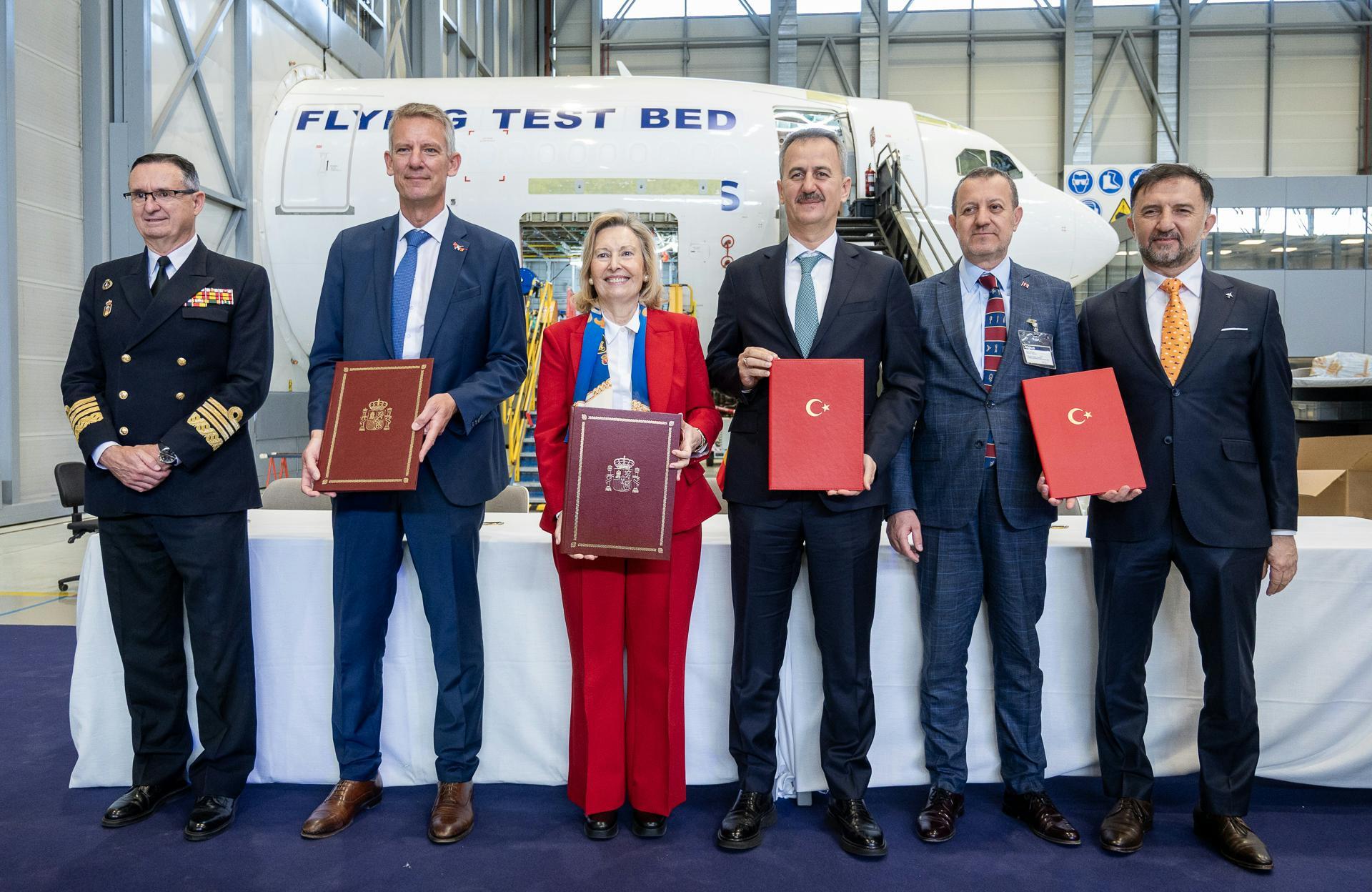
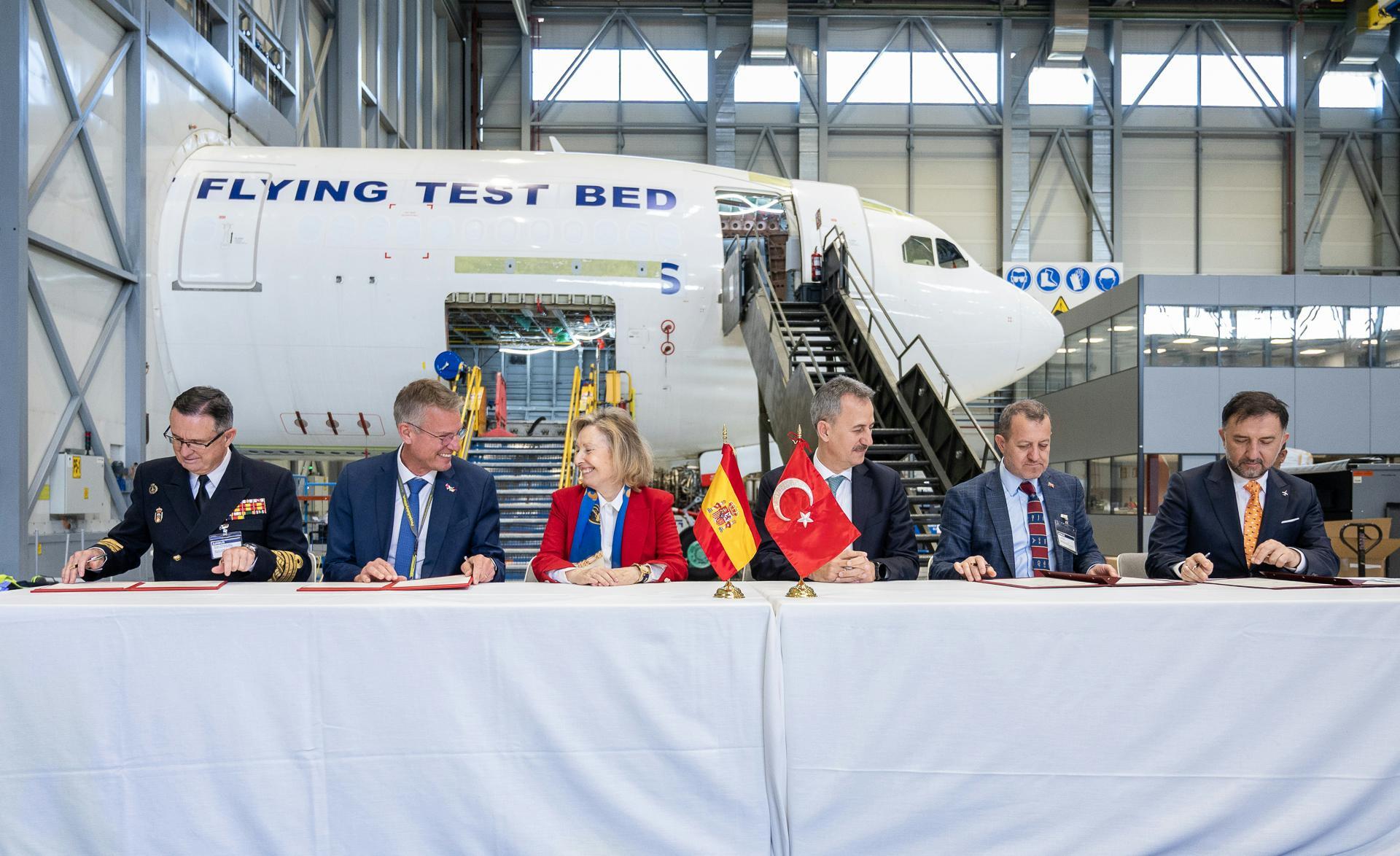
The group of Spanish companies led by Airbus today introduced the industrial programme for the new Integrated Combat Training System (ITS-C) of the Spanish Air and Space Force. The programme, for which a contract was awarded in December 2025, will replace the existing F-5 aircraft fleet and will include a 60% national industrial participation rate.
The ITS-C programme, based on a joint development agreement between the main contractor Airbus and Turkish Aerospace (TUSAŞ), the manufacturer of the HÜRJET training aircraft, covers the entire advanced training process of Spanish fighter pilots. This scope ranges from the customisation of a 30-aircraft fleet—nationally designated as SAETA II—according to Spanish requirements, to the integrated provision of operations and maintenance services.
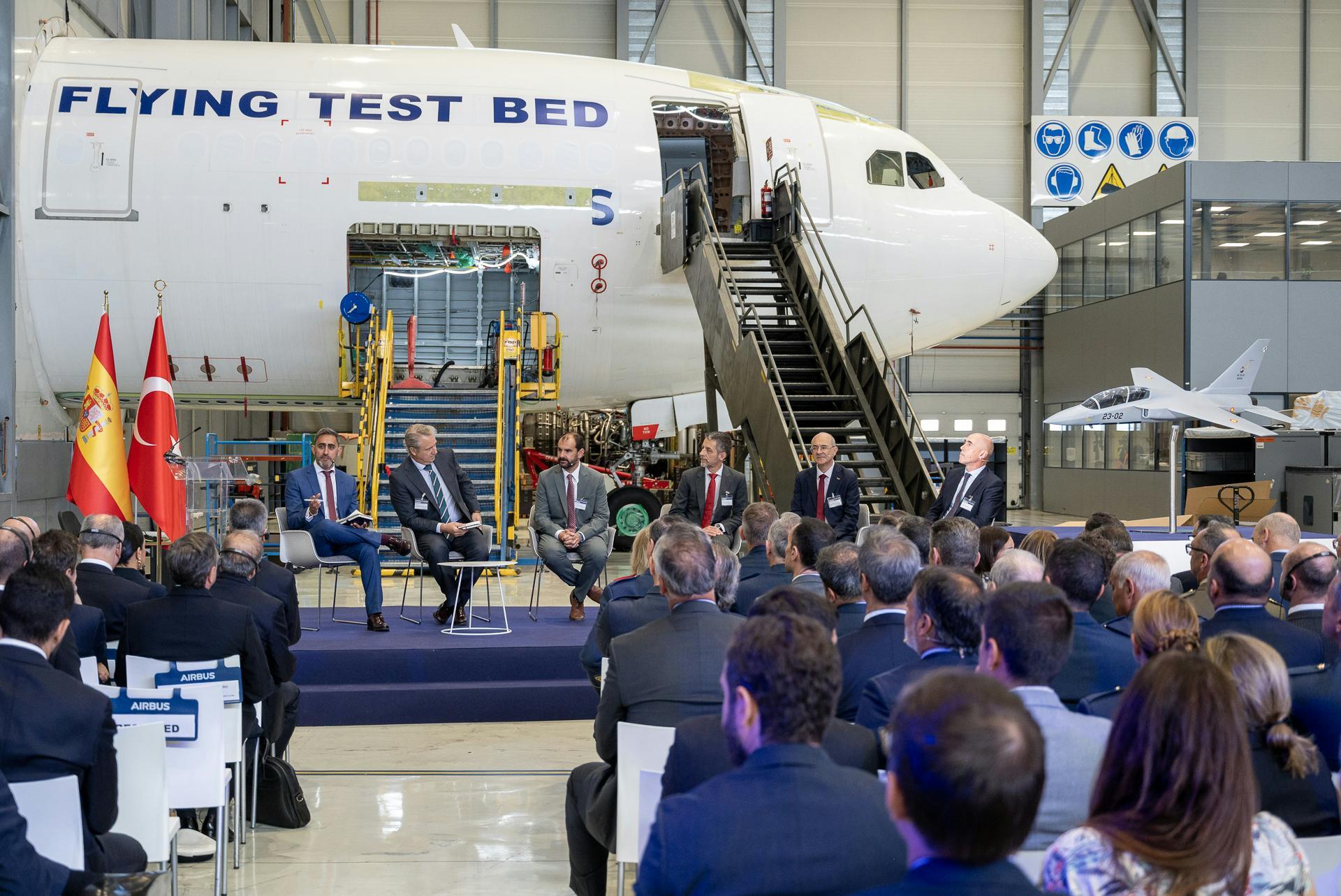
In addition to the conversion and integration of new equipment on the aircraft, Airbus will lead the redesign of the Fighter and Attack School Training Centre located at Talavera la Real Air Base in Spain’s Extremadura region. The centre, which will include state-of-the-art simulators developed in cooperation with Indra, will aim to maximise fleet availability by providing logistical support for operations and maintenance of both the aircraft and synthetic training systems.
Marta Nogueira, Head of Business Development at Airbus Defence and Space Spain, said: “Through this national programme, Spain is achieving three strategic objectives: we are enabling technology transfer in key areas, securing a significant industrial return, and most importantly, granting the programme the strategic sovereignty and independence required to manage the system’s sustainability and future development.”
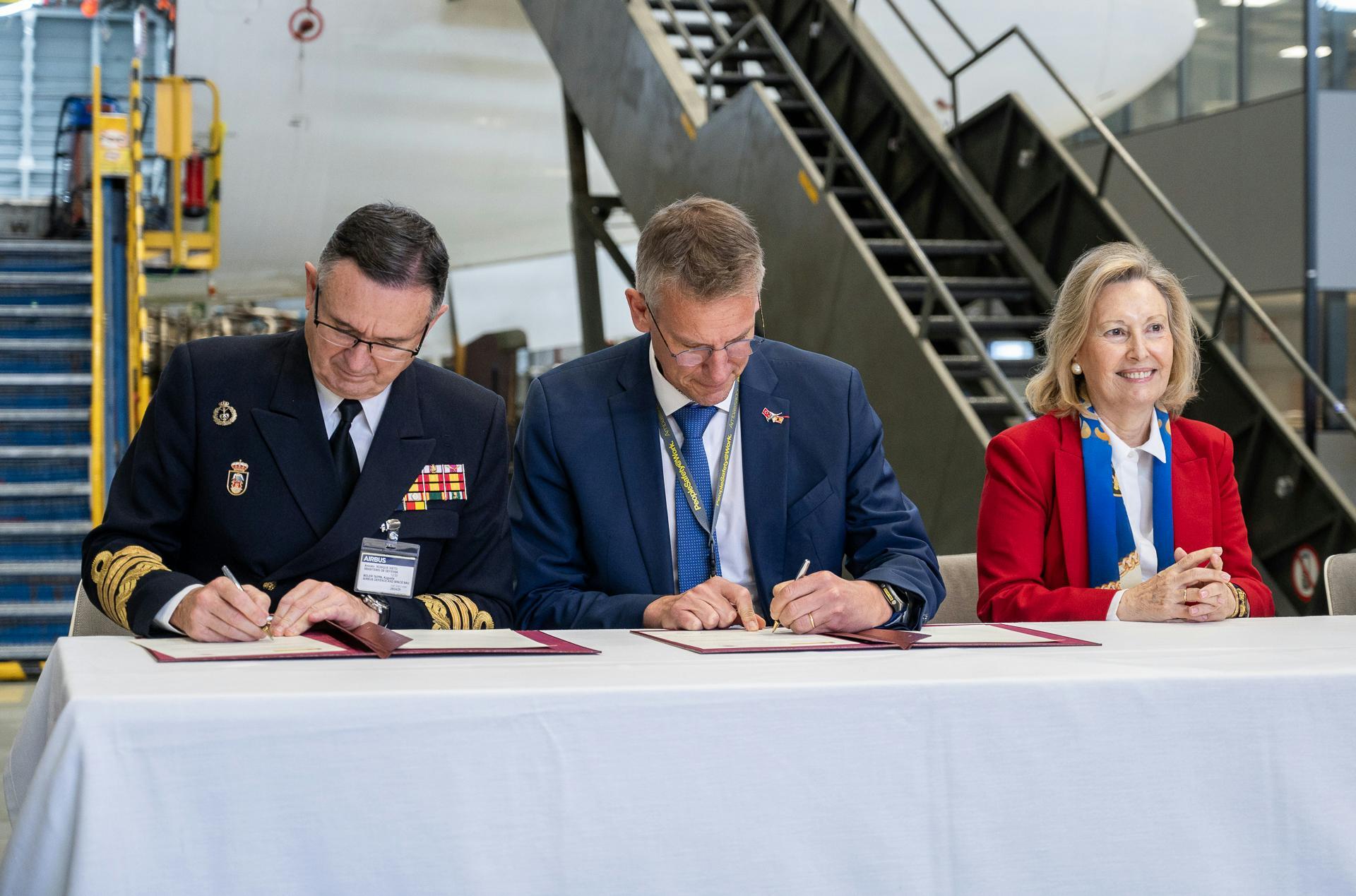
Spanish Secretary of State for Defence Amparo Valcarce, in her speech, highlighted the programme’s strong national component, stating: “This project is an initiative that mobilises our industry, creating knowledge, employment and opportunities throughout the entire value chain.” Valcarce also emphasised that the project “strengthens our strategic autonomy and reduces critical dependencies by enabling us to design, integrate and develop our own capabilities.”
Two phases: Modernising the aircraft’s “brain” and nationalising the system
The first phase, planned to begin in 2028, focuses on the delivery of the first batch of 21 aircraft. One of these aircraft will be used by Airbus as a prototype for the integration of next-generation avionics and mission equipment. At the same time, development and production activities for the ground-based training system—planned to enter service in the 2029–2030 training year—will be carried out.
In the second phase, these 21 aircraft along with the remaining 9 aircraft on order will be converted to Spanish standards, and the simulators will also be updated to this new version. Deliveries of the Spanish version of SAETA II and the ground-based training system will take place between 2031 and 2035.
Technological sovereignty and national integration
The Spanish industry, led by Airbus, will independently manage the maintenance, currency and development of this fleet.
Beyond the production of main components, electrical wiring, and the design and construction of the conversion centre, the Spanish industry will also be responsible for integrating critical national technologies for avionics and mission systems: GMV (inertial/GPS and mission computer), Sener (DataLink), Aertec (remote interface unit), Grupo Oesía (audio management), Orbital (VMDR mission recorder), and Indra (friend-or-foe identification system).