
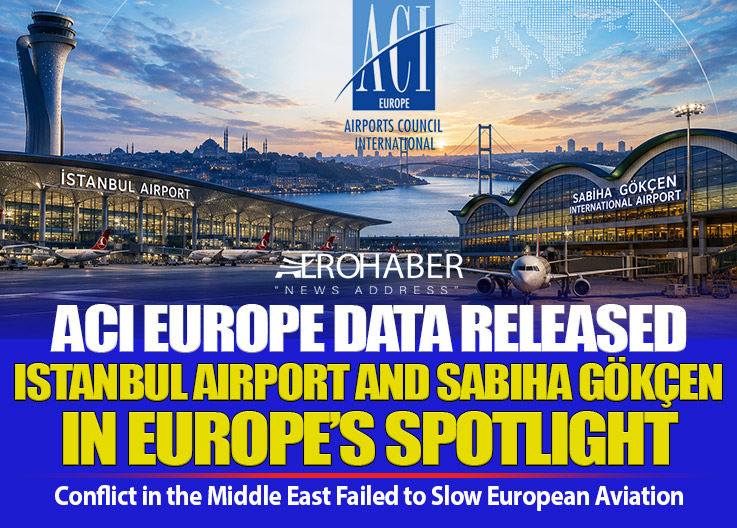


According to ACI EUROPE data, European air passenger traffic increased by 3.8 percent in March. Istanbul and Sabiha Gökçen airports ranked among Europe’s fastest-growing major hubs.
Despite geopolitical tensions, the growth momentum in the European aviation sector continues. The March 2026 traffic report published by ACI EUROPE shows that passenger traffic across European airports increased by 3.8 percent compared to the same period last year.
The continued rise in passenger demand despite the conflict that began on February 28 stands out as a remarkable indicator of resilience for the sector. The March figures, which are very close to the 4.2 percent growth recorded in February, show that the impact of global crises on air transport has now become more limited.
Israel Crisis Failed to Fully Disrupt European Traffic
According to the report, passenger traffic at airports in the European Union and associated markets grew by 4.1 percent, while growth in non-EU European markets remained at 2.6 percent. One of the main reasons for this slowdown was the severe impact of the conflict on airports in Israel.
Passenger traffic at Israeli airports dropped by more than 86 percent, while the suspension of many flights to the region created new route dynamics within the European air network.
Olivier Jankovec stated that European air transport remains strong despite new geopolitical shocks, noting that Asia-linked flights are rapidly being reshaped through alternative routes. In particular, the continued strength of intra-European connections and transatlantic flights has been one of the key factors supporting sector growth.
Turkish Airports Among Europe’s Strongest Players
One of the most notable performances in March came from Türkiye.
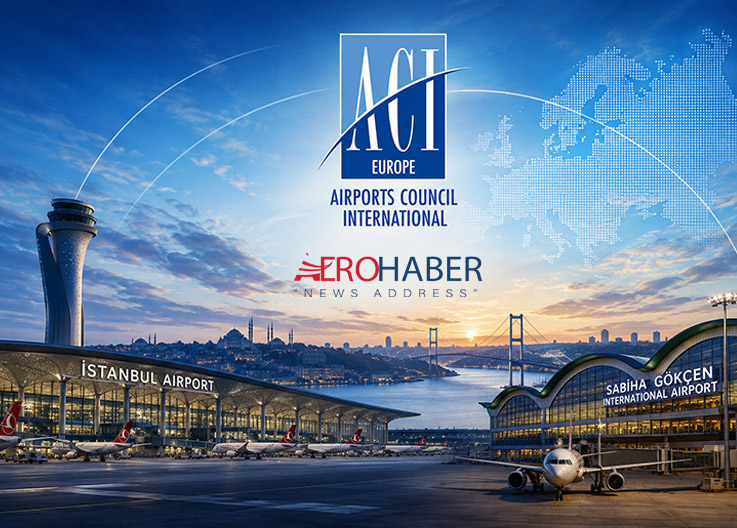
Istanbul Airport recorded the strongest performance among Europe’s major airports with a 7.7 percent growth rate. Sabiha Gökçen International Airport followed closely with a 7.2 percent increase.
Both airports ranked among the busiest traffic hubs in the continent, just behind Heathrow Airport, Europe’s busiest hub.
Türkiye also showed growth not only in Istanbul but across other cities.
- Esenboğa Airport: 19.6%
- İzmir Adnan Menderes Airport: 15.3%
- Antalya Airport: 9.2%
Germany and France Fell Below Expectations
A different picture emerged among Europe’s largest aviation markets.
While Italy recorded 4.8 percent growth and Spain 3.9 percent:
- Germany grew by 3.1 percent, the United Kingdom by 2.8 percent, and France by only 1.2 percent.
ACI EUROPE notes that national aviation taxes played a significant role in the relatively weak performance in Germany and France. Rising cost pressures are particularly influential in capacity planning for low-cost carriers.
Smaller Airports Still Below Pre-Pandemic Levels
Although the fastest growth across Europe was seen in small airports, the sector has still not fully recovered.
Airports handling fewer than 1 million passengers grew by 8.9 percent in March. However, this segment remains 32 percent below its pre-pandemic 2019 levels in total passenger volume.
Sharp Decline in Cargo Traffic
While passenger transport remained strong, a different picture emerged on the air cargo side.
Cargo volumes in Europe declined by 3.1 percent in March. This drop, following strong increases in January and February, is attributed to disruptions in Middle East-based transfer networks.
Since a significant portion of the global air cargo system flows through Gulf hubs, the conflict in the region has placed direct pressure on logistics chains.
Hope for the Summer Season, Uncertainty Afterwards
ACI EUROPE management stated that no major contraction is currently expected for the summer season. However, the main risks facing the sector include:
- a potential fuel crisis, fluctuations in oil prices, deepening geopolitical tensions, and the impact of cost-of-living pressures on passenger demand.
The post-summer period is increasingly seen as a “black box” for the aviation sector. While airlines are largely maintaining capacity for now, sharp increases in energy costs could create new pressures on European air transport.