
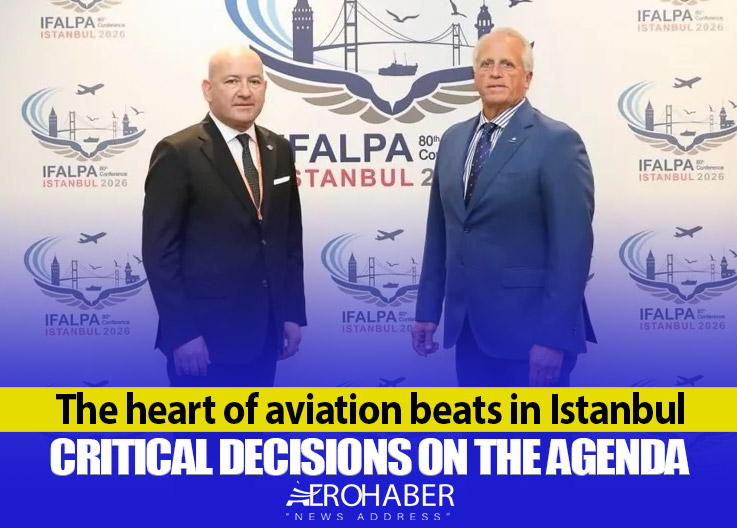


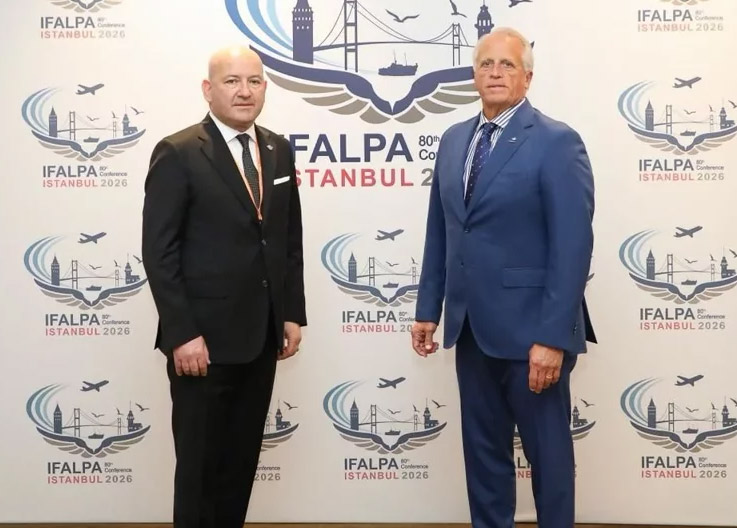
The IFALPA 80th Conference has begun in Istanbul. At the event, attended by 305 pilots from 51 countries, safety culture, pilot rights, and legal regulations in aviation are being discussed.
305 pilots from 51 countries are addressing the future of global aviation in Türkiye
The IFALPA 80th Conference has started in Istanbul with the participation of 305 pilots from 51 countries. Held between April 23–26 under the hosting of TALPA, the event brings current global aviation issues and future-oriented topics to the agenda.
Istanbul’s key position in international air traffic elevates the meeting beyond a mere logistical choice and places it on a strategic foundation. Pilots from different regions share their field experiences within a common framework.
Historical connection: World Pilots’ Day
The conference coincides with the anniversary of the first flight carried out in 1912 by Fesa Evrensev, one of the pioneers of Turkish aviation. The commemoration of April 26 as “World Pilots’ Day” adds historical depth to the meeting.
Sectoral agenda: Structural needs on the table
The meetings address not only global trends but also structural issues specific to Türkiye. Topics such as granting private passports to pilots, establishing a sector-specific labor law, and service time increases are opened for discussion in various dimensions.
These topics are considered not only in terms of working conditions but also alongside critical areas such as operational planning, crew management, and retaining experienced pilots within the system. The aim is to ensure these issues find more concrete responses within decision-making mechanisms.
“Safety is not a result, but a matter of culture”
Speaking after the opening of the conference, Okan Üreksoy stated that IFALPA represents more than 160,000 pilots in over 70 countries worldwide. He noted that Istanbul hosting this organization again after 20 years carries particular significance for the sector.
Üreksoy emphasized that safety in aviation cannot be explained solely by technology or regulations, placing the “positive safety culture” approach at the center. This understanding, built on open communication, a habit of reporting, and learning from errors, is considered decisive for the sustainability of the system.
The need for an Aviation Profession Law
In his speech, Üreksoy stated that the current structure regarding the working life of flight personnel presents a fragmented picture. He noted that different practices may arise in job security, seniority rights, and standard working conditions, and emphasized that this situation is directly linked to the safety culture.
A message was conveyed that concrete steps should be taken for an “Aviation Profession Law” that covers sector-specific risks and is aligned with international standards.
Regulatory issue at the global level
Ron Hay stated that the piloting profession does not fully align with existing legal frameworks. He explained that pilots operating across different countries, time zones, and operational conditions work within a structure caught between aviation safety rules and labor law regulations.
This mismatch can lead to the emergence of different standards, legal uncertainties, and pressure on working conditions. The need for a more holistic and harmonized regulation stands as a common issue on the international agenda.
An event program spanning April
The conference proceeds as part of an extensive schedule of events planned for World Pilots’ Day. In addition to the program in Istanbul, commemorative events to be held at the Air Force Museum and social responsibility projects are also included in the calendar.