


Chris earned a Master’s degree in Defense and Strategic Studies (Highest Honors) from the University of Texas at El Paso.
His graduate work concentrated on Global and National Security, Low-Intensity Conflict, Modern Warfare, and US grand strategy. He also undertook extensive regional studies, analyzing how key regions integrate into the broader US security architecture.
This rigorous program provided him with a comprehensive understanding of U.S. military operations, global strategy, and weapons systems. Additionally, he gained a strong appreciation for great power competition.—an increasingly central force shaping international relations and conflict for the foreseeable future.
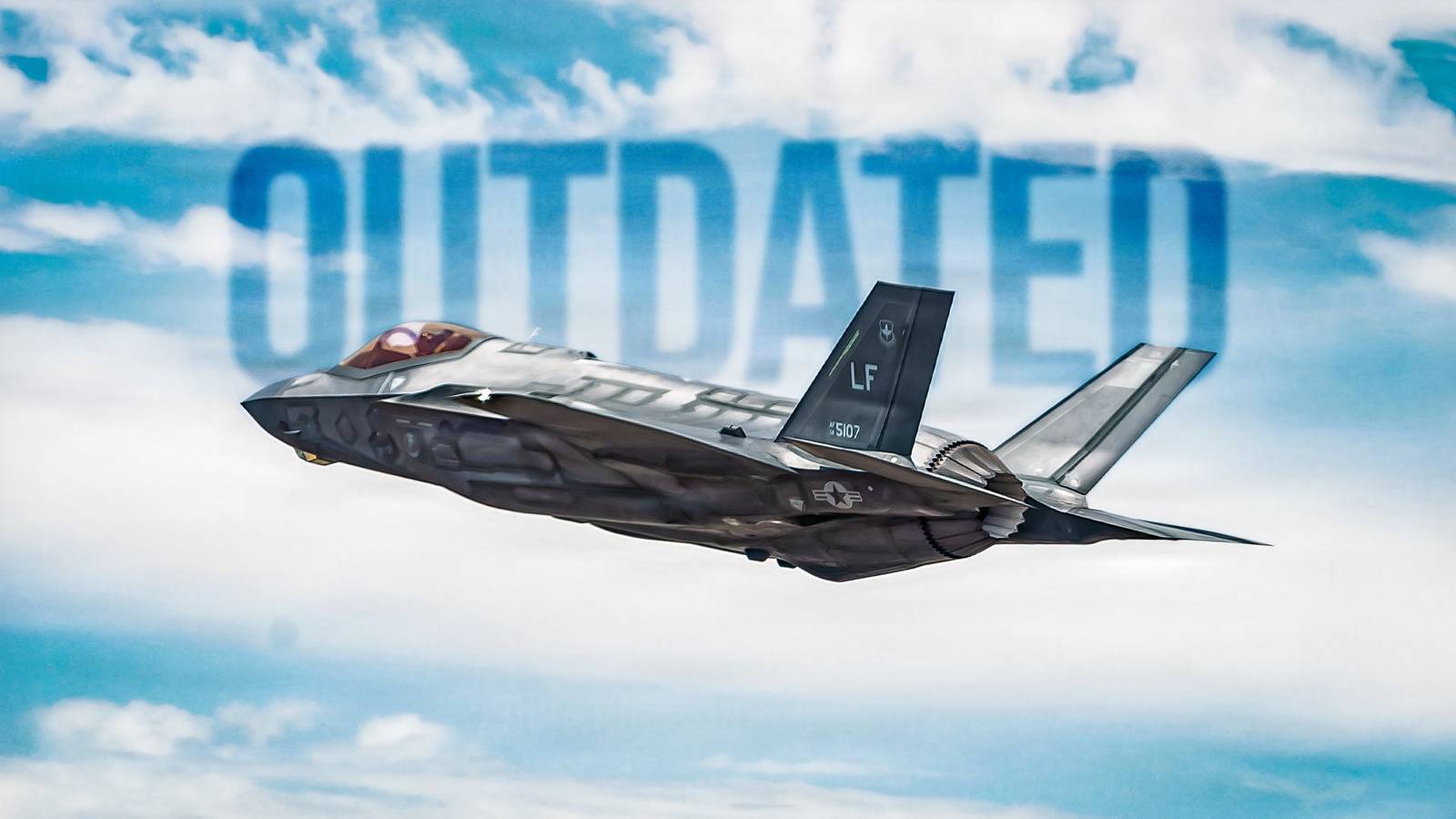
The Lockheed Martin F-35 Lightning II is an incredible fifth-generation aircraft, so much so that it has been selected by the air forces or navies of 20 nations. This aircraft is far more advanced than its predecessors, equipped with internal weapon bays, fly-by-wire controls, vastly improved stealth features, and advanced sensor fusion capabilities.
While these aspects of the aircraft set it far apart from fighters before it, providing it with a higher degree of operational flexibility, the march of technology does not cease. As such, the F-35 will eventually be surpassed by sixth-generation aircraft expected to enter service within the coming decades. Sixth-generation aircraft will build upon the F-35’s groundbreaking sensor fusion capabilities and stealth, while surpassing it in their ability to harness the power of AI in the cockpit, greatly enhancing operational efficiency.
Finally, a hallmark of this new generation of aircraft will be the fact that it is just one component of a wider system-of-systems. Unlike the F-35, which, while a command node in the truest sense, is still fundamentally a single aircraft operating as an individual unit. Sixth-generation aircraft will enhance battlespace connectivity, command networks of drones, and serve as advanced nodes within a broader battle architecture, designed to further situational awareness and distribute information for the purpose of combat and air-space supremacy.
China’s Stake In The Sixth Generation Air Dominance Race
The J-36 is one of China’s future concept aircraft that could usher in a new era of sixth-generation combat airpower, and has been seen undertaking multiple flight tests since late 2024. This aircraft is designed to rely on its stealth shaping and features to penetrate deep into a rival’s airspace and strike high-priority targets such as command-and-control nodes, air defense sites, radar networks, and air bases.
To accomplish this mission, the J-36 has a large internal weapons bay that can accommodate ordnance such as the KD-20 air-launched land-attack cruise missile, which has a range of approximately 310 to 1,200 miles (500–2,000 km). For targeting aircraft, the J-36 would potentially be armed with the PL-17 missile (which the J-20 cannot carry internally). The latter would be ideal for targeting aerial tankers and AWACS aircraft, which the United States (US) would rely heavily upon in any Taiwan contingency.
In addition to its deep-strike role, the J-36 could serve as a flying battle manager. The aircraft is expected to be capable of processing vast quantities of battlespace information and distributing it to other aircraft operating in the theater, thereby maximizing operational effectiveness. Additionally, the J-36 will likely command a team of drones or drone swarms with AI assistance, while also conducting electronic warfare operations.
The aircraft is known to have a two-seat configuration. In addition to the pilot, the second crew member will probably serve as the weapons officer, responsible not only for weapons deployment but also for electronic warfare and drone operations. Once operational, the J-36 will likely be one of the leading platforms, enhancing China’s ability to control the South China Sea region.
While China’s fighter jet exports remain limited, it is offering a growing selection of high-end fighters at a time when Russia struggles.
A Collaboration of France, Germany, and Spain
FCAS is the European response to the future of air combat. The aircraft is forecast to reach initial operating capability around 2040, and the program is expected to have a total life-cycle cost of approximately €100 billion ($116.6 billion). This program will be defined not by a single aircraft but by the close coordination between varying systems across multiple domains. Specifically, this aircraft will link air, space, land and cyber assets into a unified operational architecture within what has been described as the “Combat Cloud”.
The latter is quite possibly the central pillar of the FCAS program and has been described as a military Internet of Things. It will be a broad architecture combining a vast sensor network, a battle management system, AI-enabled command-and-control capabilities, and secure military networking. The Combat Cloud will create a single operational picture of the battlespace, harvested from the sensor network and other connected assets. AI will process and prioritize information flows for maximum operational effectiveness, while this architecture will connect users with the information they need for their specific role within a mission.
Within this system-of-systems is the New Generation Fighter (NGF), a piloted sixth-generation stealth aircraft. It will be equipped with an advanced sensor suite, allowing it to rapidly absorb and process battlespace data. Through its sensor fusion capabilities and connection to the Combat Cloud, the NGF is intended to act as a command node or airborne battle manager.
As a command node, the NGF will operate in close conjunction with autonomous and semi-autonomous drones, with the AI system making suggestions to the pilot based on the rapidly evolving battlespace. The pilot will make the final decision, and the AI will then execute the directives given by the human operator. In this setup, drones will be an integral part of the mission rather than optional add-ons. At a larger scale, this system is intended to enhance battlefield efficiency by absorbing, processing, prioritizing, and acting upon the vast amounts of information present on the battlefield.
The two types are in many ways each other’s equal and are among the most powerful fighter jets the Europe has to offer.
A Partnership Between the United Kingdom (UK), Italy And Japan
The GCAP partnership between BAE Systems (UK), Leonardo (Italy) and Mitsubishi Heavy Industries (Japan) is an ambitious program designed to produce a sixth-generation jet by around 2035, slated to replace the Eurofighter Typhoon and Japan’s F-2 fleet. The international joint venture, which comprises the aforementioned defense manufacturers, is called Edgewing, with each company retaining a 33.3% ownership stake.
In 2026, a £686 million ($925–$930 million USD) contract was awarded to the GCAP industrial joint venture Edgewing to fund key design and engineering work. The project is anticipated to yield around 290–350 aircraft between all three participating members.
The GCAP program is slated to deliver a highly capable networked fighter that can serve as an airborne command node with AI-assisted processing and decision-making. This will aid in the direction of both fifth-generation aircraft and accompanying drones. As envisioned, the aircraft’s low-observability features will allow it to operate effectively deep within contested airspace and conduct deep-penetration strikes. It is also expected to possess advanced electronic warfare capabilities, allowing it to disrupt and suppress enemy air defenses and communication systems.
When the GCAP combat aircraft becomes operational, it will provide the contributing members with greater independence from the US defense industry and other foreign fighter aircraft suppliers. This will give members greater control over technology development and production lines, resulting in fewer external constraints on exports compared to US-led platforms such as the F-35.
Japan hoped that these ships would turn the course of the momentum.
The Future US Navy Multi-role, Next-Generation Strike Fighter
The F/A-XX is going to replace the Boeing F/A-18 Super Hornet, which entered service in 1999. The F/A-XX remains in design and contractual competition, with Boeing and Northrop Grumman being the final remaining defense contractors bidding for production rights. This follows the removal of Lockheed Martin in early 2025 for failing to meet the Navy’s requirements. The final decision on the program contractor is expected to be this August.
Regarding the program’s cost, the Pentagon’s FY27 budget request includes $140 million (£104–£105 million). This includes $68 million (£50.3–£51.0 million) in the base budget and a further $72 million (£52.5–£54 million) requested in the upcoming reconciliation bill.
In terms of capabilities, the F/A-XX will be integrated into the Navy’s Next Generation Air Dominance family. The aircraft will engage in long-range strikes, provide fleet air defense, in addition to multi-domain operations. With its advanced sensors and AI-driven processing, the aircraft will collect, synthesize, and distribute data across the entire combat network, furthering the effectiveness of the theater combat force, including the utilization of drones to extend the sensor architecture, aid in strikes, and in-air refueling.
With its stealth features, enhanced fuel capacity, and efficiency, the F/A-XX improves the survivability of the carrier by operating at greater distances from it, while eliminating threats before they can become a danger. Additionally, the aircraft, with its advanced stealth features, will be capable of penetrating and operating in areas that have dense A2/AD networks. Once operational, this aircraft will likely be a key component of any U.S. military operation in a Taiwan scenario.
The U.S. Navy’s shift to the F/A-XX will retire legacy fighters like the Super Hornet, ushering in a new era of advanced air combat capabilities.
Under Development Within The United States Air Force’s NGAD Project
The F-47 project fits within the United States Air Force’s (USAF) next-generation combat aviation effort under the Next Generation Air Dominance program. The aircraft is progressing through advanced development as Washington continues to prioritize air superiority in anticipation of high-end peer competition, particularly in the Indo-Pacific region, with a focus on a Taiwan scenario.
According to defense budget reporting, the USAF is expected to allocate multi-billion-dollar funding levels in the FY2027 cycle toward NGAD-related projects. This reflects a clear commitment to developing a sixth-generation fighter. Further, the F-47 is understood to be transitioning into its Engineering and Manufacturing Development phase, following Boeing’s selection as the prime contractor in 2025. The aircraft is expected to be the primary component of the USAF’s future air-dominance architecture.
Much like the American hypersonic weapons program, the F-47 is emerging at a time when China has already produced and tested its sixth-generation aircraft prototype. While much remains to be seen regarding its actual stealth capabilities, weapons, and combat performance of the J-36, the US appears to be playing catch-up. Thus, the heightened pace of research and development efforts.
Operationally, the NGAD will operate as a part of a system-of-systems, connected to a wide array of sensors. The aircraft will also serve as a command-and-control node in any particular battle, leveraging its advanced onboard sensor suite to process and distribute information to a wider battle architecture. Additionally, it is expected to command drone swarms that will further its sensing, conduct strikes, electronic warfare, and deploy defensive countermeasures.
In terms of deployment, the NGAD could be forward-deployed to bases across the UK, Germany, and Eastern Europe on rotational deployments. However, there is a high probability that the most important area of deployment for this aircraft will be the Indo-Pacific to deter China’s regional ambitions. In this theater, the NGAD would likely be stationed in locations such as Guam, Japan, Alaska, and potentially Australia on a rotational basis.
Found an error? Send it info@simpleflying.com so it can be corrected.
Orijinal Haberi Görüntüle