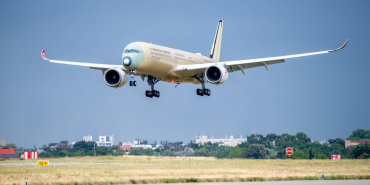

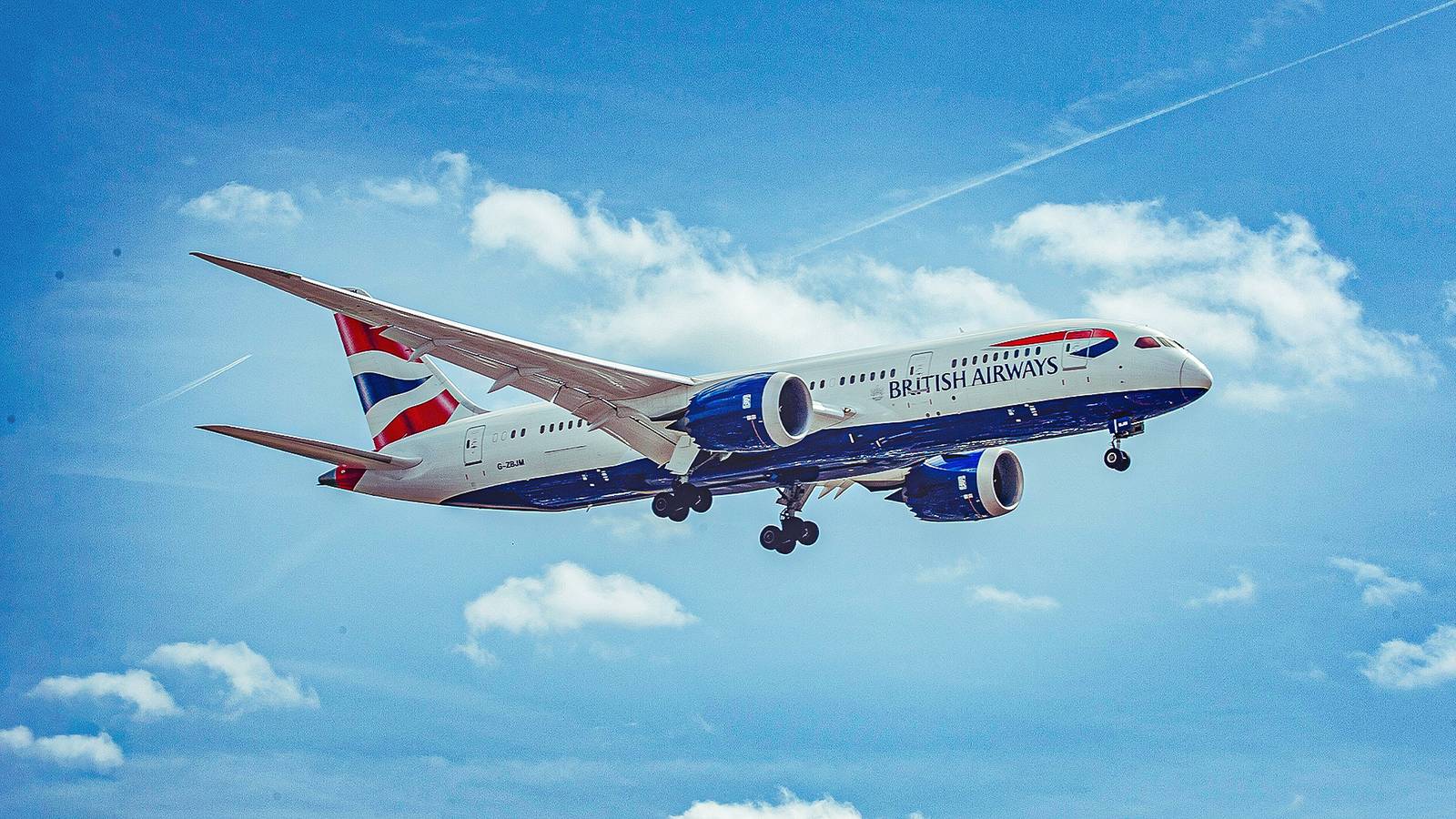


British Airways is one of only three airlines to operate all three variants of the Boeing 787. According to ch-aviation, the oneworld member has 42 Dreamliners, which is Boeing’s marketing name for the type. It has 12 787-8s, 12 787-10s, and 18 787-9s. They account for nearly a third of BA’s total widebody fleet.
With only 204 seats, the 787-8 is BA’s lowest-capacity twin-aisle equipment. The variant was recently reconfigured from 214 seats, with more premium economy seats added at the expense of those in business and economy. They have the newest cabins. Then there’s the first-class-equipped 787-9 with 215 seats (retrofitted with the latest cabins) and 216 seats (old cabins). The 787-10, with first class, has 256 seats (latest cabins).
The airline’s 787 nonstop and one-stop route network from July 2026 to March 2027 has been explored using OAG data. Sometimes, only nonstop flights are considered, which some may prefer. As usual, the distance is based on the maximum block time. This includes taxiing at both ends of the route, the flight time, and a period for short delays.
The results are summarized in the following table and shown on the subsequent map (which does not show detouring around Russia or other airspace). As predictable as it is, BA’s longest link is from Sydney Kingsford Smith Airport (SYD) back to London Heathrow Airport (LHR) via Singapore Changi Airport (SIN). Both the 215-seat and 216-seat 787-9 runs during the northern summer season only. In the northern winter, the 254-seat 777-300ER will take over, providing additional capacity for the summer Down Under.
Daily 787-9 until October 26, with the variant returning next March
Melbourne Airport (MEL) back to LHR via Kuala Lumpur
Begins on January 9, 2027. Daily 787-9 (BA last served Victoria in 2006, when the 747-400 flew via SIN)
Daily 787-9 until October 26, with the variant returning next March (flights continue to/from SYD)
Up to daily 787-9. Variant runs from December 14, when the route’s overall frequency with all equipment jumps up to three daily services for the peak season
Begins on October 25. Five weekly 787-8. The route switches from Gatwick, from which the so-called Gatwick-configured 777-200ER was used
** Dates refer to the first departure from the UK
BA’s New Second-Longest Link Is Brand-New On The 787
When all airlines are included, booking data shows that 310,000 round-trip local passengers flew between London and MEL in the 12 months to May 2026. It was, of course, a smaller market than SYD (498,000), with lower average fares, presumably due to less premium travel.
In the examined period, no same-plane, same-flight-number service existed between London and MEL. As such, everyone flew indirectly. The top ten transit airports were SIN, Dubai, Hong Kong, Kuala Lumpur, Doha, Shanghai Pudong, Abu Dhabi, Bangkok, Perth International Airport (PER; on Qantas’ nonstop flights), and Bandar Seri Begawan. Notably, Istanbul was not among them.
On October 25, 2026, Qantas will reintroduce MEL-PER-LHR one-stop, same-plane, same-flight-number service. Flights will run daily on the 787-9. Two or so months later, BA will return to MEL after a 21-year absence. Both the 215- and 216-seat 787-9 are scheduled. Obviously, this new service will increase BA’s market share substantially. In the examined period, only one in every 33 passengers flew with the carrier for part of the way, before switching to its partners.
Five are from London Gatwick and two are from London Heathrow. Find out more here!
HND Back To LHR Is BA’s Longest Nonstop 787 Offering
With a maximum block time exceeding 15 hours, BA’s offering from HND, which is much closer to Tokyo’s downtown area than Tokyo Narita Airport (NRT), back to LHR ranks first for nonstop activity. Due to the war in Ukraine, BA’s inability to fly over Russia has extended the scheduled time greatly.
For example, before the war, such as between 2019 and 2021, the airline’s maximum time was 12 hours and 40 minutes. Nowadays, BA flies through Central Asia to HND and over Alaska back to Europe. The block time has been extended by nearly a fifth. The consequences on fuel burn, operating expenses, emissions, and so on are obvious.
Other airlines from Europe are in the same position, so the competitive implication is perhaps not as great as it could be. However, carriers from the Middle East, along with Turkish Airlines, are better positioned geographically to benefit. Chinese operators, which often offer dirt-cheap fares, do fly through Russia. They may have benefited from offering a relatively quick and inexpensive journey, counterbalanced by their less-regarded hard product compared to many global carriers.
Orijinal Haberi Görüntüle