
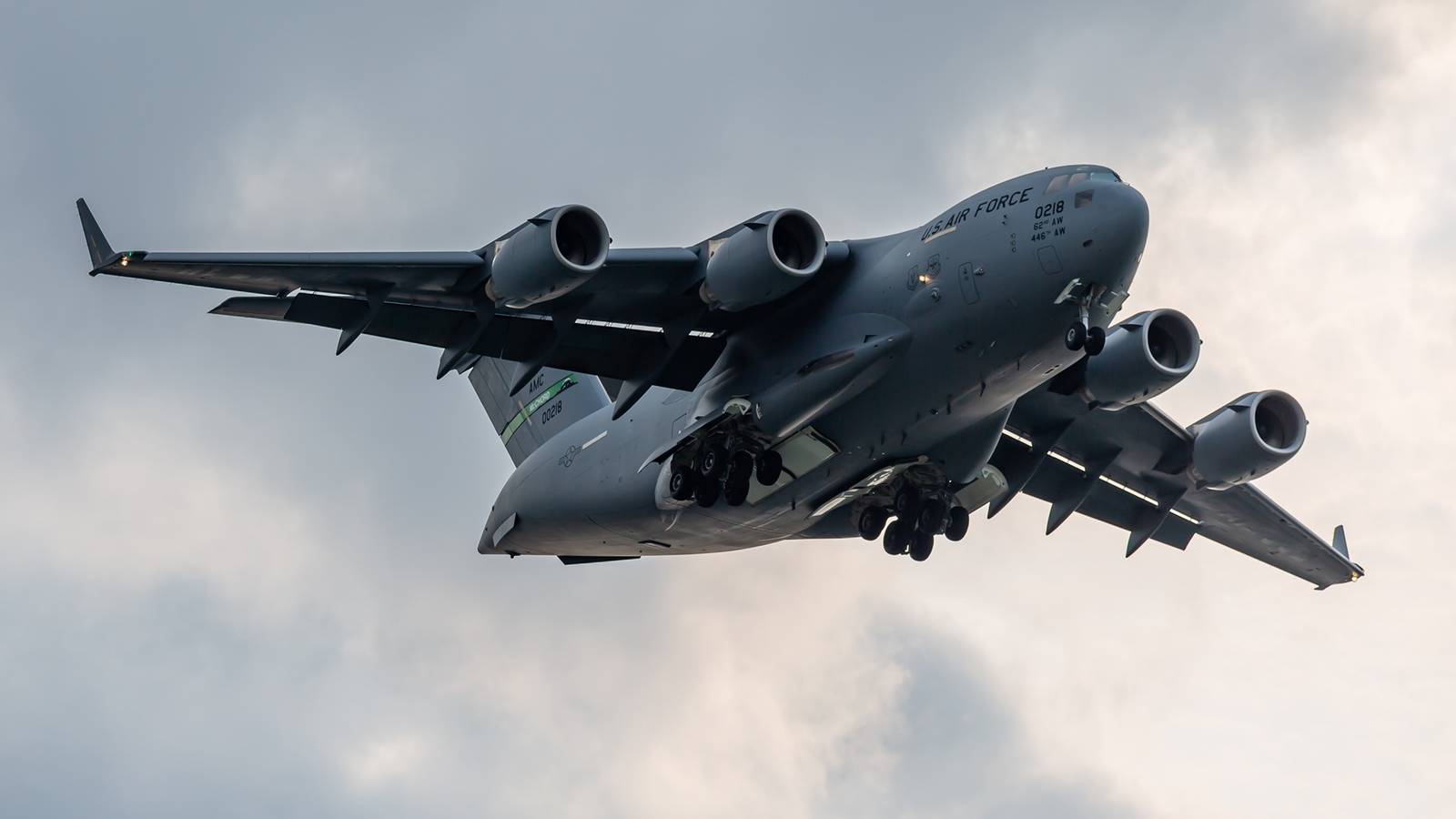


A US Air Force (USAF) Boeing C-17 Globemaster III bound for Antarctica was forced to abandon its mission and return to Christchurch, New Zealand, after a warning indicated potentially hazardous Russian space activity along its planned route. The aircraft had been airborne for approximately 150 minutes before turning around, according to flight-tracking data and reports cited by Yahoo News.
The unusual interruption affected a scheduled Antarctic support mission, not a combat operation. The aircraft was participating in the US military’s seasonal flights supporting operations in Antarctica, where weather, limited infrastructure, and the enormous distance from alternative airports already make flight planning unusually demanding.
The C-17 departed Christchurch Airport (CHC) on Tuesday as part of the annual Antarctic winter fly-in program. These missions reconnect US operations and research facilities on the continent after the seasonal period when Antarctic conditions restrict regular aviation activity.
The Globemaster is particularly important to Antarctic logistics because its combination of range, cargo capacity and ability to operate from relatively austere runways makes it suitable for transporting personnel, equipment and supplies. C-17s have supported American Antarctic operations for decades, regularly flying between Christchurch and McMurdo Station. On this occasion, however, the aircraft did not reach Antarctica. The return decision was made out of precaution and prevented the crew from continuing into an increasingly uncertain operating environment without clear information about the potential hazard.
The alert reportedly stemmed from a Russian missile or space launch, with a warning indicating potentially dangerous space activity near the aircraft’s planned route. The terminology is important because the threat was not necessarily an incoming missile directed at the C-17. Space launches can create hazards for aircraft operating in or near affected airspace. Depending on the trajectory, authorities can issue aviation warnings when rocket stages, debris or other objects could enter areas occupied by civilian or military aircraft.
For an Antarctic flight, the consequences of such a warning can be greater than they would be on a conventional route. Relatively few diversion airports exist in the Southern Ocean and Antarctic regions, leaving crews with fewer alternatives if conditions deteriorate or an external hazard develops. That makes risk management particularly important. A military transport aircraft does not need to be facing an immediate attack for commanders and crews to decide that continuing a mission is unnecessary when a safer option is to return to a known airport. The available reporting does not indicate that the C-17 encountered a missile or debris, nor that the aircraft itself suffered a malfunction.
Such flights are essential for resupplying a Canadian military base more than 82 degrees north of the equator.
The decision to turn back shows one advantage of conducting the Antarctic mission from Christchurch. The New Zealand airport serves as a major staging point for international Antarctic aviation, allowing aircraft to prepare for the much longer sector toward the continent before committing to the remote operating environment. Returning early also meant the C-17 remained within a practical range of its departure airport. Rather than proceeding farther south and potentially requiring a more complicated recovery plan, the crew could terminate the sortie before reaching the most isolated portion of the journey.
The aborted flight does not mean the Antarctic airlift has been canceled. Instead, the mission will be rescheduled once authorities determine that the relevant hazard has passed and the route is suitable for continued operations. For the Air Force, the episode also illustrates how military airlift missions can be affected by developments far beyond the aircraft’s immediate vicinity. A C-17 designed to move heavy cargo across continents can still be grounded or redirected by a temporary space-related warning.
The aircraft’s 150-minute journey therefore produced no Antarctic delivery, but the decision to return achieved the more important objective of preserving the safety margin for the crew and aircraft. With Antarctic operations dependent on narrow seasonal windows, planners will now have to balance the lost sortie against weather, runway availability, and any further restrictions associated with Russian space activity.
Orijinal Haberi Görüntüle