


New Zealand, which generates approximately 85% of its electricity from renewable energy sources, has taken another significant step in sustainable aviation. The country has launched a comprehensive testing phase to enable the use of fully electric aircraft in short-distance logistics operations.
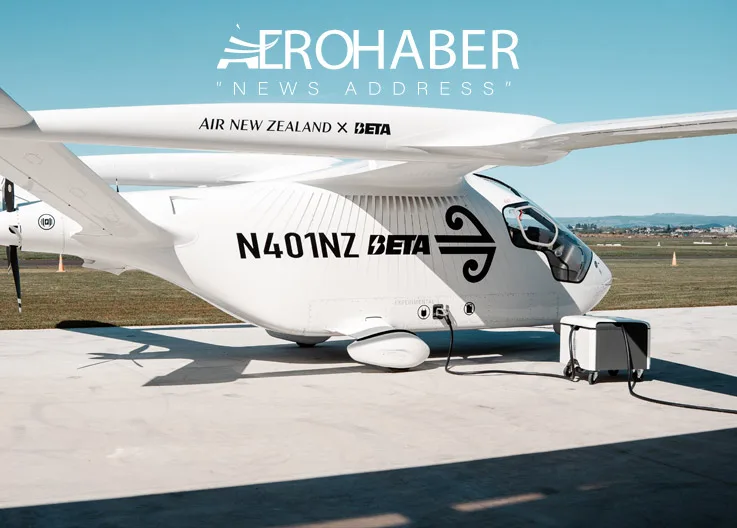
The fact that most of New Zealand’s domestic cargo flights are under 350 kilometres makes the use of electric aircraft practical and viable. In this context, Air New Zealand has partnered with US-based BETA Technologies to include the BETA ALIA CX300 electric aircraft model in a four-month technical demonstration programme.
398 km-range electric aircraft in testing
The BETA ALIA CX300, which has conventional take-off and landing (CTOL) capability, achieves zero emissions with its fully electric propulsion system. The aircraft’s technical specifications are as follows:
- Maximum range: 398 km
- Initial routes to be used: regional flights up to 200 km
- Cargo capacity: 5.6 m³
- Crew capacity: 2 people
With these features, the ALIA CX300 is seen as a suitable model particularly for short-distance, quick-turnaround, small-scale cargo operations.
Ready to fly again in 90 minutes
During the test phase, the aircraft’s performance will be evaluated on routes representing the country’s diverse geographical and climatic conditions. For this purpose, 65 kW mobile charging stations have been installed along the routes. Thanks to these stations, the aircraft will:
- Be fully charged in approximately 90 minutes
Be capable of completing multiple flights in a single day
The test programme is planned to continue until early 2026. The operational, environmental, and safety-focused data collected during this period will guide New Zealand’s next steps in sustainable aviation.
An ideal country for zero emissions: New Zealand
Thanks to its high renewable energy production rate, the operation of electric aircraft in New Zealand presents a model that is much closer to truly zero-emission flight. This also provides significant advantages in aviation operational energy costs, making the practice more economically viable.
If the tests are successful, New Zealand will become a pioneering example in the early adoption of electric aviation technologies, paving the way for low-cost, low-emission regional flights.