


Flight recorders play a critical role in aviation safety, and their technological evolution has continuously advanced in light of lessons learned from accidents. From the early days of photographic film to the modern era of solid-state memory, these devices have not only enhanced data integrity and reliability but also improved accessibility and analytical capabilities, thereby raising safety standards in the aviation industry.
Learning from Accidents: An Ethical Imperative
Crash recorders form the foundation of aviation safety. Understanding the causes of accidents and preventing similar incidents in the future is an ethical responsibility shared by all stakeholders in the industry. These devices capture aircraft parameters and cockpit audio, providing vital information during post-accident investigations.
Technological Advancements: From Photographic Film to Solid-State Memory
In the 1930s, French engineer François Hussenot laid the groundwork for flight recorders by developing the first data recorder. Early devices recorded approximately ten parameters optically onto photographic film. Today, solid-state recorders eliminate moving parts by using stacked memory chips, minimizing the risk of crash damage. These technological advancements have enabled flight recorders to capture and store more data than ever before.
Increased Data Capacity and Durability
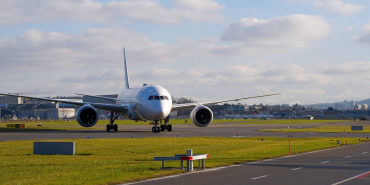
Modern flight recorders can record thousands of parameters for extended periods. For instance, the black boxes of the Airbus A350 can manage around 3,500 parameters, including cockpit commands, flight controls, autopilot, climate control, fuel systems, hydraulic and electrical systems, for up to 25 hours. These devices are built to withstand fire, explosions, impact, and water.
Data Streaming and Automatic Deployable Recorders
The inability to locate black boxes after aircraft accidents has spurred the development of new solutions. Continuous satellite transmission allows for the rapid retrieval of flight data, reducing the risk of data loss. Additionally, Airbus has developed automatic deployable flight recorders designed to withstand impact and float on water, making them easier to locate and recover after an accident.
Autonomous Distress Tracking and Combined Recorders
Airbus has introduced new generation emergency locator transmitters (ELTs) with autonomous distress tracking features for commercial aircraft. These devices ensure that aircraft are not lost in distress situations. Moreover, to meet ICAO’s requirement to extend cockpit voice recording from 2 to 25 hours, aircraft are now equipped with combined recorders that integrate flight data and cockpit voice recording functions into a single device.
Recorders for Helicopters
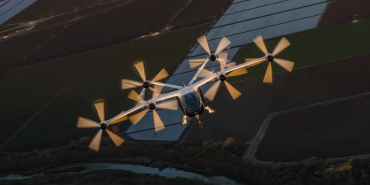
Helicopters are also equipped with advanced recorders that capture flight parameters and cockpit audio, providing critical information for investigating helicopter accidents. Heavy helicopters, like airplanes, are fitted with recorders that can withstand high temperatures.
Conclusion: Continuous Improvement in Safety
The technological evolution of flight recorders results from ongoing efforts to enhance aviation safety. These devices provide essential information to understand accident causes and prevent their recurrence. Technological advancements have allowed these devices to capture more data, be more durable, and be found more quickly. The aviation industry continues to innovate to ensure the highest safety standards.
© www.aerohaber.com | www.tr.aerohaber.com
Note: Aviation news on our news site cannot be used without citing the source