
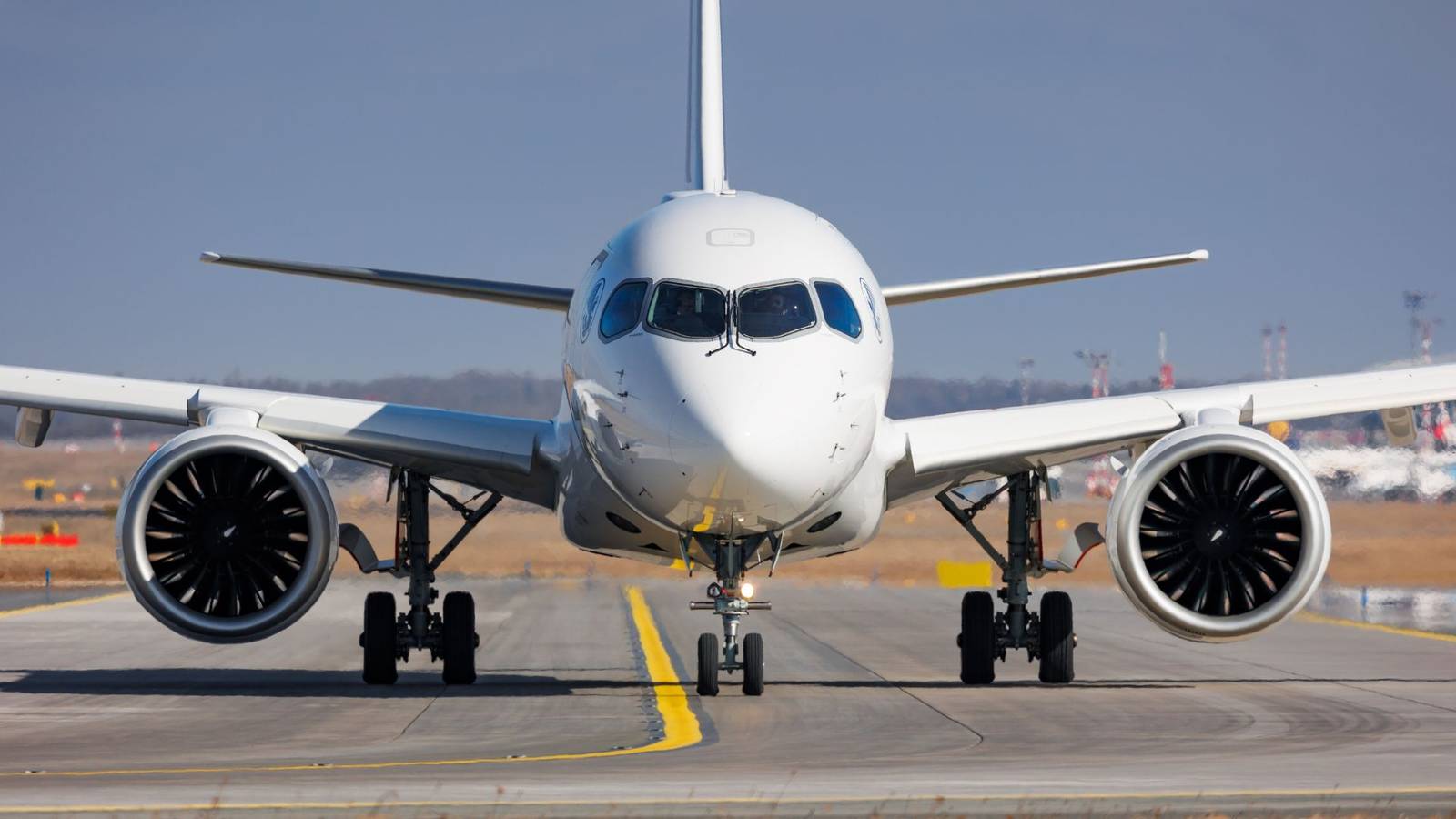


Airbus is studying whether the Airbus A220 could move further upmarket by offering lie-flat premium seats, a cabin development that would make the smallest Airbus family much more relevant to airlines chasing higher-yield traffic. The A220 is already known for its quiet cabin, large windows and passenger-friendly five-abreast layout, but a true lie-flat product would increase its value as a narrowbody able to extract premium revenues over long-and-thin routes.
This will capture the attention of multiple airlines that are increasingly asking narrowbodies to do jobs once reserved for widebodies. Premium-configured Airbus A321LR, Airbus A321XLR and Boeing 737 MAX aircraft have shown that lie-flat seats can work on single-aisle aircraft when the route, yield and cabin mix are right. If Airbus can bring that thinking to the A220, it would appeal not only to current A220 operators, but could also tip the scales with carriers that do not yet fly the type.
According to RGN, Airbus has started investigating the option of having lie-flat seats as a line-fit option for the A220. This would be particularly appealing for airlines using the type for longer-range operations, where routes can routinely exceed seven hours. Christian Kley, the head of single-aisle market development at Airbus, says that the work is still “very preliminary,” but believes that it would lead to the A220 winning new business, including new airline customers.
The concept appears to include both modest and more ambitious cabin possibilities. The most likely version would be a small premium cabin with eight to twelve lie-flat seats in the typical 2-2 configuration for an A220 business class, allowing airlines to add a differentiated front cabin while preserving much of the A220’s economy capacity. Another more radical possibility would be an all-premium A220 with around 38 to 40 lie-flat seats, which would be a very niche product but could appeal to airlines targeting high-yield, long-and-thin routes.
Airbus is confident that it can leverage much of the work that has been done to design and install lie-flat seats on its larger narrowbodies. Several seat makers — most notably Thompson Aero Seating with its VantageSOLO product — have already solved many of the technical challenges around monuments, seat angles, aisle access, weight, and certification. Airbus can now look at the A220 and ask whether some of that work can be adapted to a smaller aircraft with a very different fuselage.
Among current A220 operators, there are some obvious names that would be interested in this development. Delta Air Lines, as the largest A220 operator, has been dramatically increasing the percentage of premium seats on its aircraft, and would love to add Delta One to its A220s. So too JetBlue, which has built much of its premium brand around Mint on the Airbus A321 family. Beyond the US, the likes of Air Canada, ITA Airways, and Korean Air have already put lie-flat seats on larger narrowbodies, so would certainly consider adding them to their A220 fleets.
But the bigger prize for Airbus may be airlines that do not yet operate the A220. A lie-flat cabin would give the aircraft a new sales hook with carriers that already believe in premium narrowbodies, but have routes where an A321LR, A321XLR, or 737 MAX 9/10 is too much airplane. It could also strengthen the A220’s case as a replacement for older small narrowbodies, including Airbus A319s and Boeing 737-700s.
Airlines With Potential Interest In A220s With Lie-Flat Seats
Boeing 757-200, future A321neo/A321XLR premium cabins
Older A319s and 737-700s need replacing, major premium transcontinental market, and a clear move toward lie-flat narrowbodies.
A319 replacement logic and established premium narrowbody flying, though fleet simplification works against it.
Business built on thin Americas network, strong premium hub model, and long-term 737-700 replacement logic.
A319 and smaller narrowbody replacement needs, plus long-and-thin premium routes from Lisbon.
A321LR First Suites and lie-flat Business Class
Already a premium-heavy narrowbody operator. A lie-flat A220 could serve shorter or thinner premium regional sectors.
Smaller premium markets from Bahrain where a widebody can be too large.
The most obvious all-premium wildcard if Airbus can make a 38–40-seat A220 concept work.
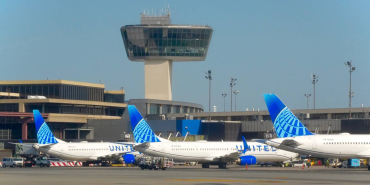
United Airlines is the most obvious non-operator to consider because it sits at the intersection of several themes. It already flies premium 757s, has a large transcontinental premium market, is preparing to use A321XLRs for longer missions, and still operates older small narrowbodies. A lie-flat A220 would offer a smaller-gauge aircraft for routes where United wants a premium cabin but not A321-level capacity, such as Newark Liberty International Airport (EWR) to Norman Y. Mineta San Jose International Airport (SJC).
Copa Airlines is perhaps the most interesting sleeper candidate. It already operates lie-flat-equipped Boeing 737 MAX 9s and has a network built around connecting long, thin markets across the Americas. TAP Air Portugal also makes sense because it has used the A321LR to stretch its narrowbody network and still has smaller aircraft that will eventually need replacing. The point for Airbus is that lie-flats could make the A220 relevant to airlines that might otherwise dismiss it as too small or too separate from their existing fleet plans.
A new addition to the lineup is in the works.
The lie-flat study becomes even more interesting when viewed alongside the proposed Airbus A220-500. Airbus has the concept under active study, with a view to stretching the A220-300 to seat roughly 170 to 180 passengers, moving the family closer to the lower end of the A320neo and Boeing 737-8 market.
That extra fuselage length would make lie-flats far easier to justify. On an A220-300, installing eight lie-flat seats would take away a meaningful share of total capacity. On a stretched A220-500, the airline has more cabin length to absorb the premium cabin while still keeping a useful economy section behind it. That could make the -500 a more natural home for lie-flat development than the existing -100s and -300s.
There is a tradeoff, though. Recent reporting suggests Airbus is examining a relatively simple stretch, which could reduce development cost and speed up time to market. However, a simple stretch may also come with reduced range compared with the A220-300. That matters, because lie-flat seats are most compelling on longer, higher-yield sectors. If the A220-500 loses too much range, it becomes less of a mini-A321LR and more of a premium medium-haul aircraft for transcontinental routes and thinner business markets where an A321 would be too much airplane.
For Airbus, the opportunity is also about differentiation. The A220 already offers a passenger experience that stands apart from conventional six-abreast narrowbodies. Adding lie-flat seats would sharpen that difference, especially for airlines that are pushing for more premium revenue and/or are seeking a consistent premium experience across their fleets. Matched to a stretched fuselage, Airbus might yet define and fill a whole new long-and-thin niche, much like it has done so successfully with its A321 variants.
Orijinal Haberi Görüntüle