
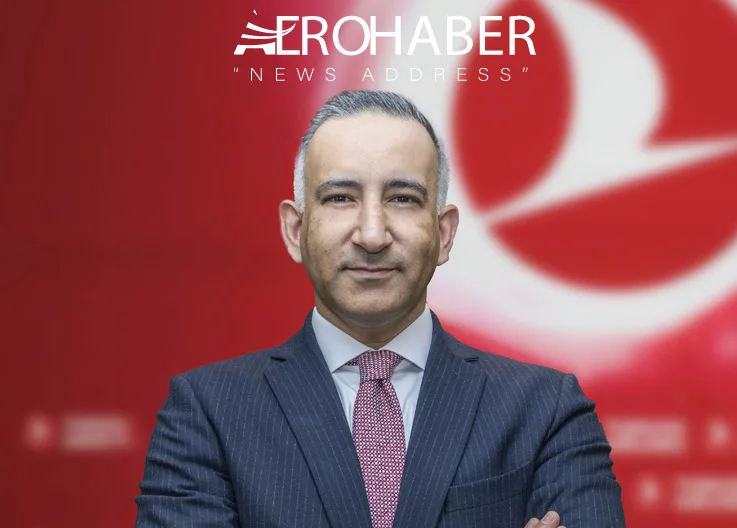


Turkish Airlines (THY) has announced its growth strategies in the Polish market and its sustainable aviation goals in a new assessment. Sedat Orman, THY’s Vice President responsible for Sales and the Eastern Europe Market, stated in his remarks to the Polish press that a comprehensive expansion analysis is underway for both passenger and cargo operations.
New Routes in Poland on the Table
Recalling that THY currently operates regular flights to Warsaw and Kraków, Orman said, “I can confirm that we are analysing the possibility of adding new connections in Poland and increasing frequencies on existing routes.”
While maintaining its position as the airline that flies to the most countries worldwide, THY is preparing to expand its network in line with the rising demand in the Polish market.
Turkish Cargo: The Goal is to Become the World Leader
Evaluating Turkish Cargo’s global growth, Orman stated that the company has reached the position of the world’s third-largest air cargo operator with a market share of 5.7%.
Orman expressed the strategic target with the following words:
“We want to become the global leader in cargo transportation. We plan to reach 120 cargo destinations in 2028 and 150 in 2033.”
Turkish Cargo’s freighter fleet consists of 27 aircraft and will be increased to 44 aircraft by 2033. THY is preparing to increase the capacity of the smartIST cargo facility in Istanbul from 2.2 million tonnes per year to 4.5 million tonnes. Half of this capacity is planned to be allocated to special cargo.
EU Regulations and the Sustainable Aviation Fuel (SAF) Strategy
Sedat Orman emphasised that the EU’s ReFuelEU and ETS regulations have a direct impact on THY’s operations. Nevertheless, the company remains committed to environmental responsibility:
SAF usage will begin in flights departing from EU airports as of 2025.
From 2026 onwards, SAF will become mandatory on all international flights departing from Türkiye.
According to Türkiye’s SAF directive, the targeted emission reduction will be at the level of 5%.
THY aims to reduce costs and dependency on imports through its agreement with petrochemical giant Tüpraş for local SAF production.
Orman evaluated the contribution of domestic production to the sector with the following words:
“The formation of a national SAF ecosystem will increase cost efficiency while strengthening supply security. This is a historic step for Turkish aviation.”
2050 Carbon Neutrality Target Maintained
While rapidly expanding its fleet, Turkish Airlines does not compromise on its environmental goals. The THY fleet, expected to exceed 800 aircraft by 2033, will consist entirely of new-generation, fuel-efficient aircraft by 2035. The company reiterates its goal of achieving carbon neutrality by 2050.