


THY increased its brand value by 27.3% to $2.9 billion in the Brand Finance Airlines 50 report. With 516 aircraft, 131 countries, 303 destinations, $24.1 billion in revenue, and strong cargo performance, Turkish Airlines has strengthened its strategic position in global aviation.
Brand Finance data also showed that Turkish Airlines has increased its strategic weight in global aviation.
For Turkish Airlines, 2026 became a strategic threshold in which global brand strength became more visible, alongside financial growth. According to the Brand Finance Airlines 50 report, THY increased its brand value by 27.3% to $2.9 billion, reaching the highest level in its history.
While THY has become one of the fastest-growing global carriers in terms of brand equity, it has supported its strength in the industry with operational capacity, network breadth, crisis management, and financial sustainability.
What Does the Increase in Brand Value Mean?
In global aviation, brand value can be interpreted as a combination of awareness, passenger trust, investor perception, premium revenue potential, and international competitiveness.
THY’s 27.3% increase becomes even more meaningful considering the geopolitical tensions, economic fluctuations, and operational pressures of 2025. THY has proven that it can maintain economies of scale and network advantage even during periods of crisis.
516 Aircraft, 131 Countries, 303 Destinations: Network Strength as THY’s Core Weapon
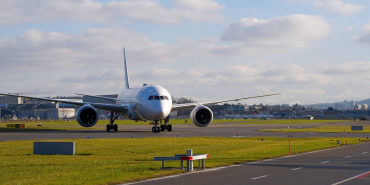
THY maintained its title as “the airline flying to the most countries in the world,” reaching 303 destinations across 131 countries with a fleet of 516 aircraft.
Beyond the classic fleet size competition, it demonstrated how effectively the Istanbul-based hub model operates on a global scale. The ability to reach 4 billion people within a 6-hour flight radius from Istanbul is one of the key indicators of THY’s success in transforming its geographical advantage into an operational strategy.
Financial Performance: Balance Between Revenue Strength and Profitability
The 2025 performance also shows that THY is strong not only as a brand but also on the balance sheet side:
- $24.1 billion in revenue
- $2.9 billion net profit
- 83% load factor
- 81% on-time departure performance
These figures prove that THY can support its expansion strategy with efficiency. In particular, the balance between high load factors and operational punctuality shows that system management remains strong despite an intensive network structure.
Turkish Cargo Effect: Not Just Passengers, but Logistics Power
In THY’s growth, Turkish Cargo has become as decisive as passenger transport.
With a cargo volume of 2.2 million tonnes, the company further strengthens its role in global logistics, while also demonstrating how critical revenue diversification has become in aviation. Even if passenger transport fluctuates, cargo operations continue to be one of THY’s financial stabilizers.
$2.5 Billion Investment: The Infrastructure Behind Growth
An infrastructure and ecosystem investment exceeding $2.5 billion shows that THY does not view its growth as a short-term capacity increase.
THY’s structure should be interpreted as a long-term preparation for global competition in areas such as fleet, maintenance, digitalisation, operations centre, and passenger experience.
Skytrax and Customer Satisfaction: The Psychological Power of Brand Value
Being selected as Europe’s Best Airline for the 10th time by Skytrax and achieving an 86% customer satisfaction rate prove that THY’s increase in brand value is not only financial but also strong on a perceptual level.
Building trust in the premium segment in global aviation creates a direct revenue impact, especially in transfer passenger strategy.
THY Is Now a Global Strategic Brand
THY’s 2026 performance shows that it is no longer just a carrier that flies more, but has become a multidimensional power centre with financial strength, brand value, operational flexibility, and global network depth.
The real question for the coming period will be: how far can THY carry this scale to the level of global leadership?
At this point, the answer is becoming clear: Turkey’s flag carrier, Turkish Airlines, is rapidly advancing towards becoming one of the most powerful strategic players in global aviation.