
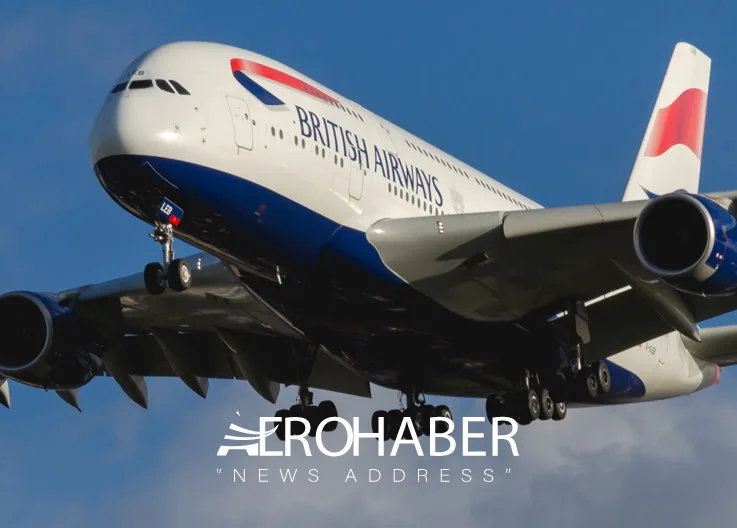


A newly released air accident report has revealed the danger caused by severe turbulence encountered over the North Atlantic. On a British Airways Airbus A380 aircraft, two people suffered broken ankles, while one passenger lost consciousness.
According to the report by the Air Accidents Investigation Branch (AAIB), the incident occurred on 6 December 2024 during a British Airways flight operating from Los Angeles to London Heathrow, while the aircraft was passing over Greenland at an altitude of 39,000 feet. Of the 277 passengers and 24 crew members on board, a total of three people, including one cabin crew member, were affected by the turbulence.
The report states that approximately 20 minutes after the seatbelt sign was illuminated, a cabin crew member attempting to fasten themselves into their seat was thrown into the air by sudden turbulence, fell to the floor and broke an ankle. A passenger on the upper deck was also injured in a similar manner while standing up to go to the toilet. It was noted that the passenger had been asleep during the seatbelt warning and the related announcements. Following the first two injuries, a third passenger became unwell and fainted.
Initial medical assistance was provided by two doctors on board, with splints applied to the broken ankles and pain relief administered. The crew also made use of Medlink, a 24/7 medical advisory service that supports in-flight emergencies.
The flight crew assessed the possibility of diverting to Gander Airport in Canada or Keflavik Airport in Iceland. However, due to adverse weather conditions and the risk of icing at both locations, diversion was not possible. The captain therefore activated the “PAN-PAN” emergency protocol, one level below a MAYDAY call, and decided to continue to London Heathrow. Ambulance teams met the aircraft on the runway after landing, and the injured passengers were taken to hospital.
The report noted that no turbulence had been forecast in pre-flight meteorological assessments, but that a live weather application used by the crew after departure issued a “potentially severe turbulence” warning south of Greenland. The AAIB emphasised that the pilot’s timely activation of the seatbelt signs helped prevent more serious injuries.
“If the seatbelt signs had been off, more people could have been affected,” the report stated, highlighting in particular the contribution of live weather technologies and ground-based medical support systems to flight safety. No technical faults were found on the aircraft.
Experts warn that, due to the effects of global warming and climate change, air turbulence may occur more frequently and with greater severity in the future. Changes in atmospheric pressure and temperature, combined with jet streams and storms, are said to be making certain flight routes riskier. The British Airways incident is regarded as a current example demonstrating how advancing technology can play a critical role in reducing these risks.