
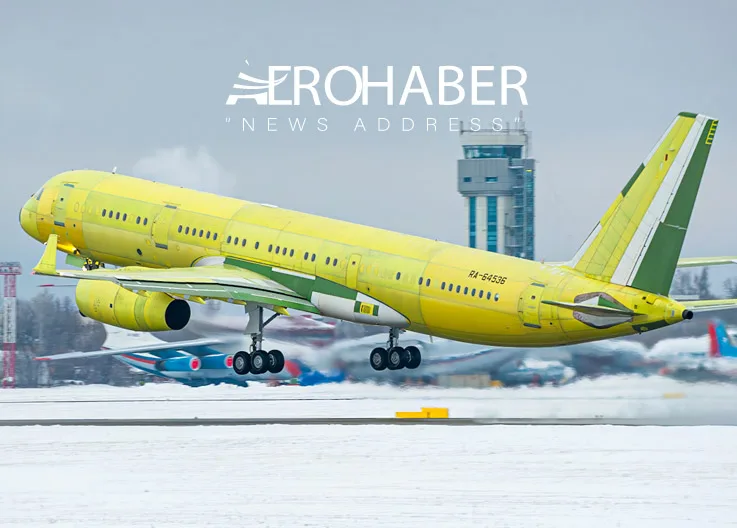


Largely excluded from the global supply chain due to Western sanctions, Russia is undergoing a fundamental strategic shift in its aviation industry. Within this restructured process, shaped by the goal of fully independent production based on domestic components, the Tu-214 passenger aircraft stands out as a critical platform symbolising the resilience of Russian engineering and technological continuity.
Rolled out from production facilities in Kazan and having successfully completed its first flight, the Tu-214 represents a new era in Russian civil aviation, with its domestically produced PS-90 series engines and a vision focused on minimising dependence on foreign components.
Kazan Production Line: The Practical Expression of Strategic Independence
The production of the Tu-214 in Kazan is not merely a logistical choice; it is regarded as a concrete reflection of Russia’s strategy to remain viable through its own internal production ecosystem. Thanks to modern manufacturing infrastructure, a domestic supply chain and a highly skilled workforce, the Kazan facilities enable the aircraft to be produced safely, efficiently and cost-effectively.
In the aircraft’s design, flight safety, fuel efficiency and ease of maintenance are among the primary priorities, with fuselage optimisation and system architecture shaped in line with these objectives.
Technical Infrastructure: PS-90 Engines and Structural Optimisation
Designed for long-range operations, the Tu-214 flies with domestically produced PS-90 series engines. These engines reflect the long-term development of Russian engine technology and provide sufficient performance for both domestic routes and international operations.
Innovative composite materials and aerodynamic improvements used in the structural design aim to reduce fuel consumption and lower maintenance costs.
Market Dynamics: Role Sharing Between Aeroflot and GTLK
The future of the Tu-214 programme is closely linked to institutional preferences within the Russian aviation market. Aeroflot is considering shaping its fleet around the next-generation MC-21 programme, a preference that also highlights competition among domestic aircraft projects.
In contrast, the state-backed leasing company GTLK has signed contracts for more than 40 Tu-214 aircraft, positioning itself as the programme’s strongest supporter. This once again underscores the decisive role of state procurement in domestic aviation projects.
Return to From-Scratch Production: A Strategic Threshold
A significant portion of the Tu-214 aircraft that entered service over the past two years consisted of refurbished airframes taken out of storage. However, the new production line in Kazan strengthens Russia’s claim of regaining the capability to produce passenger aircraft from scratch.
Operational Capability and Usage Profile
Thanks to its airframe flexibility and fuel efficiency, the Tu-214 is capable of operating on both short-haul domestic routes and long-haul flights. The integration of domestic engine technology secures maintenance and spare parts continuity, enhancing operational reliability.
With new orders, the aircraft offers an alternative solution for airlines targeting high utilisation rates and fleet continuity.
Risks, Challenges and the Certification Process
Key challenges facing the programme include production scaling, serial production of domestic engine technology and international safety certification processes. In addition, Aeroflot’s final fleet decisions stand out as a determining factor in shaping market demand.
The sustainability of state-backed orders is of critical importance for the programme’s long-term success.
Tu-214: A Flying Strategic Vision
The Tu-214 is not merely a passenger aircraft; it is positioned as a tangible indicator of Russia’s strategic independence vision. It also serves as an important lever for strengthening domestic engineering culture, creating employment and deepening the technology ecosystem.
Supported by production capacity in Kazan, a domestic supply chain and state-backed procurement, the Tu-214 appears poised to become one of the cornerstones of Russian civil aviation in the short to medium term.