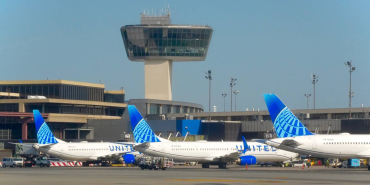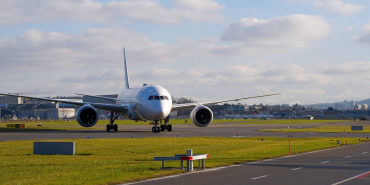

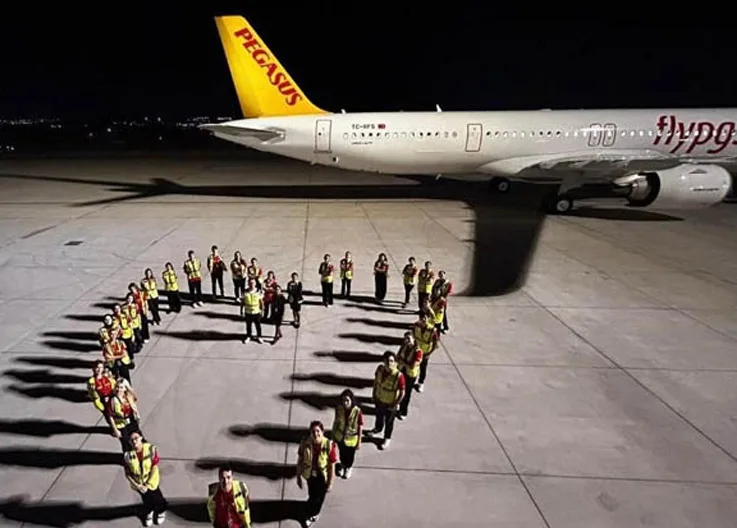


Pegasus Airlines continues to expand its fleet in line with its goals of modernisation and sustainability. The airline has most recently added a new-generation Airbus A321neo passenger aircraft to its inventory, naming it “Belinda.” With this addition, Pegasus now operates a total of 124 aircraft.
Equipped with next-generation engine technology, the A321neo stands out for its environmentally friendly and passenger-friendly features. Offering improved fuel efficiency, lower emissions, and quieter operation, the aircraft contributes to environmental sustainability, while its spacious cabin design provides a more comfortable travel experience for passengers.
With continued investment in new aircraft, Pegasus aims to maintain a young, efficient, and eco-friendly fleet. The airline is responding to growing travel demand with modern aircraft, improving service quality both domestically and internationally.
A Silent Revolution in Aviation: Airbus A321neo Ushers in a New Era in the Skies
The global aviation industry is undergoing a transformation driven by fuel efficiency, cabin comfort, and environmentally conscious engine technologies. One of the key players in this evolution is undoubtedly Airbus’s next-generation star: the A321neo.
The A321neo, the flagship of Airbus’s single-aisle aircraft segment, is redefining short- and medium-haul travel. With its new engines, intelligent aerodynamic design, and “Airspace” cabin concept, it has become a favourite among passengers as well.
Flying Efficiency Machines: Longer Flights with 20% Less Fuel
Offered with CFM LEAP-1A and Pratt & Whitney PW1100G-JM engine options, the A321neo delivers up to 20% fuel savings compared to previous-generation A321s.
It also outperforms its competitors in range: with a flight range of 4,000 nautical miles (approximately 7,400 km), the A321neo proves itself even in short-haul intercontinental operations.
Turkish Airlines and Pegasus Expand Their Fleets with A321neo
The A321neo is also gaining popularity among Turkish airlines. Turkish Airlines, Pegasus, and AJet are enhancing both environmental sustainability and passenger satisfaction by integrating this aircraft into their fleets. THY’s A321neo configuration includes 182 seats: 20 in Business and 162 in Economy Class.
A New Segment Emerges: A321LR and XLR
Airbus has also developed the A321LR and XLR variants to further extend the capabilities of the A321neo, both notable for their impressive range.
The A321LR, equipped with three additional fuel tanks, exceeds 7,400 km in range, while the XLR version, entering service in 2024, offers uninterrupted flights of up to 8,700 km.
According to Aerohaber.com and various aviation news outlets, the A321neo is on the verge of becoming the new “fleet standard.” With its long range, low operating cost, and advanced cabin technology, it is shaping airline business models and redefining industry competition.