



NASA is ferrying a former JAL B777-200ER aircraft to Langley after converting it into a “flying laboratory.” The new platform will replace the DC-8 and begin scientific missions in 2027.
The platform that will replace the DC-8 will usher in a new era in Earth science research
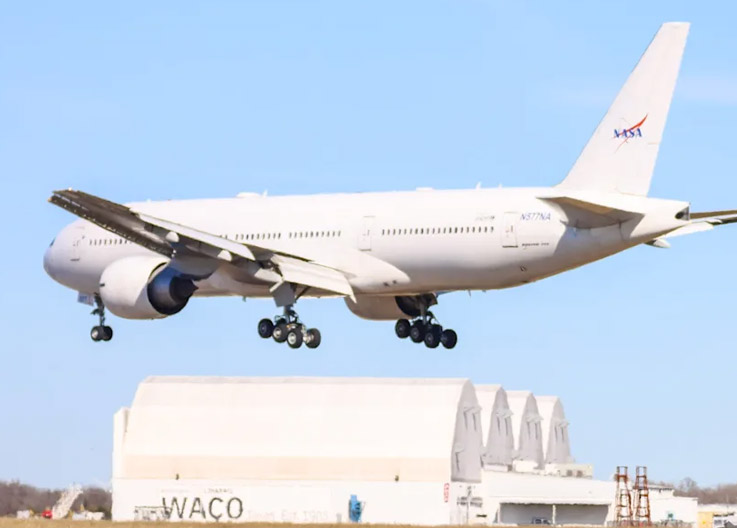
NASA has completed a significant milestone in the process of introducing its next-generation “flying laboratory” platform for airborne research. The Boeing 777-200ER aircraft (N577NA), previously operated in the Japan Airlines fleet under the registration JA704J, is en route to NASA’s Langley Research Center.
To Replace the DC-8
The new platform will replace the NASA DC-8, which has been used for more than 25 years under NASA’s Airborne Science Program and was retired in 2024.
The selection of the B777-200ER is considered a major leap in scientific research thanks to its larger capacity, longer range, and enhanced data collection capabilities.
Advanced Sensor and Research Infrastructure
The aircraft has been extensively modified for scientific missions. The platform will feature:
- Downward-looking and window-type sensor ports
- High-capacity power and data infrastructure
- Advanced communication systems
- Dedicated work areas for instrument operators
Thanks to this equipment, more precise data can be collected in many fields such as the atmosphere, climate change, air quality, and Earth observations.
Operations to Begin in 2027
NASA plans to start the aircraft’s active scientific missions in fiscal year 2027 from the Langley Research Center. During this period, test flights and system integration activities will continue.