
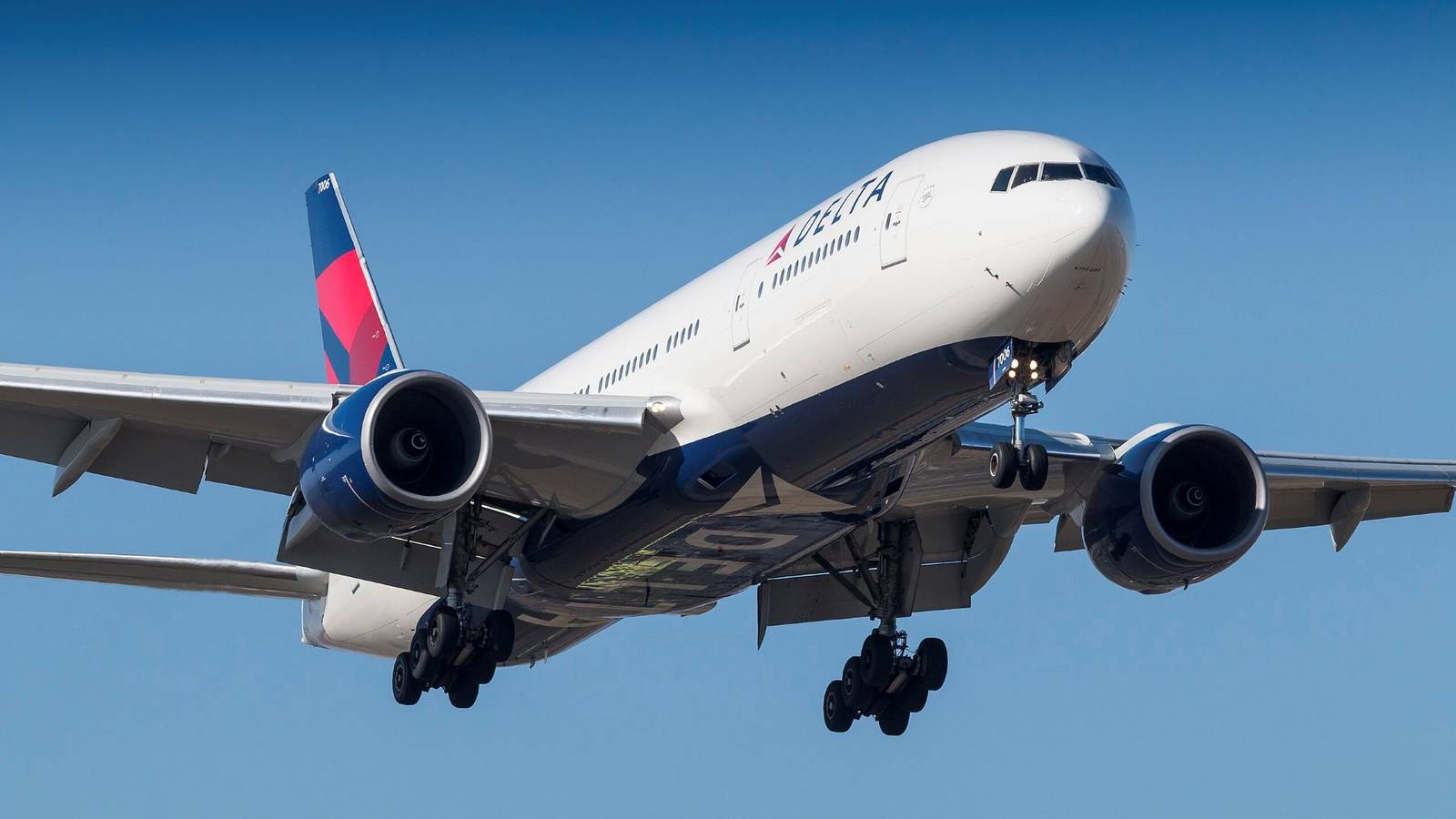


Delta Air Lines is one of the largest international long-haul operators, with more than 650 weekly transatlantic flights in summer 2026, and some of the world’s longest commercial routes. At the heart of its network is Hartsfield-Jackson Atlanta International Airport (ATL), the airline’s largest hub, handling over 1,000 departures on peak days. But its long-haul destination map has changed far more than many travelers might expect.
Over the past two decades, Delta has removed 20 long-haul airport pairs from Atlanta. They range from major global business centers such as Shanghai, Dubai, and Mumbai, to short-lived experiments including Vienna and Recife. However, not every cut represents a city disappearing entirely: some flights moved to another airport in the same city, passed to a partner airline, or were consolidated at a different Delta hub.
Delta Has Eliminated 20 Long-Haul Routes From Atlanta
The route cuts span several very different eras. Vienna disappeared after just one season in 2007. Nine routes were gone by the end of 2011, and the latest losses were Düsseldorf International Airport (DUS) in 2023 and Stuttgart Airport (STR) in 2024. Across their operating lives, the 20 routes accounted for over 67,000 flights in both directions.
Two of the largest apparent cuts were really airport switches. Delta ended its route to Tokyo Narita Airport (NRT) when it consolidated flying at the more convenient Tokyo Haneda Airport (HND). In London, Delta moved its remaining Atlanta service from London Gatwick Airport (LGW) to London Heathrow Airport (LHR) after the US–EU Open Skies agreement gave it greater access to the more valuable airport.
Two other destinations remain linked to Atlanta through partner airlines. Virgin Atlantic operates Manchester within its transatlantic joint venture with Delta, while SAS restored Copenhagen service in 2024 and provides onward connections across Scandinavia. Delta may no longer operate those airport pairs with its own metal, but Atlanta did not lose the nonstop destinations.
The routes did not all disappear for the same reason. Some were caught in economic downturns and capacity reductions, others could not generate sufficient yields, and several were eliminated because Delta changed how it served a city or region. The table below assigns each airport to its best-fit primary theme, although several could reasonably fall into more than one category.
Economic shocks, high fuel costs, and capacity reductions
Vienna, Shannon, Stockholm, Recife, Fortaleza, Copenhagen, Prague, Moscow, Brasília.
Thin demand, weak yields, or intense connecting competition
Mumbai, Kuwait City, Dubai, Shanghai, Lisbon.
Strategic network changes and evolving demand
Tokyo Narita, London Gatwick, Manchester, Dakar, Düsseldorf, Stuttgart.
The largest cluster followed Delta’s rapid post-bankruptcy international expansion. By early 2008, the carrier had launched nearly 90 international routes since summer 2005, but rising fuel prices added $585 million to its first-quarter costs. The global recession then contributed to a 22% fall in passenger revenue during the third quarter of 2009, placing thinner routes under immediate pressure.
Other services were undone by difficult economics, even when they could attract passengers. Mumbai, Kuwait City, Dubai, and Shanghai required extremely long aircraft rotations and substantial premium demand. Delta specifically blamed competition from the Gulf carriers when it withdrew from Dubai, although Emirates disputed that explanation, noting that the Atlanta flight itself had strong load factors, suggesting that low fares and weak yields — not an absence of passengers — were the central problem.
The most recent German cuts reflect a different kind of shift. Stuttgart and Düsseldorf returned after the pandemic but did not survive as corporate travel recovered more slowly than leisure demand. Their removal contrasts with Delta’s additions of multiple leisure-centric long-haul destinations from Atlanta, indicating that the airline now sees greater potential in distinctive leisure markets and selected strategic destinations.
Atlanta has the carrier’s second-highest number of European services.
Several Destinations Remain Elsewhere In Delta’s Network
Delta still serves seven of the former Atlanta destinations from other US airports. Most of the European routes have gravitated toward New York-JFK, where a large local transatlantic market and extensive domestic feed can support seasonal flights that would be harder to sustain from Atlanta. Boston also supports Lisbon, while Minneapolis–St. Paul’s geography and Scandinavian links make Copenhagen a logical fit.
Shanghai follows a different network logic. Detroit, Seattle, and Los Angeles are better positioned for China flying because they offer shorter routings, substantial local corporate demand, and established Pacific connecting flows. Delta restored Los Angeles–Shanghai in 2025 alongside its existing Detroit and Seattle links rather than rebuilding the considerably longer Atlanta service.
The 20 cuts therefore do not amount to a simple international retreat. Delta has changed airports in Tokyo and London, handed two routes to partners, and redistributed several destinations across its US hubs. At the same time, Atlanta has gained nonstop flights to Cape Town International Airport (CPT), Naples (NAP), and Marrakesh (RAK), while a new three-times-weekly Airbus A350-900 service to Riyadh is scheduled to begin in October.
Orijinal Haberi Görüntüle