


WASHINGTON — A host of upgrades meant to extend the life of the aging B-52 Stratofortress bombers face a number of cost and schedule risks, and officials aren’t properly using all tools at their disposal to shape the aircraft’s modernization, according to a new watchdog report.
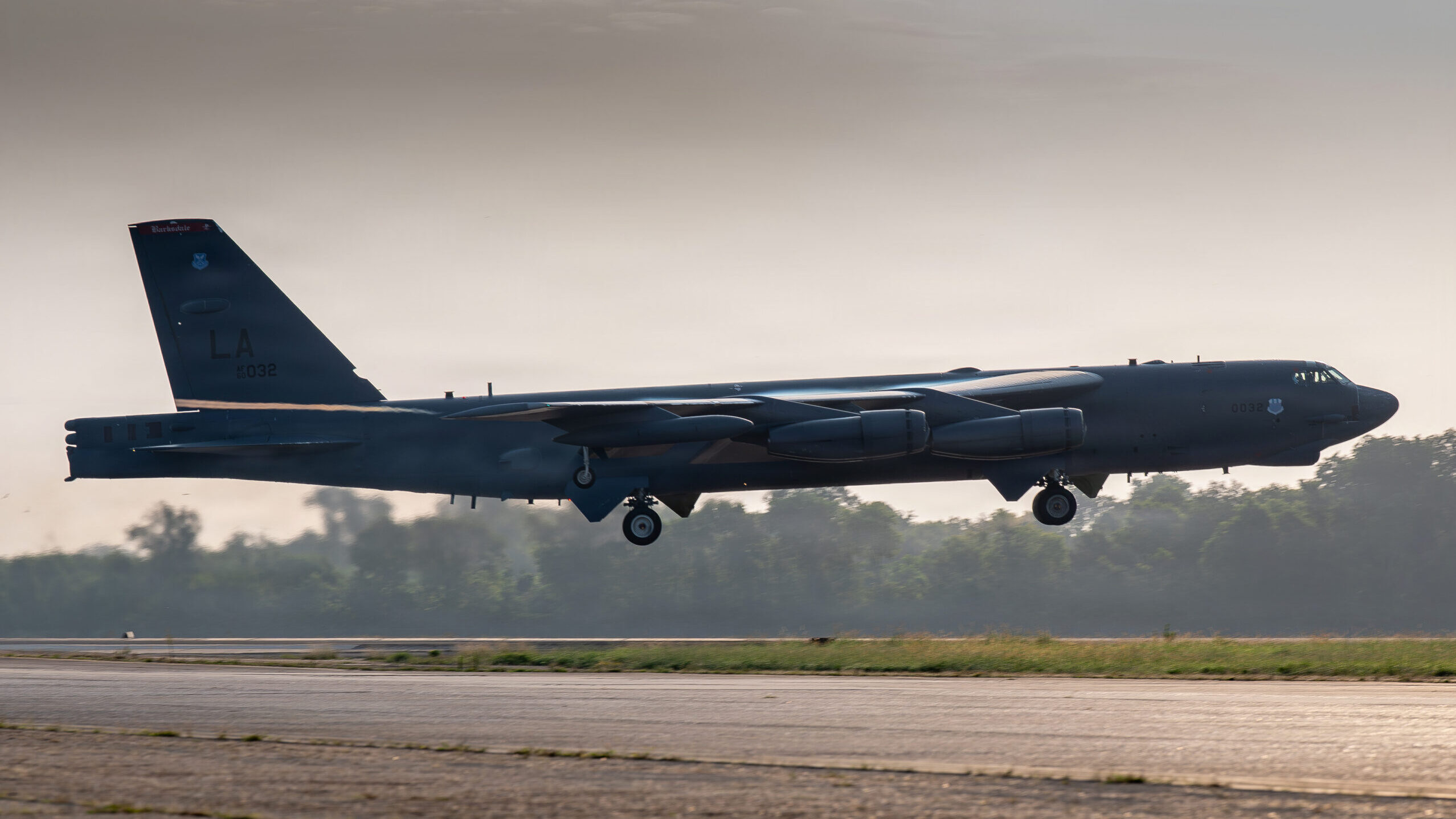
Collectively, the Air Force plans to spend roughly $21 billion on 13 different upgrades for the B-52, which will keep the Eisenhower-era bomber flying through the 2050s. But two key, expensive efforts — one to replace the aircraft’s eight engines, and another to swap out its radar — are “at risk for additional cost, schedule, and performance challenges,” the Government Accountability Office said in a report published today.
The report found that the propulsion overhaul dubbed the Commercial Engine Replacement Program (CERP), which will switch out aging TF33 powerplants manufactured by Pratt & Whitney with modern Rolls-Royce F130 engines, is expected in 2033. That schedule is in line with previous estimates, but its expected cost has now swelled to $15.4 billion, approximately $400 million over the $15 billion projection previously shared by program officials.
RELATED: B-52 modernization ‘stabilized’ after cost spikes, schedule delays, Air Force official says
GAO notes that the cost growth for the CERP effort reflects an over 38 percent jump since 2018, which would normally have triggered a congressionally mandated notification known as Nunn-McCurdy — but didn’t in this case, because the program’s development has been delayed by nearly three years.
GAO found development is now slated to kick off in the third quarter of fiscal 2026, which ended in June. (In May, the Air Force announced CERP passed a critical design review, which typically comes after the start of development known in Pentagon parlance as Milestone B.)
But GAO warned that CERP’s overall schedule is still at risk, especially as both engine production and developmental flight testing are set to begin in FY29. Doing both concurrently, the watchdog warned, could mean that unwelcome discoveries spur costly and time-intensive rework. The hasty schedule is largely driven by the need to replace the aircraft’s TF33 engines that will become increasingly difficult to sustain as years pass.
On-demand webinar: Research security in an era of global competition
Watch experts discuss foreign influence risks, evolving DoD policy, and strategies for balancing security with scientific collaboration.
Any further delays for the engine overhaul could have cascading effects, GAO noted. While the Air Force is expanding depot capacity, the service has not planned for CERP delays beyond 2031, which risks disrupting the careful choreography of regular maintenance work and various modernization efforts for the in-demand B-52 fleet. Additional CERP schedule slips could render the Air Force “unable to effectively sustain the current B-52 engines and could result in too few B-52s to support operational requirements,” GAO found.
Like with engines, the radar upgrade, dubbed the Radar Modernization Program (RMP) that will integrate an RTX sensor, has seen its own cost and schedule challenges. That program’s budget has ballooned 30 percent to over $2.9 billion — a number lower than a $3.3 billion estimate previously shared by officials, but still enough to previously trigger its own Nunn-McCurdy breach.
Similar to prior schedule estimates, the Air Force anticipates RMP will be operational in the third quarter of FY30, three-and-a-half years later than originally expected. And it will come with its own risk of concurrency since production is planned to start with only two months of flight testing completed, out of 18 total planned.
While the Air Force has implemented some cost and savings control measures, the service has also removed some unspecified performance requirements. GAO notes that “in this case, after contract award, the Air Force will receive less capability while paying more for the program.”
The RMP effort also suffered a tragic setback in June when one of two flight test aircraft for the program crashed shortly after takeoff from Edwards Air Force Base in California, killing all eight crew on board. An Air Force official on Monday said that the program is focusing on supporting the mishap investigation, and will make schedule adjustments as necessary.
RELATED: Air Force mulls ‘maybe’ pulling B-52s from retirement
Elsewhere, GAO noted that while some digital engineering is being used for the CERP program, the other 12 B-52 modernization efforts are not utilizing digital design tools in line with best practices. The dearth of digital engineering, GAO found, means “the Air Force may be missing opportunities to take advantage of efficiencies that digital engineering can provide, including avoiding future sustainment and supportability challenges.”
The watchdog identified organizational issues as well, including that the B-52 fleet is lacking one-third of the unique support equipment it needs. Compounding the problem, it said the Air Force lacks clear guidance on who exactly is responsible for the life cycle management of that equipment. Without that clarity, GAO warned “the Air Force will likely face additional maintenance challenges, which may, in turn, negatively affect the availability of B-52 for operational deployment.”
Owing to woes like a lack of spare parts, the report notes that the B-52’s mission capable rates “have not improved” since a November 2022 assessment that found the aircraft was failing to meet benchmarks. However, GAO said in its report today that mission capable rates, schedules and availability for the B-52 were withheld since those details were deemed “sensitive” by the Defense Department.
Today the Air Force did not respond by press time when asked for updates on the modernization schedule for the B-52. Both the CERP and RMP efforts are led by prime contractor Boeing, which also did not immediately respond to a request for comment.
GAO issued a total of six recommendations, ranging from implementing digital engineering to figuring out who’s responsible for the B-52’s support equipment. The Air Force fully concurred with five, but only partially concurred with a recommendation to delay the CERP’s production decision until the service analyzes the impact of recent cost increases and schedule delays.
Orijinal Haberi Görüntüle