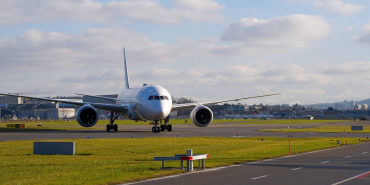



Istanbul Airport CEO Selahattin Bilgen announced that despite the jet fuel crisis, the airport continues to grow thanks to its strong infrastructure.
Istanbul Airport Maintains Its Strength Despite the Global Crisis
Selahattin Bilgen, the operator of Istanbul Airport, made important statements during a press meeting held at the airport regarding the fourth runway project, the global jet fuel crisis, passenger traffic, and year-end targets. Bilgen stated that despite the fuel crisis centered around the Strait of Hormuz, Istanbul Airport has maintained its operational advantage thanks to its logistical strength.
Emphasizing that Istanbul Airport is strengthening its position as a strategic hub in global aviation, Bilgen said that growth continues through new runway investments and increasing international flight traffic.
Final Stage Reached for the Fourth Runway
İGA CEO Selahattin Bilgen announced that a critical phase of the fourth runway project, which will increase Istanbul Airport’s capacity, has been completed.
Bilgen stated, “We have now reached the final stage of construction activities for the fourth runway. A significant part of the process has been completed. Following testing and commissioning procedures, the runway will be put into service in the second half of the year.”
With the new runway becoming operational, the airport’s operational capacity is expected to increase significantly.
Istanbul’s Advantage Stands Out During the Jet Fuel Crisis
Bilgen noted that transit issues in the Strait of Hormuz have caused a jet fuel supply crisis in the global aviation sector, adding that many airports across Europe are facing serious cost pressures.
Highlighting that Istanbul Airport has been less affected thanks to its strong infrastructure, Bilgen shared the following details:
“We have a large port capable of accommodating ships of 150,000 gross tons and a storage capacity of 300,000 cubic meters. We can directly bring jet fuel from different parts of the world to Istanbul and supply it to aircraft. We are not experiencing any problems on the supply side.”
Bilgen also pointed out that jet fuel prices have nearly doubled, increasing airline costs globally and causing frequency reductions on some flight routes.
Istanbul Airport Grew by 5.5 Percent in the First Quarter
Bilgen stated that they achieved strong traffic performance in March and noted that Istanbul’s perception as a secure transfer hub has boosted passenger demand.
“March was extremely strong for us. Istanbul’s strategic location on the east-west corridor directly reflected on occupancy rates,” Bilgen said, adding that jet fuel costs affected ticket prices in April and May.
Despite this, Bilgen stated that passenger traffic growth continues and announced that the airport recorded 5.5 percent growth in the first quarter of the year.
Significant Increase in Flights to China and Canada
Bilgen announced that Istanbul Airport has expanded its international airline partnerships, especially noting remarkable growth on routes to China and North America.
He stated that the number of weekly flights operated by Chinese airlines increased from 21 to 44 and revealed that the number of Chinese passengers rose by nearly 50 percent over the past month.
Bilgen also noted that Canada-based Transat increased its flights to Türkiye, with weekly Canada flights rising from 12 to 21.
No Revision to Year-End Targets for Now
Selahattin Bilgen stated that İGA management is maintaining its current growth targets, although year-end projections may be reassessed depending on the course of the global energy crisis.
Bilgen said, “If the crisis continues in the same way during the second half of the year, revisions to the targets may come onto the agenda.”
He also emphasized that passenger traffic has exceeded normal levels in recent weeks due to the UEFA Europa League Final and the Hajj season, adding that Istanbul Airport continues to maintain its strong position in global aviation.