
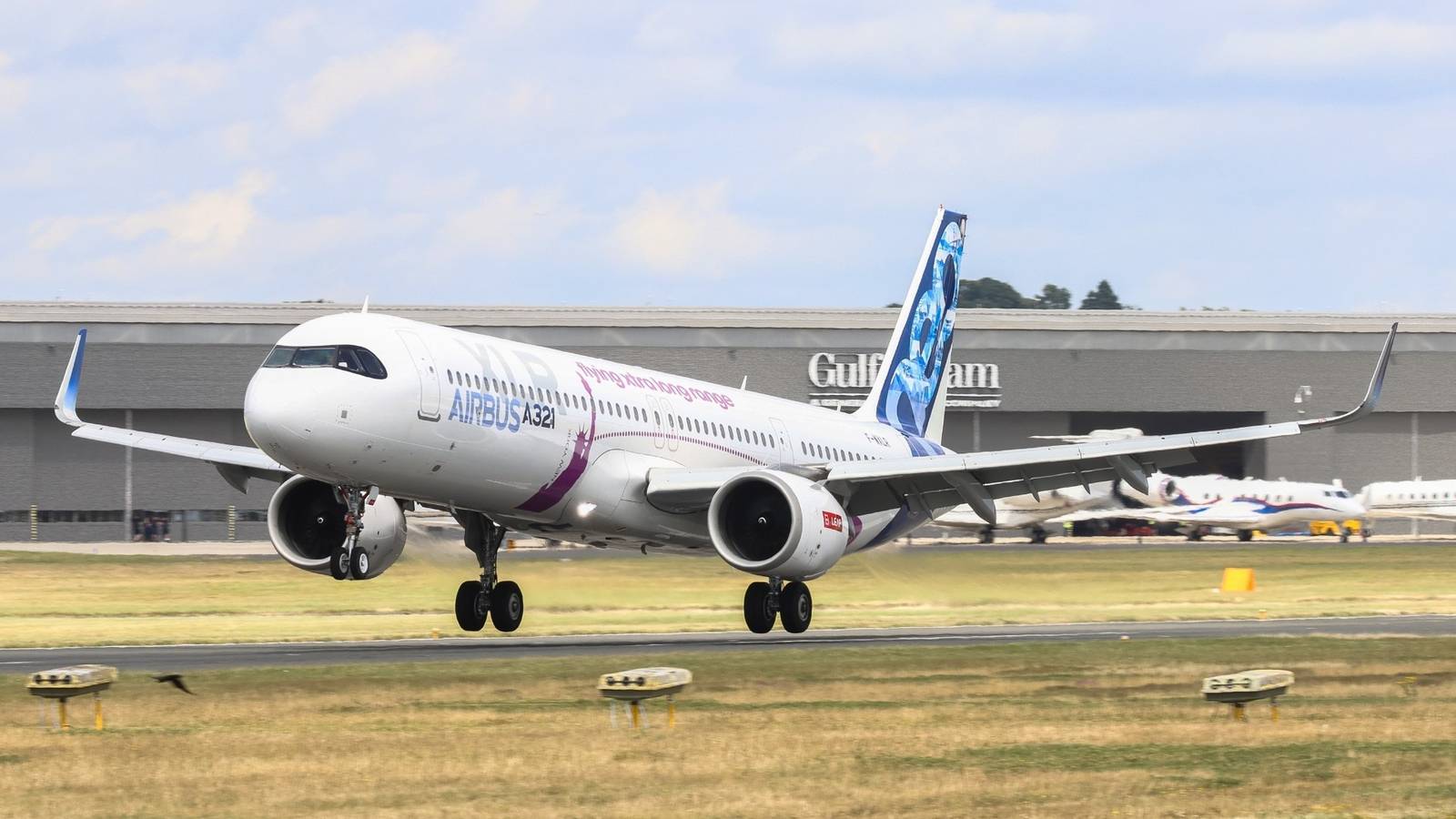


Airbus has shared the results of its Growth Market Forecast for the next two decades with the world. According to the European planemaker, GDP growth and urbanisation will be among the two most important driving forces when it comes to increasing long-term demand for air travel between 2026 and 2045. In this regard, it sees its aircraft as being well suited to how this will shift network trends.
Indeed, with urbanisation happening faster in smaller cities than larger ones, Airbus believes that secondary cities will come to the fore regarding future network growth. Such trends have already been seen in recent years, resulting in the increasing obsolescence of larger quadjets in favor of smaller and more efficient twinjets. Elsewhere, the growing middle-class demographic will also fuel demand.
Airbus Stands To Benefit From Network Decentralization
While the hub-and-spoke network model is far from dead, with many airlines continuing to operate in this way on an effective basis, the point-to-point model, whereby passengers flying between secondary cities no longer require a hub connection, is undeniably on the up. With Airbus forecasting faster growth in smaller urban centers over the coming decades, this trend looks set to continue at pace.
Paired with the increasing efficiency of the firm’s current commercial aircraft portfolio, Airbus is well-placed to take advantage of this shift, noting that “routes such as Riga-Tenerife or Melbourne-Alice Springs can already be efficiently served by aircraft like the A220.” Its narrowbodies have also unlocked thinner transatlantic routes, with its widebodies being long-haul game-changers. Airbus goes on to say:
“The number of smaller urban centres will grow at a significantly faster pace than larger ones, reflecting shifting urban populations. (…) Airbus forecasts expanding connectivity beyond trunk routes to smaller and medium city pairs.”
Demographic Shifts Will Also Fuel Growth In Aviation
Commercial air travel is as accessible as it has ever been, with the rise of low-cost carriers truly serving to democratize flying for those on lower incomes. Looking to the future, however, Airbus believes that middle-class flyers will be the true driving force behind growth in the commercial aviation sector. It says that “by 2045, the middle class demographic most likely to fly will increase by 1.4 billion people.”
This will represent a 34% uptick, and the fact that, as Airbus notes, demand in the commercial aviation sector is “inextricably linked to world economic growth as well as people’s desire to travel” means that the airline sector should see a corresponding boom in the future. Of course, in recent years, aviation has seen more than its fair share of short-term challenges, such as the pandemic and various conflicts.
The latter has made flying more expensive, due to the corresponding rise in fuel prices that has been passed on to flyers in the form of fare hikes. However, Airbus is confident that recent and current crises will not dampen long-term aviation demand, based on historical data. On a regional level, Airbus highlights the Asia-Pacific region as one where demand is mirroring economic shifts particularly strongly.
Forecast data from Airbus indicates there could be over 49,000 commercial aircraft flying in 2044.
As outsiders, it is often easier for us to comprehend such trends when there are numbers tied to them. In this regard, Airbus highlights the fact that, based on its demand forecast, “by 2045, air traffic will more than double, reaching about 10 billion passengers per year.” In the shorter term, Airbus expects annual growth rates of 3.9%, split between 2.6% fueled by GDP growth and 1.3% by demographic shifts.
Of course, in order to facilitate such growth, planemakers around the world will need to churn out plenty more aircraft over the next two decades. All in all, Airbus forecasts a “requirement of 42,060 aircraft in the next 20 years to compensate for 19,820 aircraft replacements of older aircraft and 22,240 for growth.” Of these jets, 19% will be widebodies and 81% will be narrowbodies, showing the latter’s importance.
Orijinal Haberi Görüntüle