


For decades, Boeing’s commercial aircraft lineup followed a logical progression. Airlines could move from the Boeing 737 to the Boeing 757, then to the Boeing 767, before stepping into larger widebody aircraft such as the Boeing 777 and Boeing 787. Every major capacity segment had a purpose-built solution, allowing carriers to match aircraft size with passenger demand and route length while maintaining operational efficiency. That continuity disappeared when the 757 ended production in 2004. Although the 737 MAX family became significantly more capable and the 787 Dreamliner transformed long-haul flying, neither aircraft truly replaced the unique niche occupied by the 757. The former lacks the payload and range flexibility required for many missions, while the latter is often too large and too expensive to operate on thinner routes.
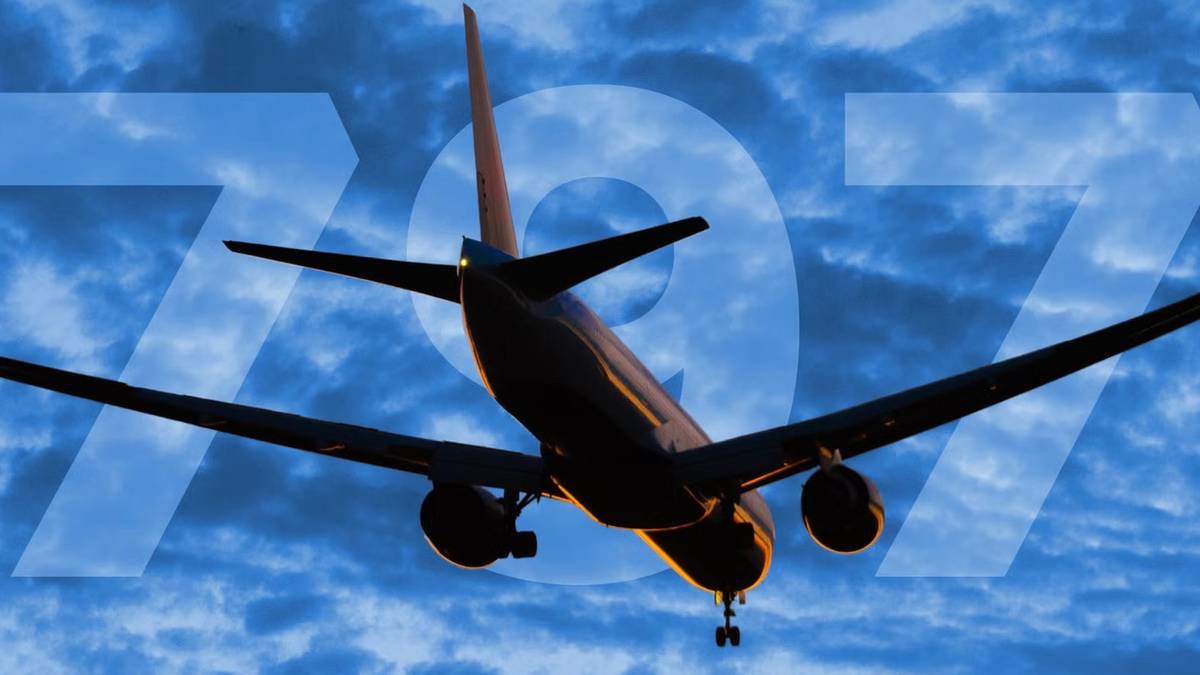
Boeing recognized the problem. During the late 2010s, it began studying the New Midsize Airplane (NMA), commonly referred to as the Boeing 797. The proposed aircraft would have carried roughly 225 to 270 passengers over approximately 4,500 nautical miles (8,334 km) to 5,000 nautical miles (9,260 km), placing it directly between the largest single-aisle jets and smaller widebodies. It was intended to become the long-awaited successor to both the 757 and portions of the aging 767 passenger fleet. The aircraft never progressed beyond the concept stage.
Following the 737 MAX crisis, Boeing redirected engineering resources toward certification, regulatory reforms, production stabilization, and future technology development. The NMA was placed on indefinite hold, leaving one of the industry’s largest market segments without a dedicated Boeing product. Several years later, that decision continues to reshape airline strategy. American carriers remain dependent on aging aircraft, Airbus has established a commanding single-aisle position, and Boeing finds itself absent from one of commercial aviation’s most strategically valuable categories.
The 797 Was Designed To Fill Aviation’s Most Difficult Market
The proposed 797 addressed what manufacturers often describe as the “middle of the market.” This segment consists of routes that require substantially more capability than traditional narrowbody aircraft but cannot consistently support the economics of a widebody. Many city pairs fit this profile: secondary European destinations and the American East Coast, premium transcontinental services, medium-density routes between North America and South America, and long domestic sectors all generate sufficient demand for more than 200 passengers without justifying aircraft carrying 300 or more travelers.
Historically, the 757 excelled in exactly these situations. Its combination of strong engines, impressive runway performance, and transatlantic range enabled airlines to operate routes that would have been uneconomical using larger aircraft. The type became especially valuable for serving smaller European cities from airports such as Newark Liberty International Airport (EWR), Philadelphia International Airport (PHL), and Boston Logan International Airport (BOS) while also handling demanding domestic missions from airports with short runways or operational restrictions.
The planned 797 sought to modernize that formula. Early studies suggested seating for approximately 225 to 270 passengers, depending on configuration, combined with a design range of roughly 4,500 to 5,000 nautical miles. Boeing also explored an oval fuselage cross-section that would have allowed twin-aisle boarding while maintaining lower operating costs than traditional widebodies. This hybrid approach promised several operational advantages. Faster boarding would reduce turnaround times, wider aisles would improve passenger movement, and additional cargo space would create new revenue opportunities. At the same time, the aircraft would consume considerably less fuel than existing twin-aisle jets on comparable missions because it would be optimized specifically for this capacity range. Industry analysts estimated that the market could ultimately require thousands of aircraft in this category over several decades.
Why Boeing Walked Away From Its Most Promising Project
The cancellation of the 797 was not driven by a lack of customer interest. Instead, it reflected one of the most turbulent periods in Boeing’s modern history. The grounding of the 737 MAX in 2019 fundamentally altered the company’s priorities. Engineering teams that might have developed a completely new aircraft became focused on software modifications, certification work, regulatory compliance, and restoring confidence among airlines and aviation authorities. Launching a clean sheet commercial aircraft is one of the largest financial commitments any aerospace manufacturer can undertake. Development costs frequently exceed $15 billion before the first delivery, while production systems, supplier networks, certification programs, and industrial facilities require years of coordinated investment.
As Boeing simultaneously addressed the MAX crisis, managed production challenges affecting the 787 Dreamliner, and responded to increasing regulatory scrutiny, introducing an entirely new aircraft became increasingly difficult to justify. The company also recognized broader technological questions. Boeing executives repeatedly suggested that future aircraft should incorporate significant advances in propulsion, manufacturing, digital engineering, and sustainability rather than simply replacing existing models with incremental improvements. Delaying the NMA created an opportunity, at least theoretically, to wait for technologies capable of delivering substantially greater efficiency.
Unfortunately, the commercial market did not pause alongside Boeing’s strategic reassessment. Airlines still needed replacement aircraft, particularly as 757 fleets continued aging beyond three decades of service. That created an opening competitors were well positioned to exploit. Instead of waiting for Boeing’s next-generation design, many carriers selected aircraft already available, even if those models represented compromises rather than perfect solutions. Today, Boeing continues evaluating future airplane concepts, but no direct successor to the proposed 797 has entered formal development. Industry observers increasingly describe the middle of the market as the manufacturer’s largest unresolved product gap.
The planemaker has been making big moves in China in recent weeks.
Airbus Turned Boeing’s Delay Into A Market Advantage
The greatest beneficiary of Boeing’s absence has been Airbus. Although the Airbus A321neo was originally conceived as the largest member of the A320 family rather than a dedicated 757 replacement, continuous improvements significantly expanded its capabilities. The introduction of the Airbus A321LR extends the operational range to approximately 4,000 nautical miles (7,408 km), while the subsequent Airbus A321XLR increases that figure to roughly 4,700 nautical miles (8,704 km), allowing airlines to serve numerous transatlantic routes using a single-aisle aircraft. For many operators, those aircraft arrived at precisely the right moment.
The A321LR and A321XLR cannot match every aspect of the proposed 797. Passenger capacity remains somewhat lower, cargo capability differs, and turnaround characteristics are not identical. Nevertheless, they satisfy many of the same commercial requirements that airlines originally hoped Boeing would address. Major domestic airlines have embraced these aircraft for long-range services that previously relied upon the 757. American Airlines, JetBlue Airways, and United Airlines have all incorporated long-range A321 variants into their fleet strategies, using them to connect cities that cannot consistently fill larger widebody aircraft.
Fleet commonality offers significant economic benefits through shared pilot qualifications, maintenance procedures, spare parts inventories, and operational flexibility. Airlines already operating substantial A320 family fleets gain additional efficiencies by expanding with longer-range variants rather than introducing an entirely new aircraft type. The result has strengthened Airbus’ competitive position in one of commercial aviation’s most valuable segments. Without a purpose-built Boeing competitor, the European manufacturer effectively established itself as the primary supplier for airlines seeking long-range narrowbody capability. While Airbus did not intentionally design the A321XLR to replace the canceled 797, market circumstances allowed it to capture many opportunities the Boeing aircraft would almost certainly have contested.
US Airlines Continue To Feel The Missing Link
The absence of the 797 affects airlines most visibly through everyday fleet planning. Across the United States, carriers still operate dozens of 757s despite their advancing age. Delta Air Lines remains the world’s largest 757 operator, while United Airlines continues to rely on the aircraft for domestic and international missions that newer alternatives struggle to replicate. These aircraft remain valuable because they combine relatively high passenger capacity, excellent takeoff performance, and sufficient range to operate demanding routes without the higher operating costs associated with larger widebody aircraft.
Replacing them has proven remarkably complicated. Deploying a Boeing 787 on thinner routes often results in excess capacity and higher trip costs, reducing profitability even when fuel efficiency remains strong. Using a smaller 737 MAX may require payload restrictions or fail to provide sufficient range under certain operating conditions, particularly on challenging sectors involving adverse winds or demanding airport environments. As a result, airlines frequently optimize around aircraft limitations rather than selecting equipment specifically designed for each mission.
Numerous domestic routes with consistently strong demand but limited airport infrastructure would benefit from an aircraft occupying the precise space once envisioned for the 797. Premium heavy transcontinental services, connections between major business centers, and growing international markets all illustrate situations where airlines continue balancing compromises instead of deploying an ideal solution. Network planners routinely evaluate aircraft not only by capacity but also by profitability per departure, seasonal flexibility, cargo revenue, maintenance requirements, and scheduling resilience. A purpose-built middle of the market aircraft could simplify those calculations considerably. Instead, airlines continue assembling fleets around available products rather than optimal ones, illustrating the commercial consequences of Boeing’s missing aircraft.
Boeing’s Next Move Will Shape The Next Generation Of Airline Networks
The unresolved middle of the market question now extends far beyond a single canceled aircraft. Every major manufacturer must determine how future aircraft should balance efficiency, passenger comfort, operating economics, and environmental performance. Airlines increasingly demand lower fuel consumption, reduced emissions, greater operational flexibility, and improved passenger experiences, all while controlling acquisition costs.
Any eventual Boeing response will likely incorporate technologies unavailable when the original 797 studies began. Advances in composite manufacturing, digital engineering, aerodynamic optimization, and next-generation propulsion systems could enable an entirely different aircraft than the one first envisioned several years ago. Yet time remains an important competitive factor. Airbus continues expanding production of the A321neo family as global demand remains exceptionally strong. Every additional delivery strengthens airline familiarity with the platform and increases long-term customer investment in Airbus infrastructure, training, and maintenance ecosystems.
For Boeing, introducing a future aircraft will therefore require more than matching technical specifications. It must deliver sufficiently compelling economics to persuade airlines to add an entirely new fleet type or replace aircraft they have only recently acquired. That represents a formidable challenge, but it also illustrates why the missing 797 continues to attract attention in the industry. The aircraft itself never left the drawing board, yet its absence continues influencing fleet decisions, network development, aircraft orders, and competitive strategy across global aviation. Until Boeing introduces a dedicated successor occupying this space between the 737 MAX and 787 Dreamliner, airlines will continue relying on compromises that shape where they can fly, how profitably they can operate, and which markets remain beyond practical reach. In that sense, the Boeing 797 remains one of commercial aviation’s most significant aircraft precisely because it was never built.
Found an error? Send it info@simpleflying.com so it can be corrected.
Orijinal Haberi Görüntüle