
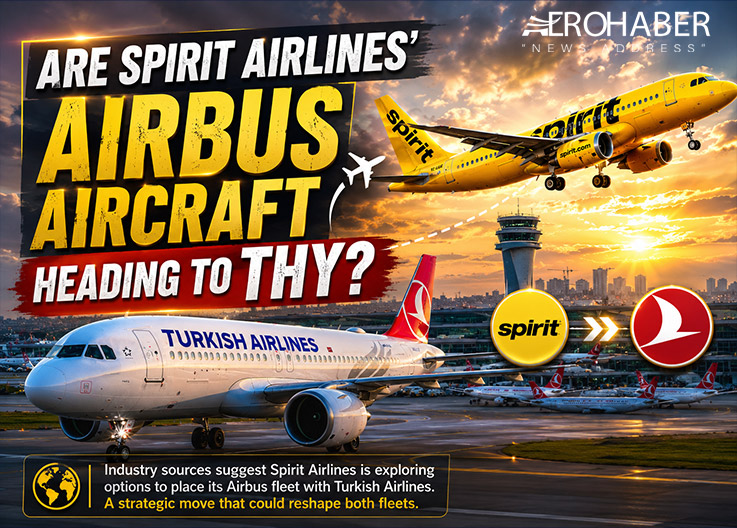


Turkish Airlines is evaluating Airbus aircraft from the Spirit Airlines fleet. THY aims to accelerate its growth plans amid the global aircraft supply crisis.
As the aircraft supply crisis deepens across the global aviation industry, Turkish Airlines has drawn attention with a remarkable new fleet move. It has emerged that THY is evaluating Airbus aircraft from the fleet of Spirit Airlines, which has entered a bankruptcy process.
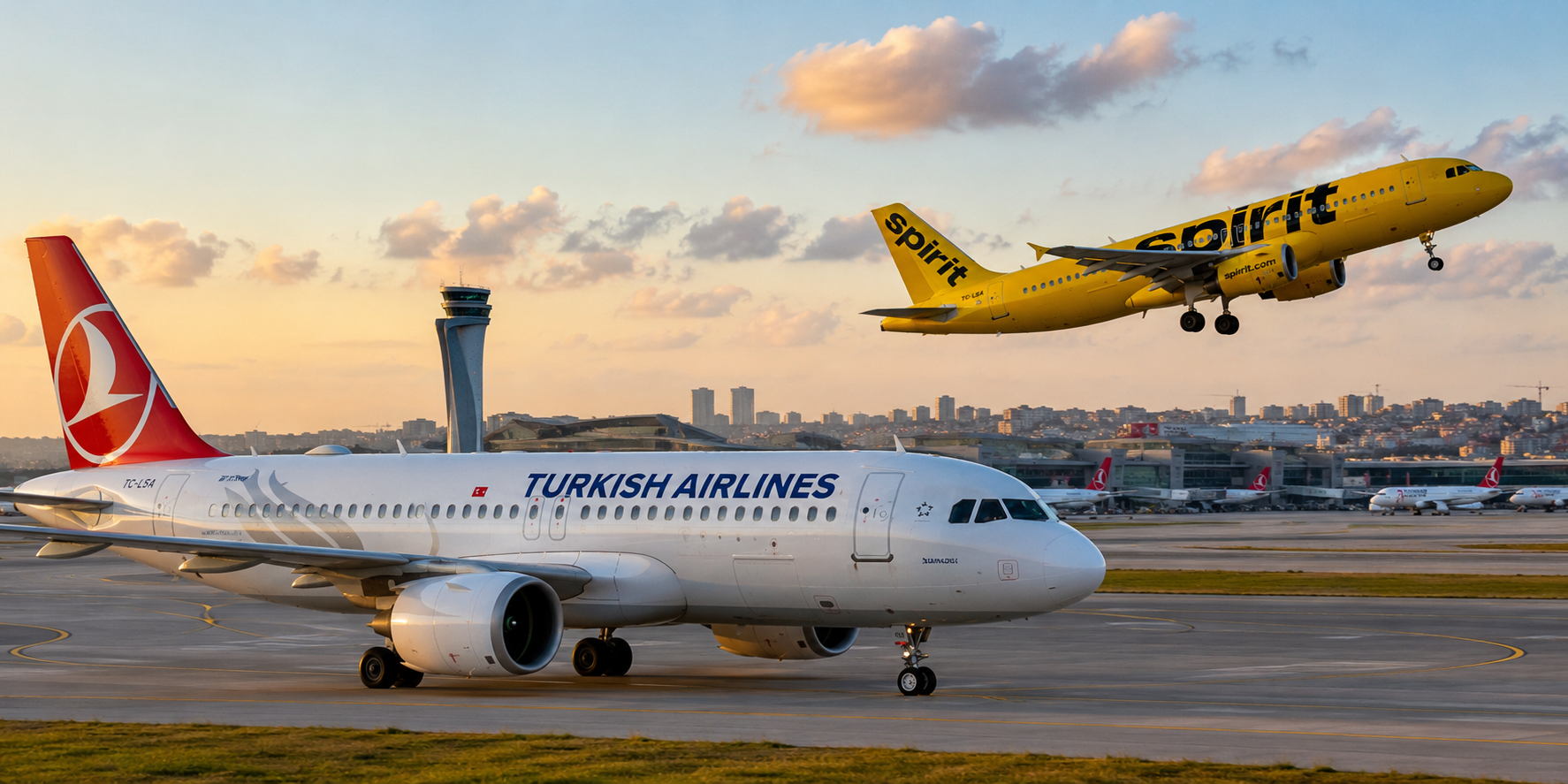
According to industry sources, THY is holding talks to add young Airbus A320 and A321 family aircraft released from Spirit Airlines to its fleet. Due to delays in global aircraft deliveries, airlines have increasingly turned toward the second-hand narrow-body market, and THY is considered to be pursuing one of the industry’s most aggressive growth strategies.
Global Aircraft Crisis Pushes THY Toward Alternatives
As passenger demand rapidly recovered after the pandemic, Airbus and Boeing production capacities were exceeded, leaving airlines worldwide facing a serious aircraft shortage.
With engine problems, supply chain bottlenecks, and delivery delays extending production timelines for next-generation aircraft by years, companies with ambitious growth targets such as THY have started turning to the second-hand market.
Especially following Spirit Airlines’ operational downsizing, the Airbus fleet entering the market has become a strategic opportunity for many airlines.
Which Aircraft Are in the Spirit Airlines Fleet?
Spirit Airlines’ fleet includes:
- Airbus A320ceo
- Airbus A321ceo
- Airbus A320neo
- Airbus A321neo
The relatively young age of a significant portion of these aircraft increases their market value.
Largely compatible with THY’s existing Airbus operational structure, these aircraft could provide rapid capacity growth, especially on routes across Europe, the Middle East, North Africa, and Central Asia.
THY’s 2033 Goal: A Giant Fleet of 850 Aircraft
In recent years, Turkish Airlines has become one of the world’s fastest-growing global carriers. With its Istanbul Airport-centered operational network, the company has created a major transit hub connecting Europe, Asia, Africa, and the Americas, while continuing its aggressive expansion plans.
According to statements by Turkish Airlines Chairman of the Board Murat Şeker, the company aims for its fleet to reach:
- 850 aircraft by 2033
- Approximately 1,000 aircraft by 2036
If this growth is achieved, THY could become one of the world’s largest airlines in terms of international capacity.

Middle East Tensions Affect Operations
THY’s fleet planning is shaped not only by commercial growth but also by geopolitical risks.
Due to regional tensions centered around Iran, some Gulf operations have reportedly been postponed, while the company is said to be shifting aircraft capacity toward Asian and African markets.
Rising jet fuel costs are also increasing pressure on airlines. Despite this, THY is considered to be maintaining operational flexibility thanks to its strong transit network.
Istanbul Airport Positioned as a Safe Transit Hub
According to industry representatives, global passengers increasingly view Türkiye as a safer and more stable transit center amid regional crises.
Investors Trust THY’s Growth Potential
Shares of THY traded on Borsa Istanbul have continued their upward trend recently, while investors maintain a positive outlook on the company’s long-term growth capacity.
According to experts, THY’s standout advantages include:
- Strong geographical position
- Massive transfer network
- Competitive operational costs
- Infrastructure advantages of Istanbul Airport
- Global expansion potential
However, the ongoing aircraft crisis across the aviation sector, fuel prices, and geopolitical risks remain among the most significant threats.