


Two young engineers aim to turn fatal crashes into survivable landings with AI-powered giant airbags.
Following the Air India crash in June, in which 260 people lost their lives shortly after take-off from Ahmedabad Airport in India, an eye-catching project has come to light. Birla Institute of Technology and Science (BITS) Dubai students Eshel Wasim and Dharsan Srinivasan have developed a radical concept to make aircraft crash-resistant: Project Rebirth.
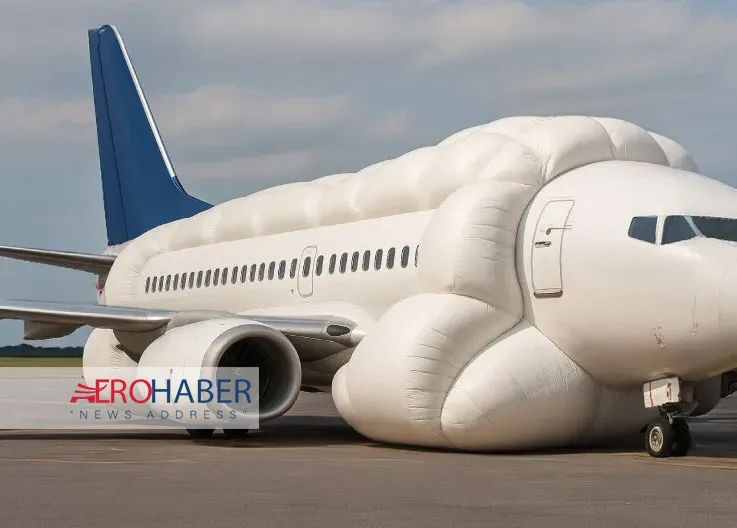
The duo claim their design, which combines artificial intelligence, smart airbags, shock-absorbing fluids and reverse thrust, could transform fatal crashes into “survivable landings.” The system would detect accidents beyond the pilot’s control and deploy giant airbags enveloping the aircraft’s fuselage.
A project inspired by tragedy
Eshel Wasim explained the origins of their project with these words:
“After the Ahmedabad crash in June 2025, my mother couldn’t sleep. She kept thinking about the fear passengers and pilots must have felt knowing there was no way out. That sense of helplessness really disturbed us. So, we decided to look for a solution.”
How will Project Rebirth work?
-
Smart airbags: Designed to wrap around the nose, fuselage, and tail of the aircraft.
-
AI monitoring system: Analyses altitude, speed, engine status, direction, and pilot responses to trigger automatically.
-
Active safety scenario: If a crash becomes inevitable below 3,000 ft, the system will inflate automatically, while still allowing the pilot to override.
Nominated for the Dyson Awards
Although still at the concept stage, the project has been submitted to this year’s James Dyson Awards. The young engineers hope to turn it into reality in the future with the £30,000 prize and potential investment support.
Experts stress that the project’s technical feasibility remains uncertain, but Project Rebirth demonstrates how radical, safety-focused ideas can emerge in aviation.