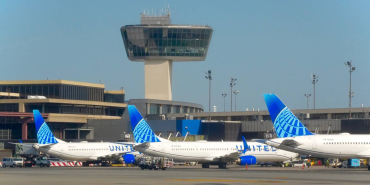

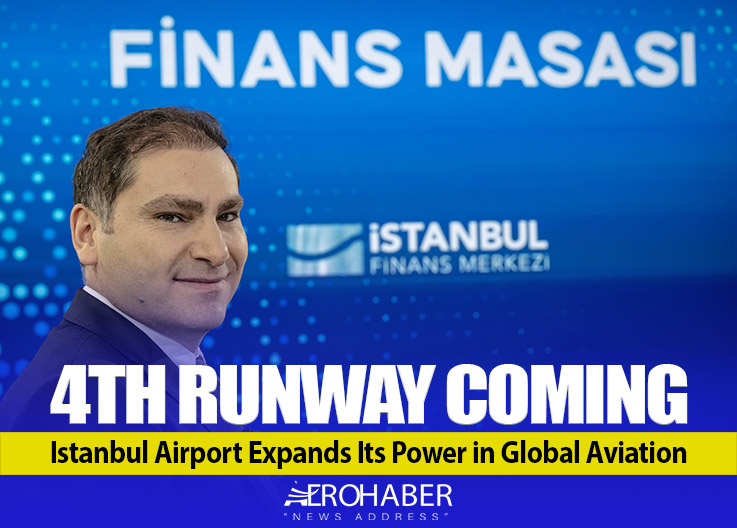


İGA CEO Selahattin Bilgen announced that the 4th runway at Istanbul Airport will be commissioned in the second half of the year. As capacity is increased to 120 million passengers, investment, technology, and sustainability projects are accelerating.
İGA strengthens its global hub position with second-phase investments
Selahattin Bilgen, CEO of Istanbul Airport operator İGA, stated that infrastructure investments carried out within the scope of the airport’s growth plans are progressing as planned. Bilgen noted that the 4th main runway is targeted to be put into operation in the second half of the year, adding that operational capacity will expand significantly.
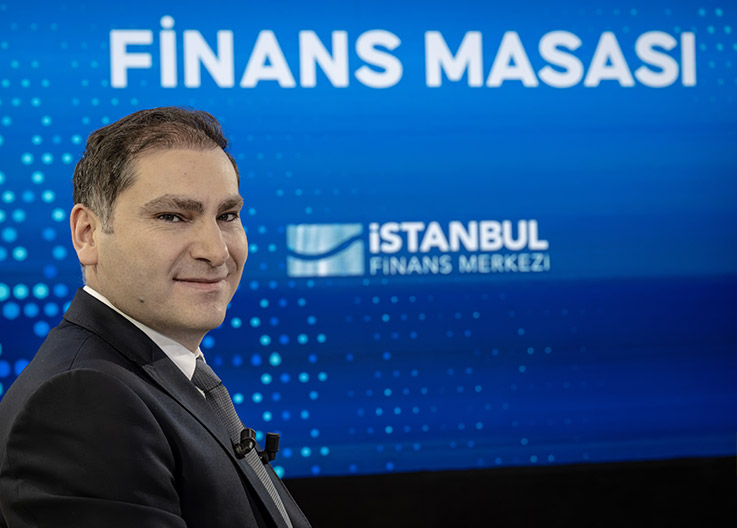
Speaking on the Anadolu Agency Finance Desk programme prepared with the contributions of the Istanbul Finance Center, Bilgen evaluated both global aviation dynamics and the strategic growth process of Istanbul Airport within a comprehensive framework.
Second-phase investments continue for the 120 million passenger target
Bilgen stated that Istanbul Airport has been developed in line with a long-term master plan and reminded that the current infrastructure was designed for a capacity of 90 million passengers. Noting that this level was reached in a short time, Bilgen said that capacity will be increased to 120 million passengers with new investments.
Bilgen stated that operations are currently carried out with 3 main runways and 2 backup runways, adding that the commissioning of the 4th runway will both ease traffic flow and increase slot capacity.
Global fluctuations affect growth performance
Bilgen pointed out that the aviation sector is shaped not only by demand dynamics but also by global geopolitical developments. He stated that tensions between the US/Israel and Iran have impacts on air traffic, leading to changes in route and operational planning.
Noting that Istanbul Airport is directly affected by these developments due to its role as a global transfer hub, Bilgen reported a 5.5% growth in the first quarter of the year. He recalled that 84.5 million passengers were reached last year and stated that the 8% growth target projected at the beginning of the year has been slightly underachieved.
The role as an alternative hub strengthens during crises
Bilgen stated that global uncertainties also create new opportunities for Istanbul Airport, emphasizing that the airport is positioned as a “safe alternative” especially during times of crisis.
He noted that some airlines in the Gulf region have directed their aircraft to Istanbul for long-term parking and operational planning purposes, adding that this trend increases the airport’s strategic importance.
Traffic rising to a leading position in Europe
Bilgen stated that Istanbul Airport has quickly climbed to the top ranks in European aviation, noting that daily passenger traffic has exceeded 280,000 and the number of flights has surpassed 1,700.
A contribution of 24.2 billion dollars to the economy
Bilgen also shared the results of independent research regarding Istanbul Airport’s impact on the Turkish economy. Accordingly, the airport’s direct and indirect economic contribution has reached 24.2 billion dollars.
Bilgen noted that a 10% increase in aviation connectivity contributes 0.5% to the economy, adding that Istanbul Airport generates an overall economic impact of approximately 2.5%.
An operational structure managed by digitalisation and artificial intelligence
Bilgen stated that Istanbul Airport has evolved into a structure that stands out not only with its physical capacity but also with its technological infrastructure, adding that artificial intelligence, biometric verification systems, and data analytics are at the core of operations.
He noted that airport management operates in integration with digital systems and that a large portion of processes are carried out through data-driven decision-making mechanisms.
Leadership in cargo traffic in Europe
Bilgen stated that Istanbul Airport has also become a strong hub in air cargo, noting that global and local companies such as FedEx, DHL, UPS, and Trendyol have established logistics bases there.
He reported that more than 2 million tonnes of cargo were handled last year, stating that Istanbul has reached the highest volume in Europe in this field.
Sustainability investments are accelerating
Bilgen also touched on sustainability efforts, stating that 35% of waste at the airport is recycled, while 40% of water is reused.
He noted that a solar power plant with a capacity of 240 megawatts has been commissioned, adding that Istanbul Airport is among large-scale airports operating with renewable energy. He also added that the supply infrastructure for sustainable aviation fuel (SAF) has been strengthened.
Passenger experience and new investments
Bilgen stated that investments aimed at passenger experience continue and recalled that Istanbul Airport received the “world’s most accessible airport” award. He noted that audio guidance systems and dedicated service areas for visually impaired passengers have been developed.
Bilgen announced that the JETEX-İGA General Aviation Terminal will be opened in the second half of the year and that a new 490-room hotel, in cooperation with Hilton, will also be put into service. He also stated that new commercial and logistics areas are planned around the airport within the scope of the “Airport City” concept.
Transformation into a global aviation ecosystem
Bilgen stated that Istanbul Airport has evolved beyond being merely a transportation hub into a global aviation ecosystem, adding that investments are continuing with the goal of advancing this structure further.
Bilgen said, “Istanbul Airport continues on its path with a structure that strengthens its claim of leadership in global aviation.”