


Boeing Unveils First Images of Sixth-Generation Fighter Jet F/A-XX
Boeing has unveiled the F/A-XX, the next-generation carrier-based fighter jet set to replace the F/A-18 Super Hornet. Expected to enter service in the 2030s, the aircraft stands out with its long range, agility, and integration with unmanned aerial vehicles.
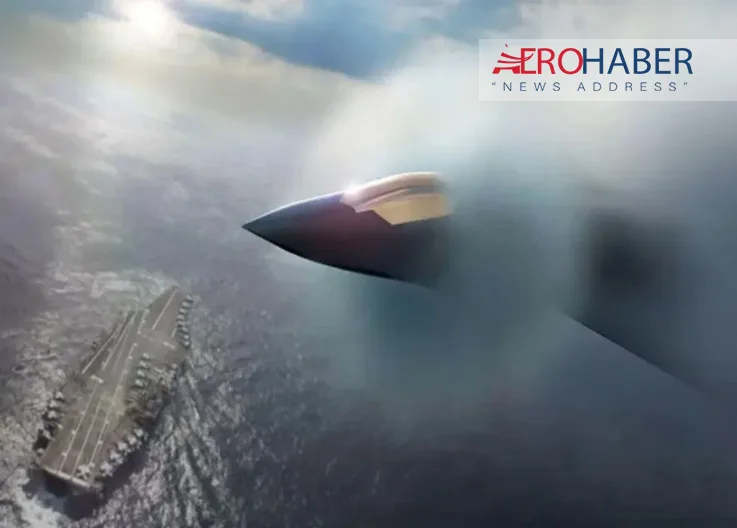
US aerospace giant Boeing has released the first design images of the sixth-generation carrier-based fighter jet F/A-XX, set to replace the F/A-18 Super Hornet. The unveiling took place at the Tailhook Symposium, one of the most significant events in naval aviation.
The aircraft, intended to renew the Navy’s ageing Super Hornet fleet, is expected to mark a generational leap in US naval aviation when it enters service in the early 2030s. Congress has already allocated around $2.4 billion in funding for the programme.

Extended Range: A Critical Advantage
The new-generation fighter jet will reportedly have 25% more range than the current F-35C Lightning II. With an operational range exceeding 1,700 miles, the aircraft is seen as crucial for Pacific operations, particularly against China’s long-range missile capabilities.
Agility Through Wing Design
One of the standout features of the design is the addition of forward canards aimed at enhancing manoeuvrability during demanding aircraft carrier landings. Although this design may increase radar visibility, the Navy continues to evaluate the trade-off between agility and stealth.
Integration with Unmanned Systems
The F/A-XX will not only operate in contested airspaces but will also serve as a command platform managing unmanned aerial vehicles. Thanks to advanced artificial intelligence systems, it will have modular payload capacity to accommodate hypersonic missiles and directed-energy weapons.

Rivalry Intensifies
Boeing is not alone in the project. Northrop Grumman has also presented its own sixth-generation design for the Navy. While Northrop prioritises stealth, Boeing highlights agility and operational flexibility. The Navy’s final decision will have to balance cost, stealth, and carrier compatibility.
Production Preparations
Boeing has announced a $2 billion investment in the Advanced Fighter Assembly Facility in St. Louis, Missouri, should its design be selected. The company also stated that the F/A-XX could be produced simultaneously with the F-47, which is being developed for the Air Force.
Boeing Defense CEO Steve Parker said, “We believe the US defence industry has the capacity to support both programmes.”