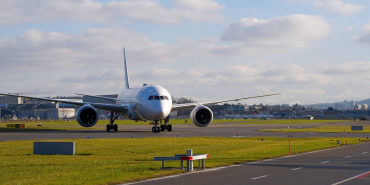

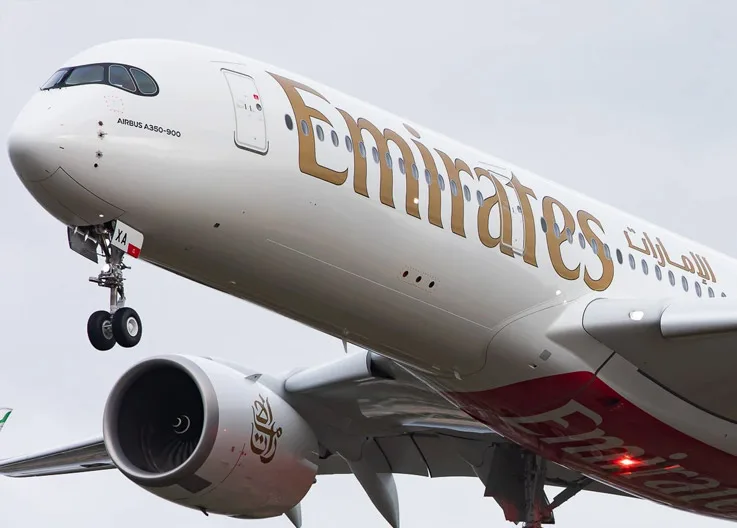


The first Airbus A350 aircraft expected to join the fleet of Emirates Airlines (EK), the flag carrier of the United Arab Emirates, completed its longest test flight at Toulouse Blagnac Airport (TLS) on October 22, 2024. Known under the registration A6-EXA, the aircraft has been undergoing extensive testing at Airbus’ production facility but has not yet been delivered to Emirates. The airline has ordered approximately 65 Airbus A350-900s, with five expected to be delivered by the end of 2024. Emirates aims to have a fleet of ten operational by March 2025.
A350 Test Flights Near Completion
The fourth test flight on October 22 was the longest for Emirates’ first A350 aircraft. The plane took off from Toulouse at 10:49 AM and landed safely at 5:36 PM local time. This flight marks one of the final steps before the official handover to Emirates. Although the first test flight occurred on September 25, 2024, the aircraft has not yet been formally delivered.
Delays in Delivery
Emirates has experienced several delays in the delivery of its A350-900 aircraft. Initially, the first flight on the Dubai-Edinburgh route was planned for August 2024, but delivery delays caused a postponement. According to the current plan, the first delivery is expected in November 2024, with the A350s scheduled to begin service on the Dubai (DXB) to Edinburgh (EDI) route on December 16. While the route will eventually be operated by the Airbus A350-900, the Boeing 777-200LR will be used temporarily due to delivery delays.
Cabin Configuration and Delivery Challenges
Emirates’ A350-900s will feature a three-class cabin layout with a capacity for 312 passengers. The aircraft will include 32 business class lie-flat seats in a 1-2-1 configuration, 21 premium economy seats, and 259 economy class seats. However, challenges related to the cabin configuration are believed to be a significant factor in the delivery delays. Emirates has designed a customized cabin layout for the aircraft, but the certification and installation of this new design have taken longer than expected.
The business class seats, produced by Safran, are adapted from Emirates’ current A380 and 777 aircraft layouts and will be installed in the new A350s. However, the installation of these seats on different aircraft models presents technical challenges, further slowing the delivery process.
Fleet Expansion and Future Plans
Emirates’ Airbus A350 fleet is a key component of the airline’s growth strategy. The Dubai-based carrier plans to have over 50 A350s in active service by 2027. These new aircraft will enhance operational efficiency and contribute significantly to Emirates’ expanding network. While delivery delays have impacted the airline’s expansion plans, these delays are considered less severe than the issues faced by Boeing’s 777X program.
© AeroHaber.com
Aviation News and Defense Industry news published on our website cannot be used without proper attribution.
Note: You can read all aviation news published on our English site in Turkish at www.airportgundem.com